A water pump that runs continuously without a faucet being open does not necessarily mean the motor is broken. In a residential pressure booster system, the pump should normally stop once demand is met and the designated cut-off condition is reached. If this does not happen, there is either unwanted consumption, the system cannot build up pressure, or the automation is not correctly signaling a shutdown.
First, distinguish between continuous operation and frequent cycling: it is one thing for the motor to sound incessantly, and another for it to start every few minutes. Observe the pressure gauge, any error indications, and the flow at the faucets. If the pump is not delivering water, smells like it is burning, makes unusual noise, or if there is water near electrical components, stop its operation from a safe, dry location. Do not open electrical covers or connections under pressure.
1. Hidden leak or undetected consumption
The first potential cause is that water is being consumed somewhere, even though no faucet appears to be open. A running toilet tank, an underground garden pipe, or an irrigation solenoid valve that does not close can keep the system under demand. Also check automatic tank refills and devices powered by the booster system.
A small leak usually causes periodic starts in a system with a pressure switch and tank. A larger leak may prevent the cut-off pressure from being reached, causing the pump to run non-stop. In electronic flow controllers, even a relatively small continuous flow may prevent shutdown, depending on the controller's design.
- Check toilets, outdoor faucets, hoses, and visible connections.
- Look for moisture, dripping, or unusually wet spots in the garden.
- Observe if the pressure drops after you turn off the pump, without using water.
A pressure drop indicates a need for a leak test, but it does not prove a leak in the house on its own: there could also be a backflow. Isolation of individual branches by a technician helps in locating the issue. Do not arbitrarily close the discharge line while leaving the pump running.
2. Non-return valve that is not sealing
The non-return (check) valve allows flow in one direction and prevents water from flowing back. If sand or sediment has become trapped on its seat, if it is worn, or if it has been installed incorrectly, the system may lose pressure toward the supply side. In suction installations, a similar problem can occur at the foot valve inside the tank or well.
A typical symptom is that the pump stops and starts without consumption. However, if the backflow is accompanied by a loss of suction priming, the pump may run continuously during the next start-up without reaching the required pressure. Therefore, a faulty non-return valve does not always cause continuous operation in the same way.
The technician checks the position, installation direction, and seal of the valve, as well as whether the water column is being held. Cleaning or replacement is performed after electrically isolating the installation and relieving the pressure. Adding a second valve without diagnosis is not a universal solution and may increase pressure losses.
3. Incorrect setting or failure of the automation
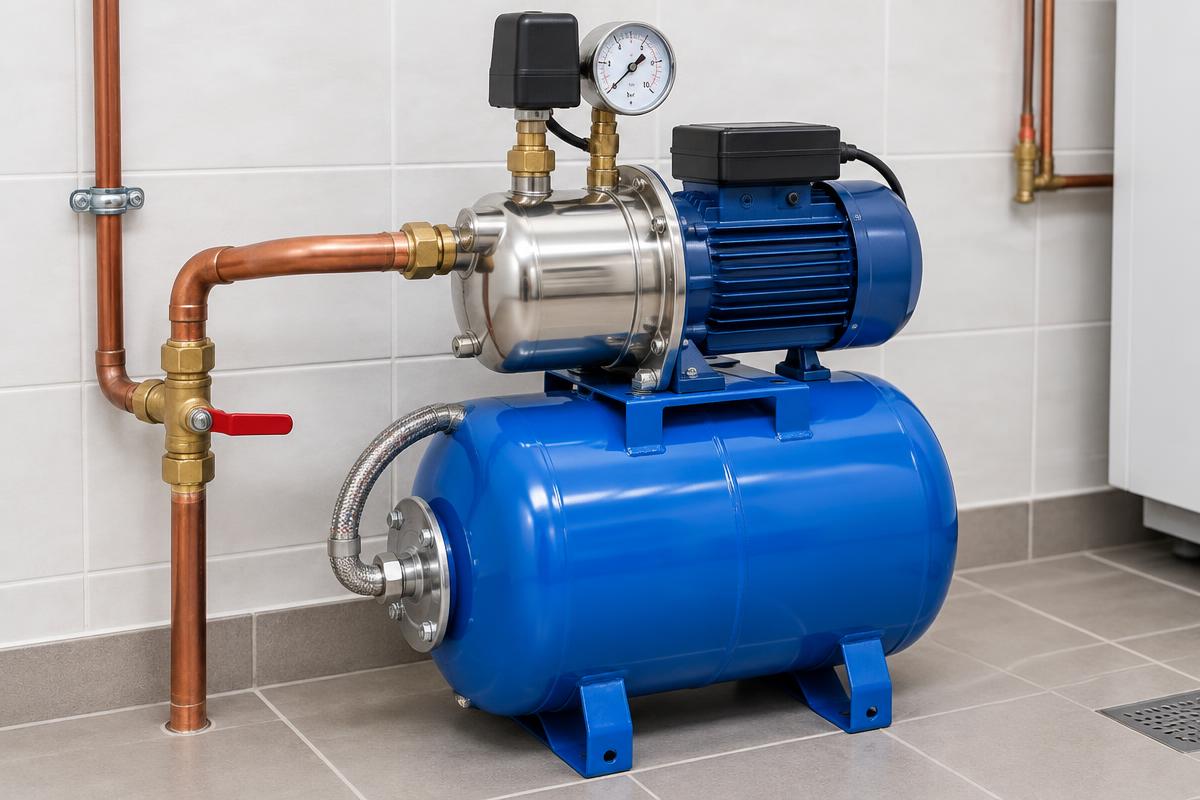
In a conventional booster system, the pressure switch starts the pump at the cut-in pressure and stops it at the cut-out pressure. If the latter has been set above the pressure the pump can actually generate, the motor will not stop. A similar scenario can result from stuck contacts, a clogged pressure sensing connection, or a fault in the control circuit.
A useful indicator is the pressure gauge reading: if the pressure reaches or exceeds the correctly defined cut-off value and the motor continues, the automation needs checking. If the pressure remains lower, leaks, supply, and pump performance must be examined simultaneously. The pressure gauge itself may also provide an incorrect reading.
In electronic press controls, the shutdown often depends on detecting zero or very low flow, not on a classic pressure switch. In an inverter system, the pressure sensor and standby parameters are checked additionally. Settings must match the manual and the installation. Do not rotate adjustment screws experimentally and do not tamper with electrical contacts.
4. Insufficient supply, air, or loss of suction
If the pump is not supplied with enough water, it may operate without reaching the cut-off pressure. Potential causes include a low tank level, a half-closed intake valve, a clogged suction filter, or a connection that allows air intake. In suction, a seal failure does not necessarily appear as an external drip.
Common signs are unstable pressure, intermittent flow, air in the faucets, and unusual noise. Cavitation, associated with insufficient inlet pressure, can also cause noise like gravel and wear. However, not every noise is proof of cavitation or air entry.
Visually check the available level and the position of the required valves. If there is no water, stop the operation: dry running can destroy the mechanical seal. Filling and venting are done according to the specific model's instructions, with safe isolation. Avoid repeated restarts without fixing the cause.
5. Reduced pump performance or unsuitable equipment selection
A worn or partially clogged impeller can reduce the total dynamic head the pump generates. Thus, even with closed consumption points, the pressure may not reach the cut-off limit. If the problem appeared gradually, consider wear, limescale, and the transport of solids from the water source.
If it appeared after a pump replacement or a change in settings, sizing must be checked. The nominal power of the motor is not enough to select a booster system. The head-flow curve, inlet pressure, elevation differences, and network requirements are needed. Friction losses matter when there is flow; they do not explain by themselves the inability to stop with truly zero flow.
The technician compares pressure and flow measurements with the manufacturer's data and checks the electrical supply. In a three-phase pump, especially after electrical work, correct rotation direction is also checked. Increasing the pressure in the automation does not fix a pump that is already unable to reach the required value.
Frequently Asked Questions
Can the expansion tank of the booster system be at fault?
Yes, but loss of pre-charge or a worn diaphragm mainly causes frequent cycling, not continuous operation on its own. The pre-charge is checked with the pump powered off and zero pressure on the water side, according to the manufacturer's instructions.
Should I let the pump run until a technician arrives?
Not when it runs continuously for no apparent reason, especially with low flow, overheating, or noise. Turn it off safely. Even if the motor is suitable for continuous duty, operating without sufficient water or without flow can cause damage.
Which details help the most with diagnosis?
Record the pump and controller model, the pressure reading, if there is normal flow, and if the pressure drops after turning it off. Also mention recent work, tank emptying, or setting changes. These help narrow down the search without unnecessary replacements.