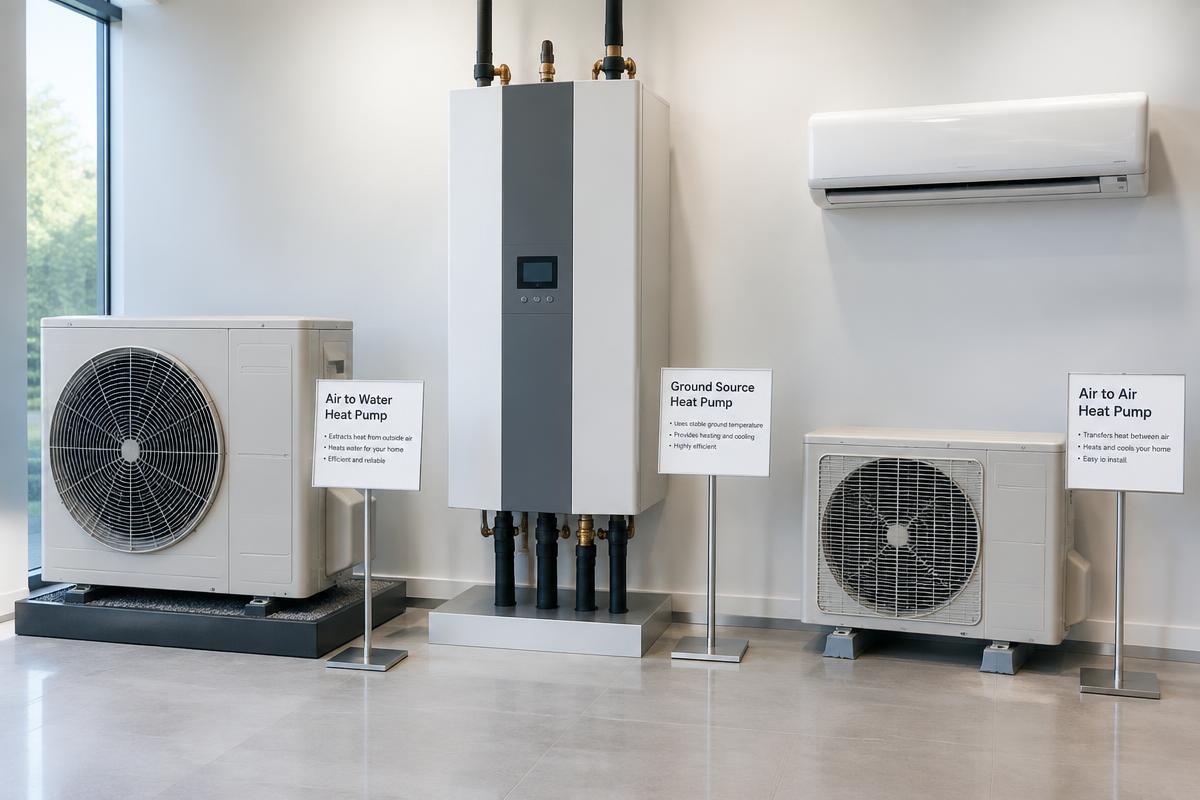
The position of the external unit affects the performance, noise levels, and maintenance ease of a heat pump. It is not enough for it to fit on a balcony or be hidden behind a wall. It requires free air circulation, secure support, and proper management of the water produced during defrost cycles.
For standard air-to-water heat pumps, the appropriate location is determined by an on-site inspection and review of the specific model's manual. The following guidelines help owners and technicians evaluate the available options, without replacing a professional installation design.
1. Choose a location with unobstructed air circulation
During heating mode, the external unit absorbs heat from the air and discharges cooler air. If this air returns to the intake, recirculation occurs: the unit operates in more unfavorable conditions, potentially reducing efficiency and causing more frequent defrost cycles.
Prefer an open location in a yard, a suitable balcony, or a rooftop. Avoid closed storage rooms, narrow light wells, and recesses surrounded by high walls. A balcony with a solid parapet can trap air, even if it appears large enough.
How much clearance is needed from walls?
There is no single distance that applies to all units. As a guide, some models require approximately 30–50 cm behind and 1–2 m in front of the fan. Others require different clearances, especially when there are obstacles on multiple sides or a second unit nearby. The manufacturer's clearance diagrams always take precedence.
- Keep the air intake and discharge areas clear.
- Provide access to covers, connections, and the heat exchanger for maintenance.
- Do not place pots, cabinets, or dense louvers within the required clearance zones.
- Avoid direct discharge of cold air toward balcony seating areas and busy corridors.
Strong wind blowing directly into the fan outlet can also cause problems. The orientation or a suitable windbreak should be chosen according to the instructions, without restricting airflow.
2. Limit noise before installation
The best way to handle noise is through proper placement. Avoid installation next to bedroom windows, both your own and your neighbors'. Also, consider the position of the fan in relation to balconies across from you and reflective surfaces.
A narrow corner between walls can amplify acoustic nuisance through reflections. Nighttime operation requires special attention, as lower ambient noise makes the unit more noticeable.
How to read noise specifications?
Sound power and sound pressure are not the same, even though both are often listed in dB(A). Sound pressure depends on distance and measurement conditions. Therefore, a catalog value is not enough to predict what will be heard at a neighbor's window.
- Check the conditions under which acoustic values are declared.
- Use vibration dampers suitable for the weight and operation of the unit.
- Avoid rigid pipe connections that transmit vibrations to the building structure.
- In borderline cases, request an acoustic assessment and verification of applicable requirements.
Silent mode may help, but it often limits available power. It does not fix an inappropriate installation on its own.
3. Ensure a stable base and maintenance access
The unit must rest on a stable, level foundation with appropriate load-bearing capacity. In yards, a concrete base or a calculated metal structure is often used. Placing the unit directly on soil, gravel without a stable foundation, or makeshift slabs can cause settling and drainage problems.
On balconies and rooftops, weight, anchoring points, wind load, and vibration transmission must be checked. Wall mounting is not excluded but requires a suitable structural element and brackets calculated for the specific unit. When in doubt, consult an engineer.
- Leave sufficient height under the unit for drainage and to prevent ice buildup.
- In snowy areas, adjust the mounting height to expected conditions.
- Protect the roof waterproofing at support points and penetrations.
- Ensure a safe path for technicians, tools, and future replacement of components.
An inaccessible exterior facade may require lifting equipment even for repairs. A lower initial cost does not necessarily mean a more economical installation in the long run.
4. Design drainage and piping together
Where is defrost water directed?
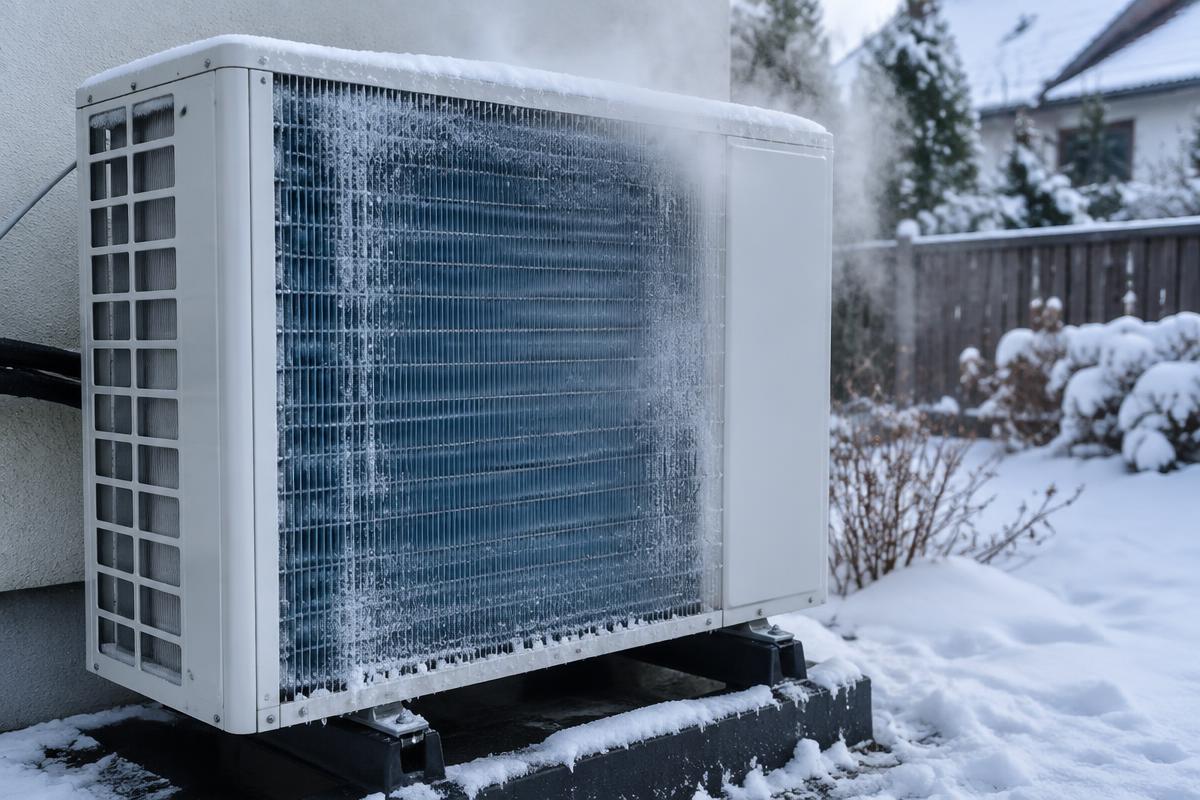
During winter operation, ice forms on the external heat exchanger, which melts during the defrost cycle. Water must be removed without ending up on sidewalks, entrances, neighboring balconies, or areas where it could freeze and cause slipping.
Plan for proper collection and drainage with a slope. In freezing areas, a narrow or exposed pipe can become clogged with ice. The solution is chosen according to the manual: a different drainage layout or approved anti-freeze protection may be required. Not every drain outlet is suitable for all climatic conditions.
Near the boiler room, but not at the expense of ventilation
Shorter pipe runs usually reduce losses and costs. However, they do not justify a location with insufficient ventilation.
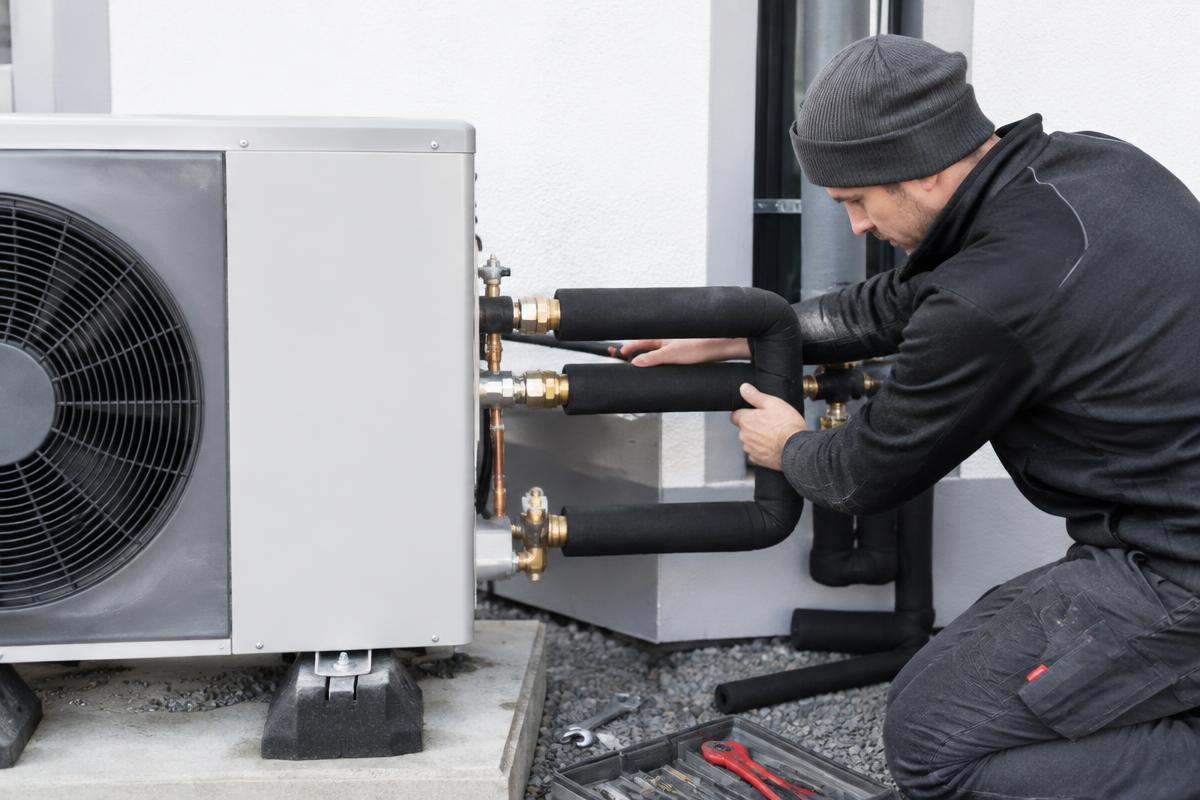
- For monobloc units: external water pipes require proper insulation, UV protection, and a documented anti-freeze strategy. Insulation alone does not prevent freezing during prolonged frost or power outages.
- For split units: the permitted lengths and elevation differences of refrigerant lines must be observed. Work must be performed by appropriately licensed and, where required, certified personnel.
If glycol or anti-freeze valves are required, their selection and application must comply with the manufacturer and hydraulic design.
5. Check refrigerant, power supply, and restrictions
Safety requirements also depend on the refrigerant. For units using R290 (propane), a protection zone may be defined around the device, with restrictions for building openings, shafts, drains, and ignition sources. The geometry of the zone depends on the model and installation layout; do not use arbitrary generic distances.
Electrical supply, grounding, protections, and the possibility of safe isolation must be checked by a qualified electrician. Cable routing must be protected from water, sunlight, and mechanical stress.
In apartment buildings, consider building regulations, the use of common areas, and any required consents or approvals. For interventions on facades, rooftops, or protected buildings, request a review by an engineer before work begins.
Frequently Asked Questions
Can it be placed under an awning or canopy?
Yes, provided that the required clearances are maintained and air is not trapped. The canopy should not direct water onto the unit or obstruct maintenance.
Is shade needed for better performance?
Shade can be useful for cooling, but unobstructed airflow is the priority. Do not build a closed enclosure solely for sun protection.
Is it better on the roof or in the yard?
There is no universally better solution. A yard often facilitates access, while a rooftop can offer more free space. Compare noise, support, drainage, and piping lengths.
Can I hide it with a decorative cover?
Only if the cover does not violate ventilation, safety, and access requirements. A dense louver can increase flow resistance and cause recirculation.
Conclusion: Proper positioning combines free air, low noise, stable mounting, and safe drainage. Before finalizing the installation, request an on-site check with the selected unit's manual and agree on the details of support, piping, and maintenance.