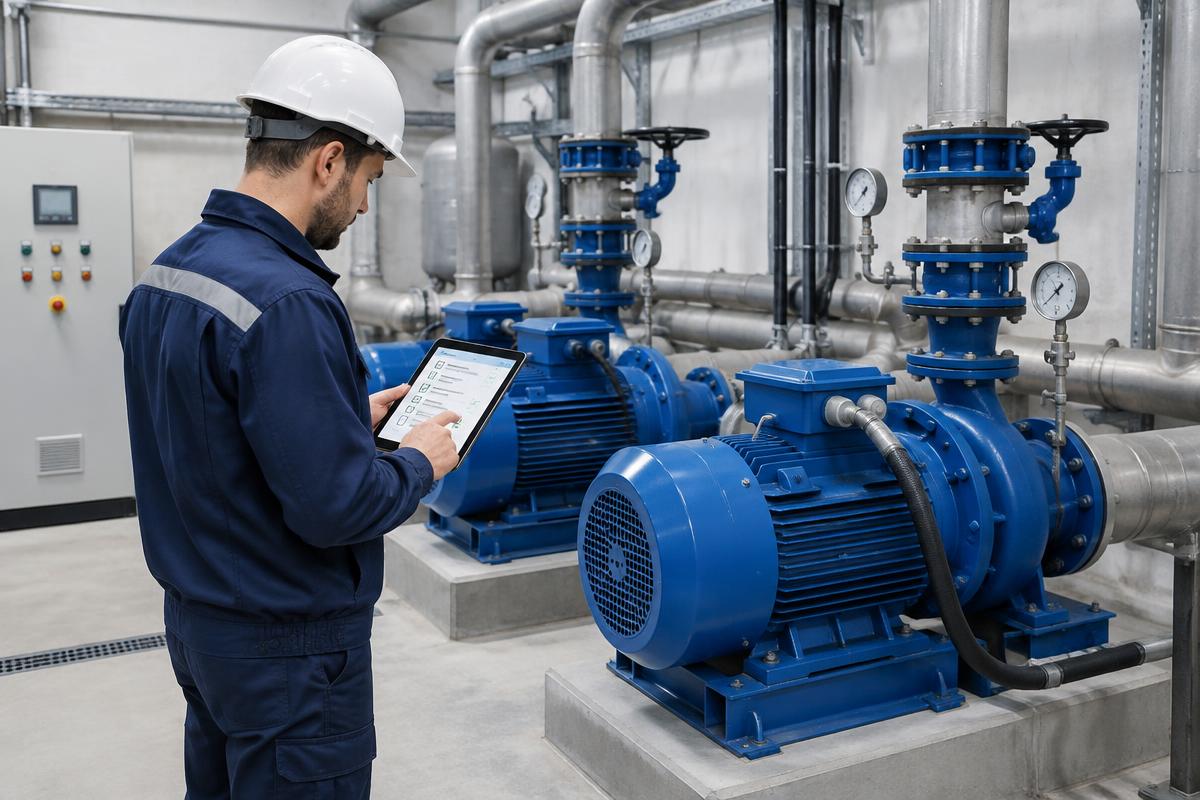
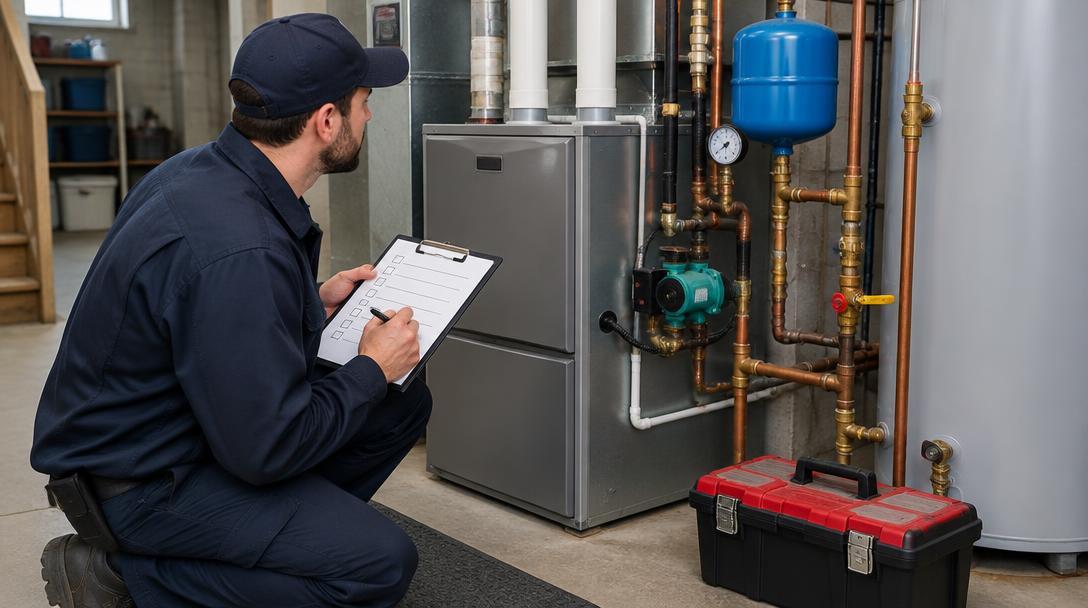
When the boiler doesn't turn on, the cause is not necessarily a serious failure. It may not be receiving a signal from the thermostat, the power supply might be interrupted, or a protection mechanism might have been triggered. Sometimes, however, the inability to start is related to the fuel supply, ignition, or flue gas exhaust, requiring a licensed technician.
The following guide primarily concerns domestic gas boilers and oil installations. The checks are limited to what you can see and operate externally, without tools. Do not open the casing, do not tamper with electrical connections, and do not bypass safety devices. For every operation, the instructions for the specific model take precedence.
1. First, check if there is any danger
Before pressing any button, check for the smell of fuel, smoke, unusual noise, or water near electrical components. In these cases, the goal is not to restart the boiler, but to keep the area safe.
- Gas smell: do not attempt ignition or a reset. Do not touch electrical switches, sockets, or a phone inside the room. Move away and call the network operator's emergency service from outside. If there is an immediate danger, call 112. Close the supply valve only if you recognize it and can do so without danger or delaying your exit.
- Carbon monoxide alarm or symptoms: headache, dizziness, and nausea in multiple people require immediate exit to fresh air and a call to 112. Carbon monoxide has no odor.
- Smoke, strong oil smell, or leakage: stop attempts to start and request a technical inspection.
Do not block ventilation openings and do not remove flue pipes. A boiler that stops due to a protection mechanism should not be forced to operate.
2. Power, thermostat, and proper operation
Does it have electrical power?
If the screen is off, check if there is a general power outage and if the boiler's external switch is in the on position. For a device with a plug, see if it is correctly inserted, without touching wet or worn areas.
Look at the electrical panel without removing covers. If the circuit breaker or the residual current device has tripped, do not perform consecutive resets. The trip may indicate an electrical fault and requires checking by an electrician or the appropriate technician.
Is the thermostat actually requesting heating?
- Temporarily set the desired temperature 2–3 °C above the room temperature.
- Check the batteries, the time, and the weekly schedule of the thermostat.
- Ensure that holiday, frost protection, or standby modes are not active.
- For a wireless thermostat, observe if a communication or command signal appears on the receiver, according to the manual.
- Check if the boiler is in winter mode and not only in domestic hot water production mode.
Wait a few minutes: some automated systems have a restart delay. With outdoor temperature compensation, a heating command may also not be issued when the weather is mild.
In a central heating system of an apartment building, confirm the schedule, the activation of the installation, and any autonomy problem with the building manager. An apartment thermostat does not always directly control the burner.
3. Water pressure and screen indications
In many domestic closed-circuit installations, the cold water pressure is approximately 1–1.5 bar. This is not a universal setting: the required value depends on the height of the installation and its specifications. In open circuits or special configurations, the same rule does not apply.
If the reading is below the permitted limit, the boiler may block for protection. Only top up with water if the manual provides it as a user operation and you are certain about the correct filling mechanism. Otherwise, seek guidance from a technician instead of testing valves.
- Check the pressure with a cold installation and follow the specified filling value.
- After filling, the mechanism must be closed as defined by the manufacturer.
- If the pressure drops again, a leak or other cause needs to be searched for, not continuous refilling.
- If the pressure approaches 3 bar or the safety valve drips, do not add more water. In many domestic installations, this is its rated opening pressure.
Photograph any error code before performing any action. The codes do not have the same meaning for all manufacturers. A low-pressure indicator, for example, is not addressed the same way as an ignition failure.
4. Fuel supply, ignition, and reset
What to check depending on the fuel?
For a gas boiler, look for information regarding a network outage. You can observe the position of a clearly identified user valve according to the instructions, but do not open a supply that has been closed for an unknown reason or by a technician. Do not use a flame to check for leaks and do not interfere with the meter or the regulator.
For an oil installation, check the tank level gauge. If it emptied recently, the new delivery does not guarantee an automatic restart: there may be air in the line or a supply problem. Pump bleeding, filter cleaning, and nozzle intervention belong to the technician.
In a condensing boiler, an obvious obstruction or frozen outdoor part of the condensate drain can also cause a shutdown. Limit yourself to visual inspection from a safe point. Do not dismantle the siphon and do not use a heat gun or boiling water.
When is a reset allowed?
A reset may only be attempted if the manual allows it for the specific indication and there are no odors, leaks, smoke, or other alarming signs. If the boiler blocks again, stop. Repeated attempts, especially in an oil burner, can lead to a dangerous accumulation of unburned fuel.
5. Frequently asked questions
I have hot water but the radiators are not working. Is the boiler to blame?
Not necessarily. In a dual-function boiler, this turns the focus toward the winter setting, the thermostat, and the heating circuit. However, there may be a fault in a diverter valve, circulator, or automation. Hot water operation does not rule out a technical problem.
I hear the boiler, but I don't see a flame indicator. Is it normal?
The fan or the circulator may operate before ignition or after shutdown. Sound alone is not enough for a diagnosis. Check the indicators without opening the device. If a blockage appears or heating does not start, inform the technician.
Should I bleed the radiators to make it start?
Bleeding is not a general solution for a boiler that doesn't turn on. It is mainly needed when there are signs of trapped air, such as a cold upper part of a radiator. Additionally, it reduces circuit pressure and can worsen an already low pressure.
What information should I provide when I call a technician?
Mention the model, fuel, error code, and pressure with a cold installation. Describe if there is hot water, what sounds are heard, and if a power outage, refueling, or work preceded the issue. A photo of the screen and the date of the last maintenance help in preparing for the visit.
6. Conclusion: checking without dangerous tests
If the boiler does not turn on, start with safety and continue with power, thermostat, operating mode, pressure, and visible indicators. These checks can reveal a simple setting or provide useful information to the technician. Repeated blockage, breaker tripping, pressure loss, or ignition failure require professional diagnosis. Maintenance and combustion adjustments are performed by a properly licensed technician, with the prescribed measuring instruments.