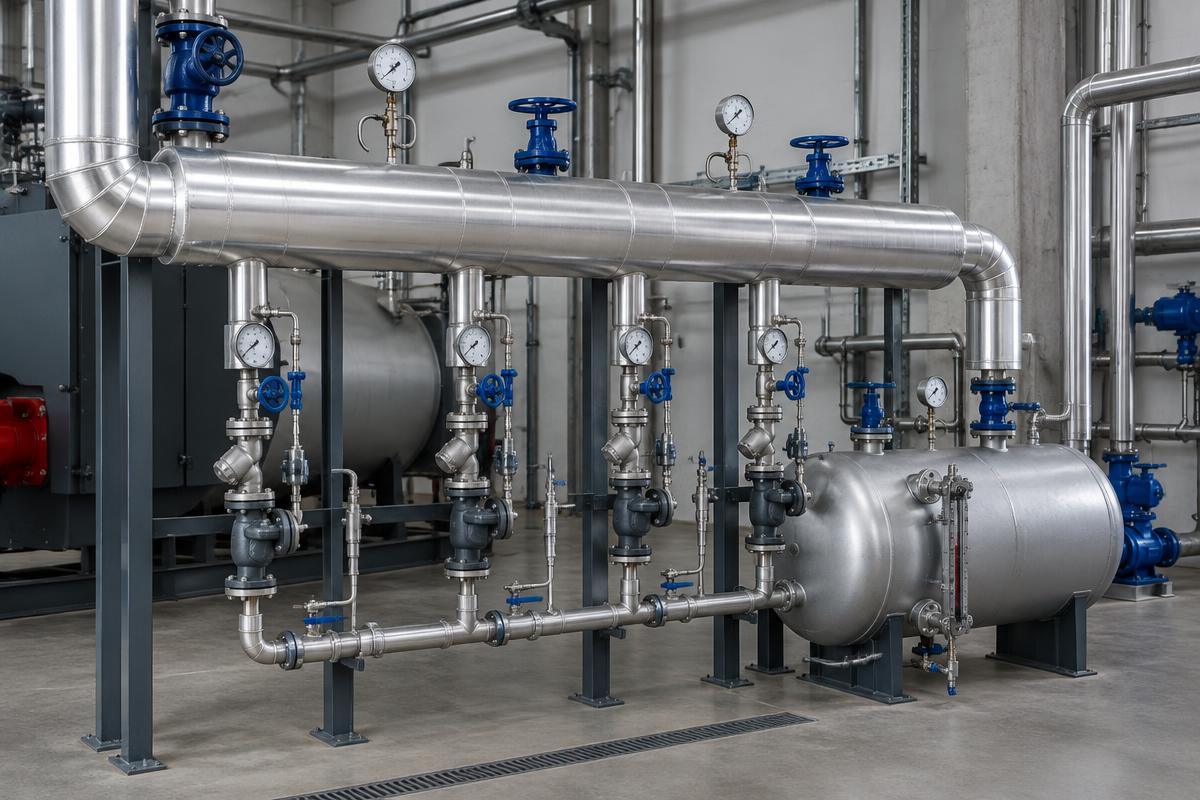
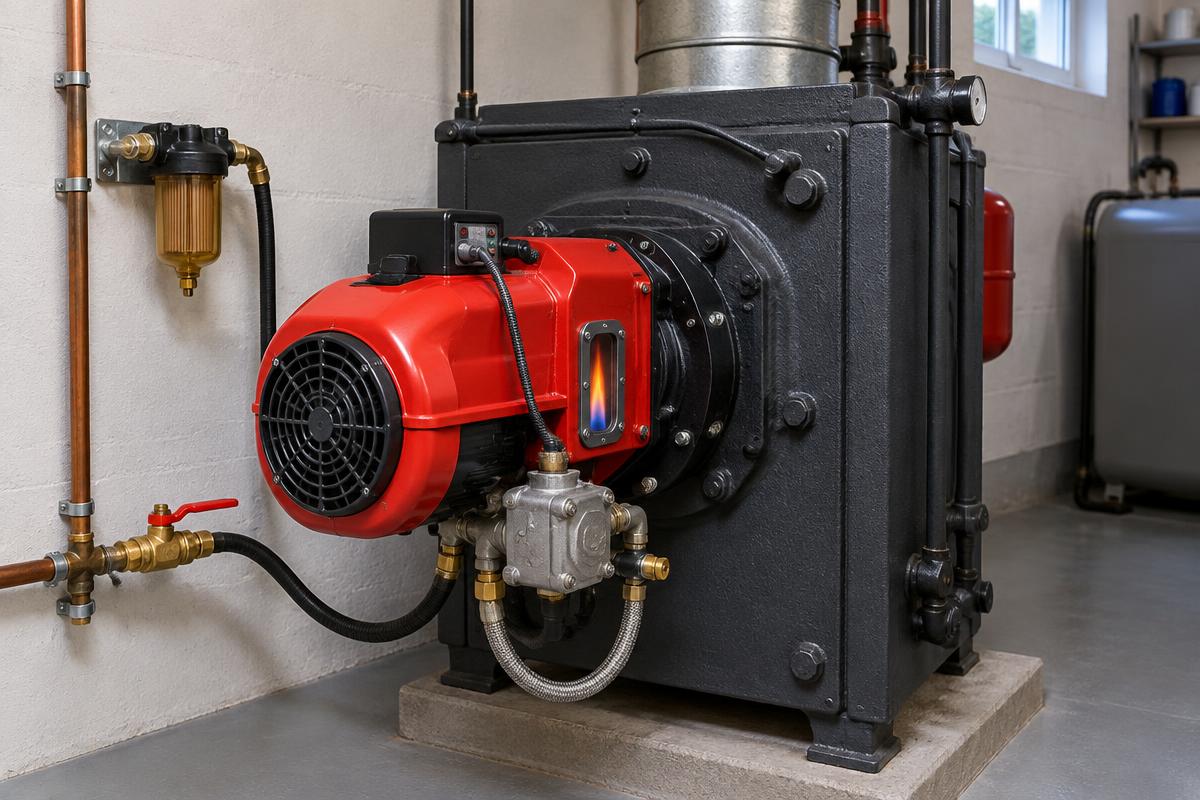
Biomass combustion in an industrial boiler can meet heating, hot water, or steam production needs by utilizing solid fuels such as pellets, wood chips, and suitable agricultural residues. However, it is not a simple replacement for an oil burner. It requires compatible equipment, organized feeding systems, and control of combustion and emissions.
For small businesses, greenhouses, hotels, and large building complexes, the primary interest lies in the cost of useful heat. For residential owners considering a shared system, the same basic principles apply, but with a different scale and installation requirements. The right decision starts with actual needs, not the rated power of the old boiler.
1. Biomass selection: the fuel defines the equipment
Biomass boilers do not burn all organic materials with the same safety and efficiency. The furnace, grate, feeding system, and ash removal system are designed for a specific range of fuels.
- Wood pellets: offer relatively uniform dimensions and low moisture content, typically up to 10% for quality fuel. They facilitate automated feeding.
- Wood chips: require specification of particle size and moisture. Moisture content of 20–35% by mass may be suitable for certain installations, but other boilers accept different ranges.
- Agricultural residues: require special monitoring for ash, chlorine, alkalis, and melting behavior. They are not automatically suitable just because they have a low price.
High moisture content reduces the energy available per kilogram because part of the heat is consumed in evaporating the water. At the same time, it increases the required fuel supply and can make stable combustion difficult.
The supply contract should specify moisture upon receipt, ash content, net calorific value, dimensions, and origin. An appropriate framework of specifications is provided by the EN ISO 17225 series. Painted, treated, or glued woods are not treated as clean woody fuel; they may fall under different waste management and combustion requirements.
2. Boiler, boiler room, and storage requirements
Dimensioning based on actual load
The study examines maximum and minimum demand, operating hours, and required temperature or pressure. An oversized boiler cycles frequently or operates at low output, potentially degrading efficiency and increasing emissions. In hot water networks, a buffer tank can limit fluctuations if properly dimensioned. Steam production requires a separate approach.
Converting a conventional boiler cannot be done simply by installing a biomass burner. The combustion chamber, heat exchange surfaces, cleaning capacity, and the overall safety of the assembly must be checked.
Safety and operational infrastructure
- Adequate ventilation of the boiler room and a chimney calculated for flow rate, temperature, and required draft.
- Overheating protection, appropriate safety devices, and a provision for safe handling of power outages.
- Certified devices against flame flashback into the fuel feed system, according to the manufacturer's design.
- Water return protection from excessively low temperatures, where required, to limit condensation and corrosion.
- Access for fuel delivery, maintenance, and safe ash removal.
The storage area requires protection from water, controlled access, and an assessment of fire and dust explosion risks. Where an explosive atmosphere may occur, relevant ATEX requirements apply. In enclosed pellet storage areas, carbon monoxide can accumulate and oxygen levels may drop. Entry is not permitted without a prescribed safety procedure, atmosphere testing, and appropriately trained personnel.
3. Emissions and licensing in Greece
Biomass is not a zero-emission fuel. Combustion produces particulate matter, nitrogen oxides, and, when not performed correctly, increased carbon monoxide and organic pollutants. Environmental assessment must also consider the origin, transport, processing, and renewal of the raw material.
Requirements in Greece depend on the rated thermal input, the fuel, the activity, and whether the unit is new or existing. There is no single emission limit for every biomass boiler. Indicatively, combustion plants with a rated thermal input from 1 MW to less than 50 MW are examined under the framework for medium combustion plants, subject to established exemptions.
Before ordering equipment, the responsible engineer checks environmental terms, required approvals, fire safety, and measurement obligations. A cyclone filter primarily captures coarser particles and is not always sufficient. A bag filter or electrostatic precipitator may be required, with appropriate protection against sparks and high temperatures.
4. Economic and energy benefits without overestimation
The key economic metric is the cost per useful kilowatt-hour, not the price per ton.
Fuel cost per kWh of heat = fuel price in €/kg ÷ (net calorific value in kWh/kg × efficiency).
As a purely calculation-based example, not a current market offer, we assume pellets at 300 €/ton, a calorific value of 4.8 kWh/kg, and 85% efficiency. The fuel cost is approximately 0.074 €/kWh of useful heat, i.e., 74 €/MWh.
To this result, one must add electricity for fans and augers, labor, maintenance, ash management, and financing. The efficiency assumption must refer to realistic operation and not just the best laboratory measurement.
- Potential reduction in operating costs: when there is a competitive and stable supply of suitable fuel.
- Diversification of energy sources: with less reliance on a single fuel or supplier.
- Utilization of local resources: provided that quality, sustainable origin, and legal use are ensured.
Payback requires a comparison of total investments and annual net savings. Low operating hours, an expensive storage facility, or demanding pollution control can significantly limit the benefit.
5. Operation and maintenance that maintain efficiency
Upon commissioning, combustion tests at representative loads and recording of baseline settings are required. Monitoring oxygen and carbon monoxide in the flue gas helps control combustion. More air does not always mean better operation: excess air increases flue gas losses.
- Check alarms, fuel supply, temperatures, and unusual noises daily.
- Clean the heat exchanger, grate, and flues according to buildup and manufacturer instructions.
- Inspect augers, bearings, seals, refractories, and dust removal systems.
- Maintain a log of fuel usage, heat produced, breakdowns, and maintenance.
Ash is collected after cooling using a safe procedure and removed according to its classification. It is not automatically suitable for fertilization. Any work on augers and moving parts requires isolation and lockout/tagout of energy sources, not just shutting down the panel.
Frequently Asked Questions
Can a pellet boiler burn olive kernel wood chips?
Only if the manufacturer explicitly specifies it for the specific model and fuel quality. Otherwise, there is a risk of deposits, corrosion, feeding problems, and exceeding emission limits.
How much fuel does a 1 MW boiler need?
For a useful output of 1 MW, 85% efficiency, and fuel at 4.8 kWh/kg, approximately 245 kg/h are required at full load. Actual consumption varies with moisture, load, and efficiency.
Is a backup boiler needed?
In critical production processes, it is usually useful. The choice depends on the allowed downtime, maintenance, and security of fuel supply.
Is it a suitable solution for an apartment building?
It can be, provided there is space, delivery access, an appropriate chimney, and responsible management. Evaluation is based on the requirements of the specific building installation.
Conclusion: Biomass pays off when the boiler, fuel, and thermal demand are a good match. Technical study, reliable supply, emission control, and systematic maintenance are the prerequisites for safe operation and a tangible economic benefit.