
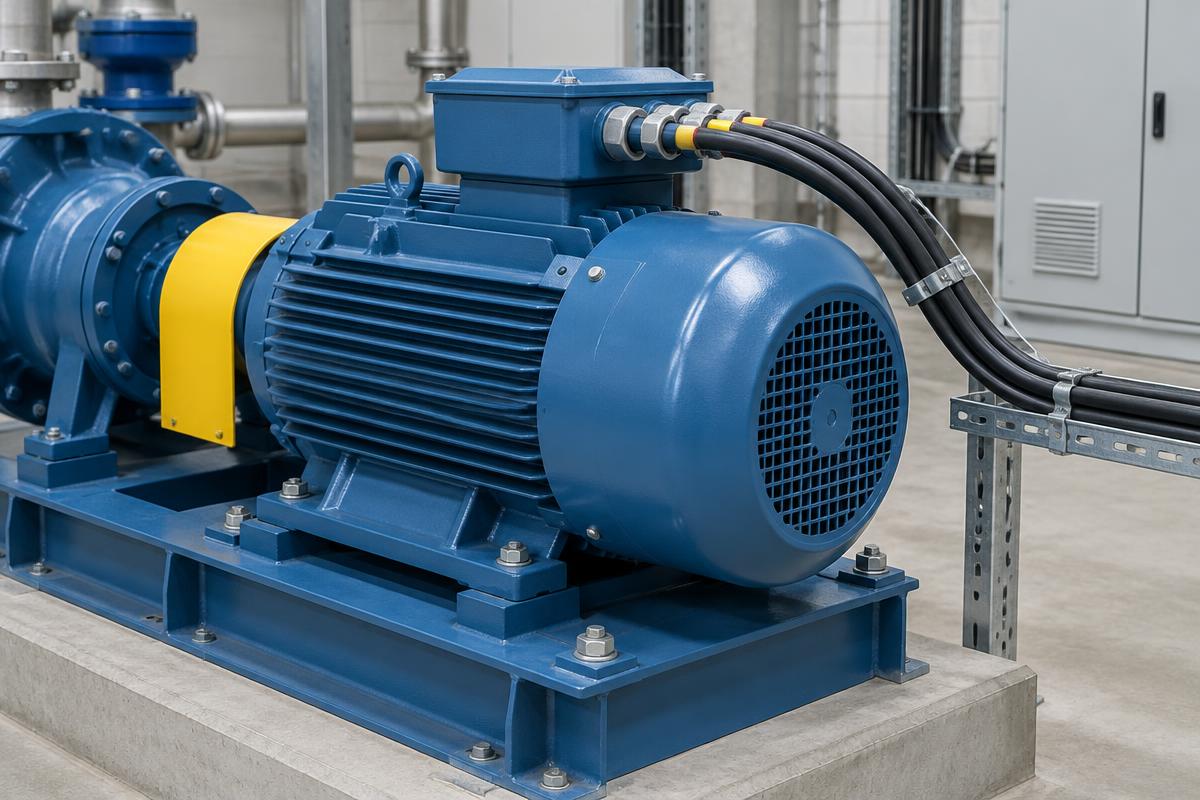
Introduction to Electric Motor Technology
Electric motors are the heart of almost every mechanical installation in a modern home or industry. From heating circulator pumps and water pressure boosters to burners and air conditioning units, motors convert electrical energy into mechanical work. As technicians, we are often called upon to diagnose why a "motor has burned out," a phrase that masks specific physical phenomena and technical oversights.
How Does an Electric Motor Work?
The basic principle of operation is based on electromagnetism, specifically the Lorentz force law. In the most common motors encountered (squirrel-cage induction motors), the process is as follows:
Stator and Windings
The stator is the stationary part of the motor that carries the copper coils (windings). When alternating current flows through these coils, a rotating magnetic field is created.
Rotor
The rotor is located inside and is influenced by the magnetic field. Due to induction, currents are generated in the rotor, which interact with the stator field, causing the shaft to rotate.
- Single-phase motors: Require a start capacitor to create the necessary phase shift.
- Three-phase motors: Self-starting, with higher torque and better efficiency.
Why Do Electric Motors "Burn Out"? The Main Causes
When we say a motor has burned out, we usually mean the destruction of the insulation on the copper windings due to excessive heat. The causes are divided into electrical and mechanical.
1. Overload
This is the most common cause. If a pump tries to move fluid with a higher density than specified, or if a valve is closed and the motor is struggling, the current (Amperes) rises above nominal limits. The heat generated degrades the varnish of the windings, causing a short circuit.
2. Phase Loss (in Three-Phase motors)
If one of the three phases is cut (e.g., due to a blown fuse in the panel), the motor will attempt to continue operating with the remaining two. This leads to an instantaneous increase in current intensity in the remaining phases and destruction of the winding within minutes.
3. Voltage Drop
In the Greek grid, especially during summer, voltage drops are frequent. If the voltage drops (e.g., from 230V to 190V), the motor must draw more current to produce the same work, resulting in overheating.
4. Bearing Problems
If bearings wear out and become "tight," friction increases. The shaft rotates with difficulty, slips more than normal, and the motor draws excess current until it burns out.
Signs That the Motor Has a Problem
Before total failure, there are signs that should alert the owner or maintainer:
- Unusual noise: Whistling (bearings) or humming (phase/capacitor problem).
- Excessive casing temperature: If you cannot touch the casing for more than 2 seconds, the motor is overheating.
- Burning smell: The characteristic odor of burnt varnish means damage has already begun.
- Frequent tripping of the fuse or thermal relay: Do not reset the breaker without investigation; the protection trips for a reason.
Protection and Preventive Maintenance
To ensure the longevity of an electric motor, the installation must include:
- Overload Relay: It must be set exactly to the nominal current (In) of the motor.
- Voltage/Phase Monitor: Interrupts the supply if a phase is lost or if the voltage goes outside established limits.
- Proper ventilation: Do not cover the fan at the rear of the motor.
- Insulation Resistance Testing (Megger): Periodic inspection of insulation condition by a licensed electrician.
Frequently Asked Questions (FAQ)
1. Can a burned-out motor be repaired?
Yes, through a process called "rewinding." The technician removes the burned copper and installs new wire. It is a cost-effective solution for large motors, but for small ones (under 1-2 HP), replacement is often more economical.
2. Why does my single-phase motor hum but not start?
Most of the time, the start capacitor is at fault. If the capacitor loses its capacitance, the motor lacks the required torque to start, and if left in this state for a while, it will burn out.
3. How much does humidity play a role?
A decisive one. Humidity erodes the insulation and can cause a short circuit to the ground (frame). In humid environments, motors with an IP55 or higher protection rating are required.
Conclusion
Understanding the operation of electric motors and the causes of failure is key to avoiding costly repairs. Choosing the correct size, properly setting protective devices, and regular cleaning ensure that your machine will operate smoothly for many years.