
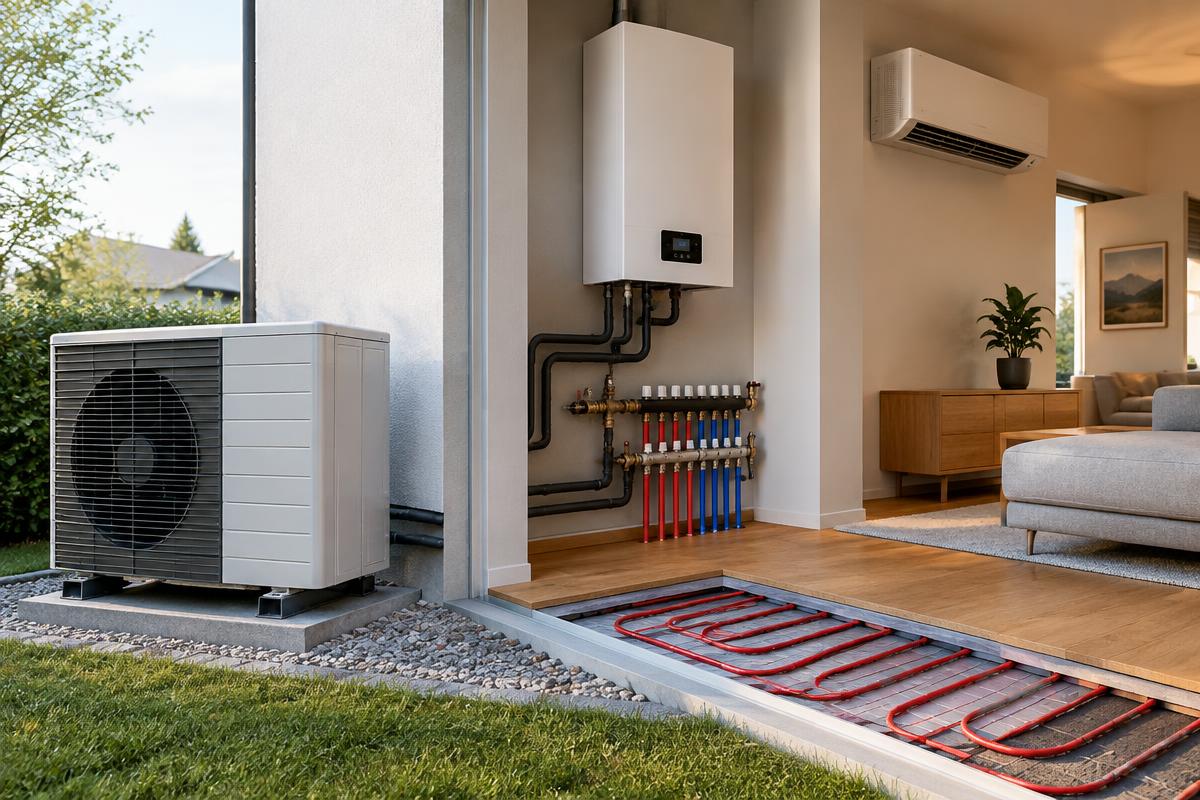
Introduction to Fan Coil Systems
The need for energy upgrades in Greek homes has brought the heat pump to the forefront as the most efficient solution. However, the performance of a heat pump directly depends on the terminal units we use. This is where Fan Coils (Hydronic Terminal Units) come in. Unlike classic radiators, fan coils are designed to operate at low water temperatures, while also offering air conditioning capabilities during the summer.
In this article, we will analyze how this combined technology offers year-round comfort, what you need to look for during installation, and why it is the top choice for modern renovations and new builds.
How Fan Coils Work with Heat Pumps
Their operation is based on a simple yet effective principle: water circulates from the heat pump to the fan coil unit (heat exchanger). A built-in fan draws in the room air, passes it through the exchanger, and returns it to the space at the desired temperature.
The advantages of low temperature
While old radiator panels require water at 65-75°C to perform, fan coils perform excellently with water at 35-45°C. This allows the heat pump to operate with a much higher efficiency (COP), drastically reducing electricity bills.
- Heating: Rapid space heating through forced air circulation.
- Cooling: By circulating cold water (7-12°C), the system functions as an air conditioner, also providing dehumidification.
- Response: Much faster temperature changes compared to underfloor heating.
Fan Coil Types and Placement Selection
Choosing the right type depends on the home's layout and aesthetic requirements. The following types are dominant in the Greek market:
- Floor/Visible Fan Coils: They look like slim radiators and are placed low on the wall. They are ideal for replacing old radiators.
- Ceiling Fan Coils (Cassettes): Installed in false ceilings and ideal for large open spaces or offices.
- Concealed Fan Coils (Ducted): Installed inside a false ceiling with air distributed through grilles, offering the most aesthetically pleasing result.
- Wall-Mounted Fan Coils: They look like classic split air conditioners (high wall).
Technical Installation and Maintenance Details
For a fan coil system to work properly, a simple pipe connection is not enough. As technicians, we pay particular attention to the following:
Drainage Network
Because fan coils produce condensate during cooling, a drainage network with proper slopes is necessary for each unit. This is often the biggest obstacle in renovations of old apartments.
Pipe Insulation
Pipes carrying water must be covered with special thermal insulation (Armaflex or equivalent) at least 9-13mm thick. Without proper insulation, condensation will form on the pipes during summer, causing damage to walls and ceilings.
Water Flow Regulation
The use of 3-way valves is mandatory. They allow water to bypass the unit once the target temperature is reached, maintaining constant pressure and circulation in the rest of the network.
Cost and Performance Comparison
Although the initial purchase cost of a fan coil (approx. €350 - €700 per unit plus installation) is higher than a simple radiator panel, the payback comes through energy savings. Compared to classic air conditioners (multi split), the fan coil system offers a "softer" air quality, as water as a transport medium does not dry out the atmosphere to the same extent and maintains more stable conditions.
Frequently Asked Questions (FAQ)
1. Can I use fan coils with my old oil boiler?
Yes, it is technically possible, but not recommended. Fan coils will output excessive heat with the boiler's 70°C water and you will not have cooling in the summer, losing the investment's primary advantage.
2. How much noise do they make?
Modern fan coils with DC Inverter motors are extremely quiet (under 25-30 dB at low speed), making them suitable even for bedrooms.
3. What maintenance do they need?
Air filters need to be cleaned every 2-3 months (just like air conditioners), and an annual check on the exchanger and condensate tray by a specialized technician is required.
4. Can I combine underfloor heating and fan coils?
It is the ideal combination. The underfloor system handles the basic heating load, and the fan coils are used for summer cooling or for quickly boosting heating in winter.
Conclusion
Fan coils combined with a heat pump represent the most comprehensive solution for the Greek climate. They offer economical heating, effective cooling, and upgrade the property's value. Proper design by an engineer and diligent installation by an experienced technician are the keys to a system that will operate trouble-free for decades.