The invisible threat in industrial heating and cooling networks
In an industrial network, water is not just a medium for energy transport, but the system's "blood." However, there is an invisible enemy undermining the performance and integrity of the equipment: trapped air. Many technicians focus on pressure or chemical water treatment, overlooking the fact that air bubbles and dissolved gases (oxygen, nitrogen) cause mechanical damage and oxidation.
The presence of air in closed circuits affects more than just flow. It creates noise, reduces thermal efficiency, and, most importantly, causes irreparable damage to pumps and heat exchangers. The solution to this problem is the installation of properly sized deaerators.
How air destroys pumps: The cavitation phenomenon
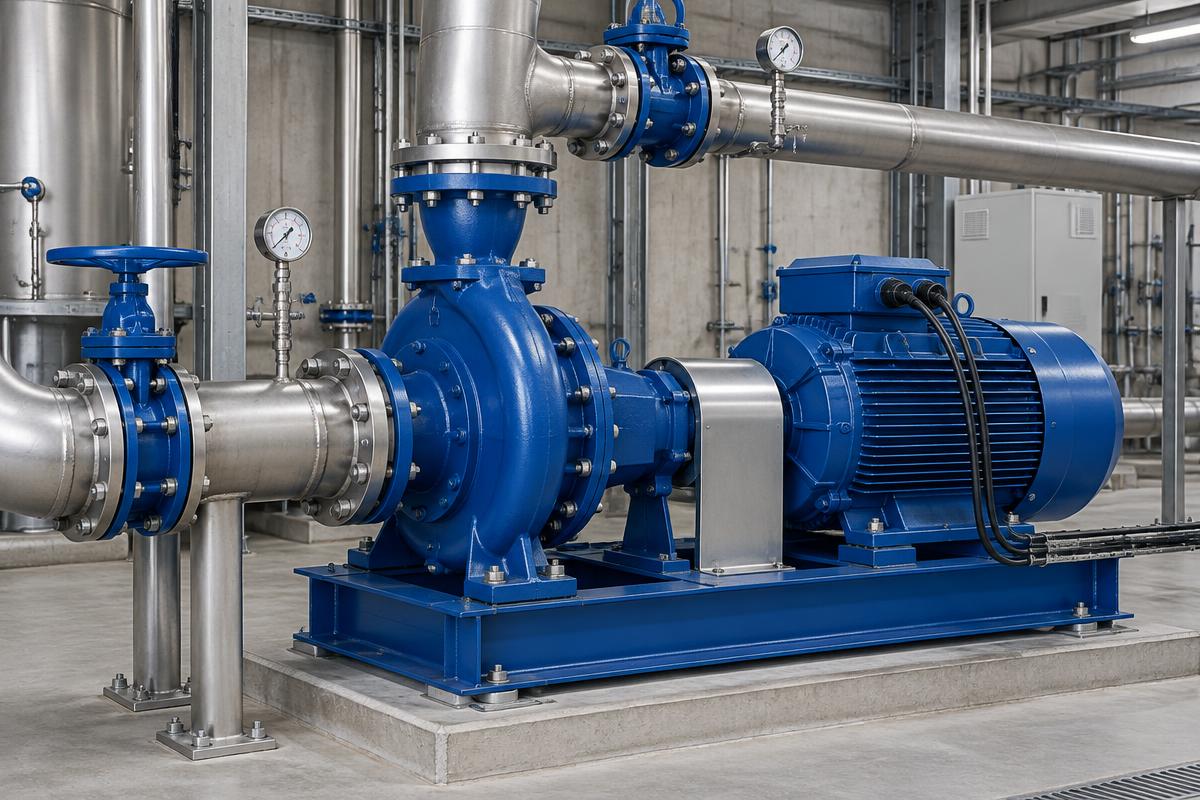
Pumps are the heart of the network. When air bubbles enter a pump, the result is often catastrophic. The most frequent damage relates to cavitation, although trapped air causes other complications as well.
- Impeller erosion: Air bubbles collapse with immense pressure against the impeller surfaces, causing micro-craters that gradually lead to material failure.
- Mechanical seal destruction: Air deprives the seals of the lubrication and cooling provided by the water, leading to overheating and leakage.
- Head reduction: The presence of air reduces the density of the transported fluid, resulting in the pump being unable to deliver the required pressure.
The effect of air on heat exchangers
Heat exchangers (plate or shell-and-tube) rely on full contact between water and metal surfaces to transfer energy. Air acts as an insulating material, dramatically reducing the heat transfer coefficient.
Reduction of efficiency and laminar flow
When air accumulates on the plates of an exchanger, it creates "pockets" that prevent water from coming into contact with the metal. This forces the system to operate at higher temperatures to meet the load, increasing fuel or electricity consumption.
Oxidation and corrosion
Dissolved oxygen in the water is the primary culprit for corrosion. At high temperatures, the chemical reaction accelerates, leading to pinholes in plates or tubes. The resulting rust (sludge/magnetite) then settles in the exchanger, creating deposits that restrict the cross-section and increase pressure drop.
Types of deaerators and their applications
In industry, simple automatic air vents are insufficient. We need devices that can remove even micro-bubbles or dissolved gases.
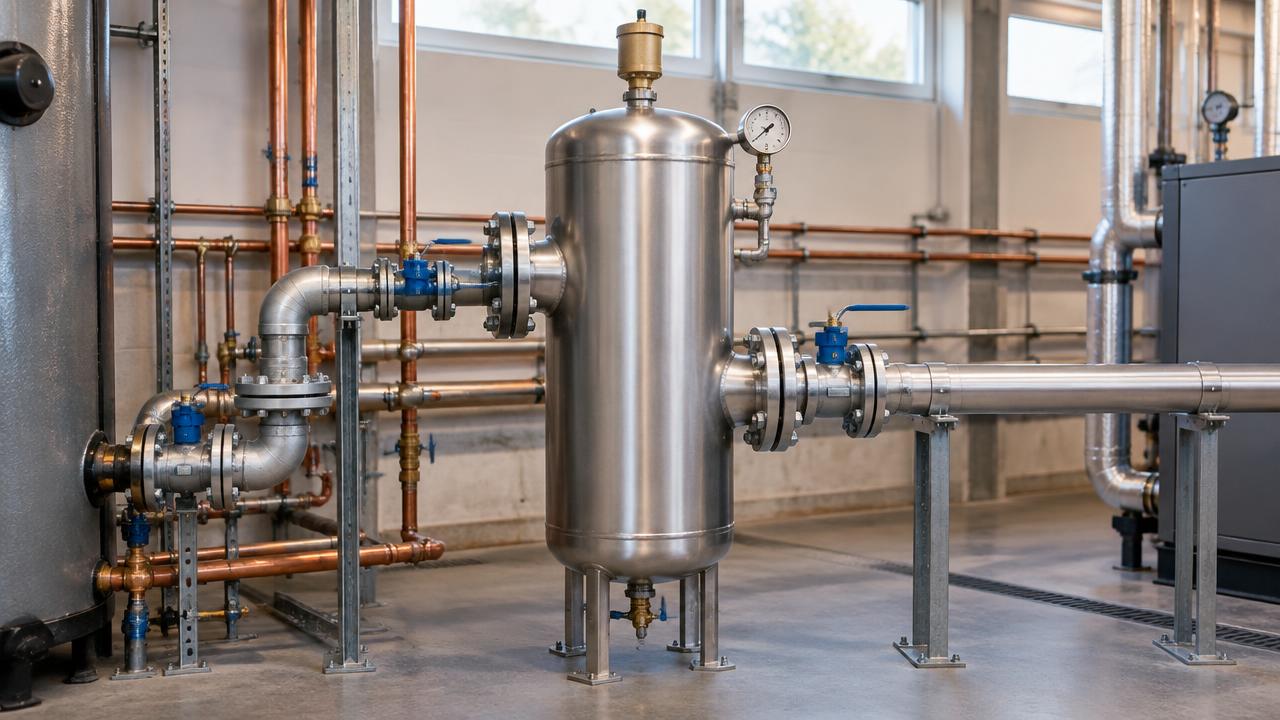
- Micro-bubble Deaerators: Installed in the flow, they use special mesh (PALL rings) to slow down water velocity, allowing micro-bubbles to coalesce and rise toward the outlet.
- Vacuum Deaerators: These are the most advanced solution. They work by spraying part of the water into a vacuum vessel. Under vacuum conditions, gas solubility drops to zero, and air is completely eliminated. They are essential in networks with low temperatures or great heights.
- Thermal Deaerators: Used mainly in steam networks, where feed water is heated near the boiling point to expel oxygen before entering the boiler.
Placement strategy for maximum protection
The installation location of a deaerator is critical. According to the laws of physics (Henry's Law), gas solubility decreases as temperature increases and pressure decreases. Therefore:
- In heating systems, the deaerator should be installed on the supply line, immediately after the boiler or heat exchanger, where the temperature is highest.
- In cooling systems, it is installed on the return line, before the chiller, as the water is at its highest cycle temperature there.
- They must always be placed before pumps to protect them from cavitation.
Frequently Asked Questions (FAQ)
1. Why are simple air vents on radiators or columns not enough?
Simple air vents only remove trapped air at the highest points of the network. They cannot remove micro-bubbles carried by water velocity or the dissolved oxygen that causes corrosion.
2. How do I know if my network needs a deaerator?
Symptoms such as noise in the pipes (like running water), the need for frequent water top-ups, a drop in heating performance, and frequent damage to pump seals are clear indicators.
3. How much does an industrial vacuum deaerator cost?
Prices vary depending on the network flow rate. For a medium industrial system, prices start from €2,500 and can exceed €8,000. However, the investment is quickly recouped through energy savings (up to 10%) and reduced maintenance costs.
4. Does a deaerator require maintenance?
Yes, mainly cleaning the internal mesh (for micro-bubble deaerators) and checking the vacuum pump and sensors (for vacuum deaerators) once a year.
Conclusion
Air is the "silent killer" of industrial facilities. Investing in a quality deaerator is not a luxury, but a technical necessity. By protecting your pumps and heat exchangers, you ensure smooth production operation, reduce your energy footprint, and avoid costly emergency repairs that always happen at the worst possible time.