The importance of water quality in industrial networks
In the Greek industrial sector and large building complexes, water is the primary heat transfer medium. However, network water in most regions of Greece is characterized as "hard," containing high concentrations of calcium and magnesium salts. When this water is heated within a boiler or passes through a heat exchanger, the salts precipitate and form deposits (scale).
Scale formation is not merely an aesthetic issue. It is a "silent killer" of efficiency. Even a 1-millimeter layer of scale can reduce thermal efficiency by 10-12%, drastically increasing fuel consumption (oil, natural gas) and stressing the equipment's metal components.
How industrial resin softening works
The most widespread and reliable method for industrial protection is the ion-exchange resin softener. The process is based on a simple but effective chemical principle:
- Ion exchange: Hard water passes through a column containing synthetic resin beads. The resin is charged with sodium ions.
- Scale binding: Calcium and magnesium ions are bound by the resin, which in turn releases an equivalent amount of sodium into the water.
- Regeneration: When the resin becomes saturated, the system automatically performs "regeneration" using a brine solution (salt tablets), restoring the material's capacity.
Types of softeners
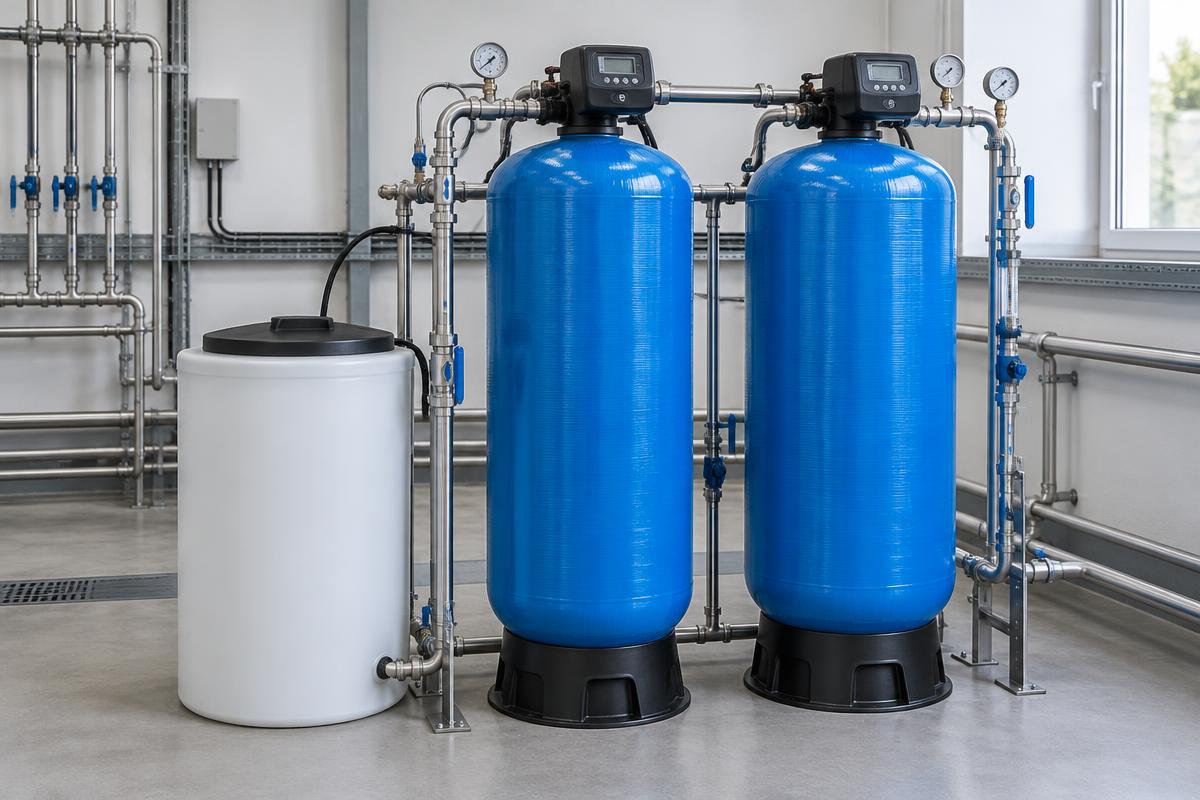
In industrial applications, we typically use Twin softeners. This allows for 24/7 supply of soft water, as when one column is in a regeneration phase, the second is automatically put into operation.
Protecting heat exchangers and boilers
Plate heat exchangers are particularly sensitive due to their narrow channels. Accumulation of scale leads to:
- Pressure drop: The circulation pump must work harder, consuming more electricity.
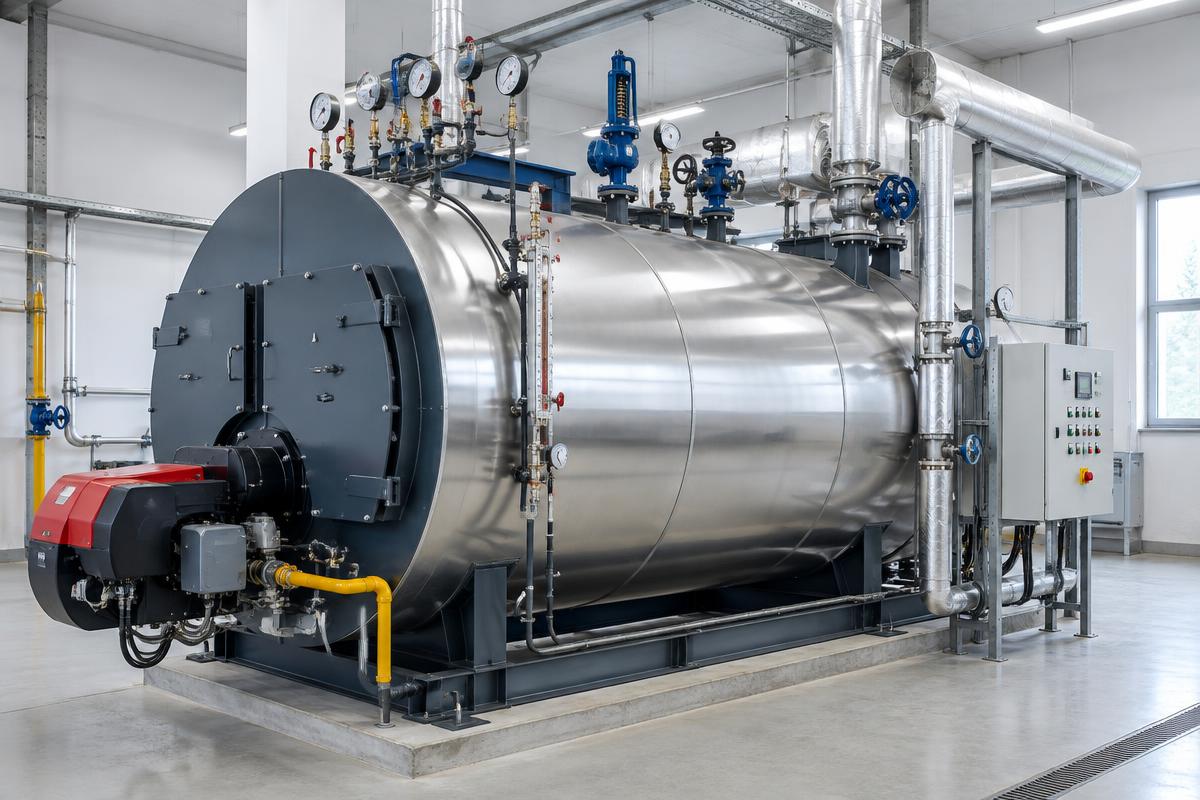
- Local overheating: In boilers, scale acts as an insulating material. The heat from the flame is not transferred to the water, resulting in the boiler metal overheating, leading to cracks or tube failure.
- Corrosion: Under-deposit corrosion often develops beneath layers of scale, which perforates the walls.
Supplementary methods: Reverse Osmosis and Chemical Treatment
Although a softener removes hardness, it does not remove Total Dissolved Solids (TDS). In high-pressure steam boilers, the use of Reverse Osmosis is often required. This method removes 98% of salts and minerals, providing water of exceptional purity.
Chemical Dosing
Even with soft water, remaining dissolved oxygen can cause oxidation. Therefore, we install dosing pumps that inject specialized chemicals (film-forming amines or oxygen scavengers) which create a protective film inside the piping and scavenge free oxygen.
System maintenance and monitoring
A softening system is not "set and forget." To guarantee equipment protection, the following are required:
- Hardness testing: Daily or weekly measurement with titration kits to ensure outlet water is 0-2 French degrees (°f).
- Salt replenishment: Use only high-purity salt tablets to avoid sludge in the brine tank.
- Annual service: Cleaning of control heads, checking of nozzles, and resin disinfection.
Frequently Asked Questions (FAQ)
1. How often should I change the resin in the softener?
Under normal conditions and with proper maintenance, industrial resin has a lifespan of 7 to 10 years. The presence of chlorine in network water can reduce this duration, which is why the use of an activated carbon filter before the softener is recommended.
2. Why do I still have scale even though the softener is working?
This may be due to incorrect programming of the head, salt bridging in the tank, or wear of the valve's rubber seals, which allows hard water to bypass into the supply line.
3. What are the operating costs?
The main cost is the regeneration salt and the water discharged during backwashing. For an average industrial boiler, this cost is negligible compared to the fuel savings provided by clean heat exchange surfaces.
4. Is a softener necessary if I have a stainless steel boiler?
Yes. Although stainless steel is corrosion-resistant, it is extremely sensitive to scale deposits and especially to chlorides, which can cause pitting corrosion.
Conclusion
Industrial softening is not a luxury, but a structural component of every modern thermal system. Investing in a properly sized softener and regular monitoring of water hardness ensures equipment longevity, stable performance, and significant savings for the company's resources. Always consult a specialized water treatment technician to study your specific installation.