
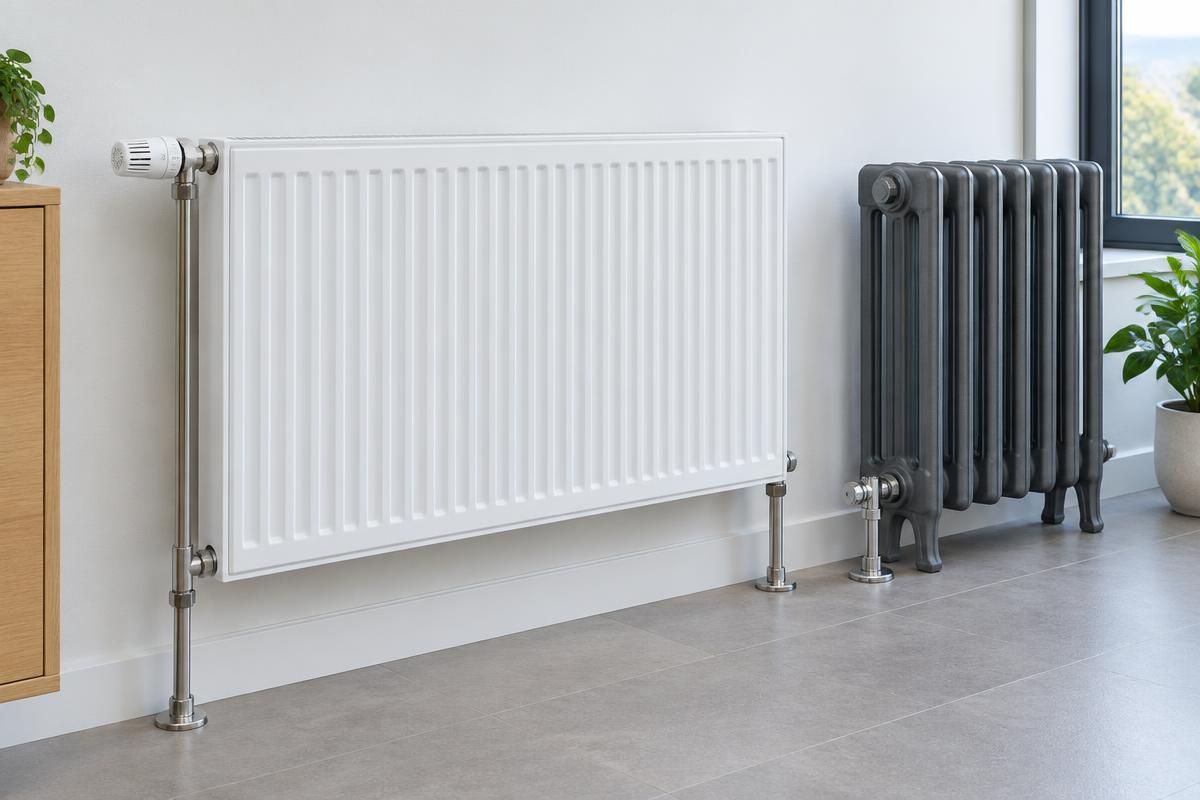
Introduction to upgrading heating radiators
Replacing old radiators is not just an aesthetic intervention. It is a critical technical task that can dramatically improve the thermal comfort of your home and reduce the operating costs of your boiler or heat pump. Whether dealing with old cast-iron radiators (sections) or older types of corroded panels, selecting the right new radiators requires attention to detail.
1. Calculating heating requirements: Don't rely on the old radiator
The most common mistake often made in the Greek market is replacing a radiator with one of the same dimensions without checking its output. Modern panel radiators (types 11, 22, 33) have a different output per square centimeter compared to old sectional radiators.
How do we calculate calories (thermal output)?
- Heat Loss: An experienced technician must calculate the volume of the room (m³), the quality of insulation, and the orientation (e.g., a north-facing room).
- Flow Temperature: If you have a gas or oil boiler, the flow is usually at 70-80°C. However, if you plan to install a heat pump, the radiators must be oversized to perform well at lower temperatures (55°C).
- Radiator Type: A type 22 radiator (two plates, two convectors) is the most common choice in Greece, offering a balance between depth and efficiency.
2. Radiator types and dimensions
Panel radiators are distinguished by two numbers. The first refers to the plates and the second to the internal convectors (the fins through which air circulates).
- Type 11 (K1): One plate, one convector. Very slim, ideal for narrow corridors.
- Type 22 (PK2): Two plates, two convectors. The market "standard" with excellent efficiency.
- Type 33 (PK3): Three plates, three convectors. For high requirements in rooms with limited wall length.
Regarding height, the most common heights in Greece are 400mm, 600mm, and 900mm. The length starts from 400mm and can reach up to 3000mm.
3. The importance of proper connection
The performance of a radiator can decrease by up to 30% if the piping connection is not done correctly. There are three basic connection methods:
- Side Entry: The inlet (hot) is at the top and the outlet (return) is at the bottom, on the same side. Ideal for short radiators.
- Diagonal Connection: The inlet is at the top left and the outlet at the bottom right (or vice versa). Mandatory for radiators with a length of over 1.20m to ensure the entire surface is heated evenly.
- Bottom Entry: Common in newly built homes with underfloor piping distribution (multilayer or PEX-Al-PEX).
4. Selecting valves and accessories
During the replacement, do not forget to replace the valves. Old valves often leak after years of disuse.
Thermostatic Radiator Valves (TRVs)
This is the most suitable time to install thermostatic heads. They allow for independent temperature regulation in each room. For example, you can have 22°C in the living room and 18°C in the bedrooms, offering fuel savings of up to 20%.
5. Technical installation details
Before installing the new radiator, the following must be taken into account:
- Support: Ensure the wall can withstand the weight of the radiator, especially if it is drywall (special reinforcements or floor stands are required).
- Clearances: The radiator must be at least 10-15cm from the floor and 5cm from the wall to ensure proper air circulation (convection phenomenon).
- Bleeding: Every new radiator must have a manual or automatic air vent at its highest point.
Frequently Asked Questions (FAQ)
1. Can I replace a sectional radiator with a panel one myself?
Although it looks simple, the center-to-center distances of the pipes rarely match. It requires modification of the pipes using special tools (pipe bender, expander) or fittings, a job that requires a technician.
2. Why does my new radiator make noise?
It is usually due to trapped air or incorrect valve flow direction (reversed supply and return). A proper bleeding usually solves the problem.
3. Do I have to drain the entire heating network?
Yes, to change radiators in a detached house or autonomous heating system, the circuit must be emptied. In central heating systems for apartment buildings, the work must be done in the summer or by using a special pipe freezing device.
4. What is the lifespan of a modern panel radiator?
With good water quality and the use of anti-corrosion fluids in the circuit, a high-quality steel radiator can last over 20-25 years.
Conclusion
Changing radiators is an investment in your home's comfort. By choosing the right size based on thermal output, the appropriate connection type for uniform heating, and adding thermostatic heads, you transform your heating system into a modern and efficient network. Always consult a licensed heating technician for the final study and installation.