The air compressor is a useful tool in the home workshop, professional garage, and for many technical installation or maintenance tasks. However, the right choice is not based solely on the tank capacity or the motor power. You need to know how much air your tools require, what pressure they operate at, and for how long they are used continuously.
Similarly, preventive maintenance is not limited to oil changes. Removing condensate, checking for leaks, and ensuring proper cooling affect both reliability and safety. Below, we focus mainly on small to medium-sized compressed air compressors, not the refrigerant compressors found in a heat pump circuit.
1. Output and pressure: basic selection criteria
Pressure is usually measured in bar and output (flow rate) in liters per minute, or L/min. Many air tools operate at approximately 6–7 bar, while many small air compressors have a maximum pressure of 8–10 bar. The requirements of the tool and the equipment's limitations always take precedence.
Pay attention to the distinction between intake capacity and actual delivered output. The former is not the air that the tool finally receives. Look for the delivered output, often indicated as FAD (Free Air Delivery), at the specific operating pressure, rather than just a large number in the commercial description.
- For tire inflation or occasional nail gun use, average consumption is usually limited because operation is intermittent.
- For a paint spray gun, pay special attention to the output: many models require about 200–400 L/min or more, depending on the type.
- For an impact wrench, distinguish between average consumption and the consumption while the trigger is held continuously.
- For simultaneous use of tools, calculate the sum of the actual simultaneous requirements.
As an initial design margin, you can use approximately 20–30% above the calculated demand. This does not replace checking the allowable duty cycle. For example, a tool with a continuous consumption of 250 L/min requires not only sufficient delivered output but also a compressor suitable for that duration of operation.
2. Air tank, technology, and power supply
What a larger tank offers
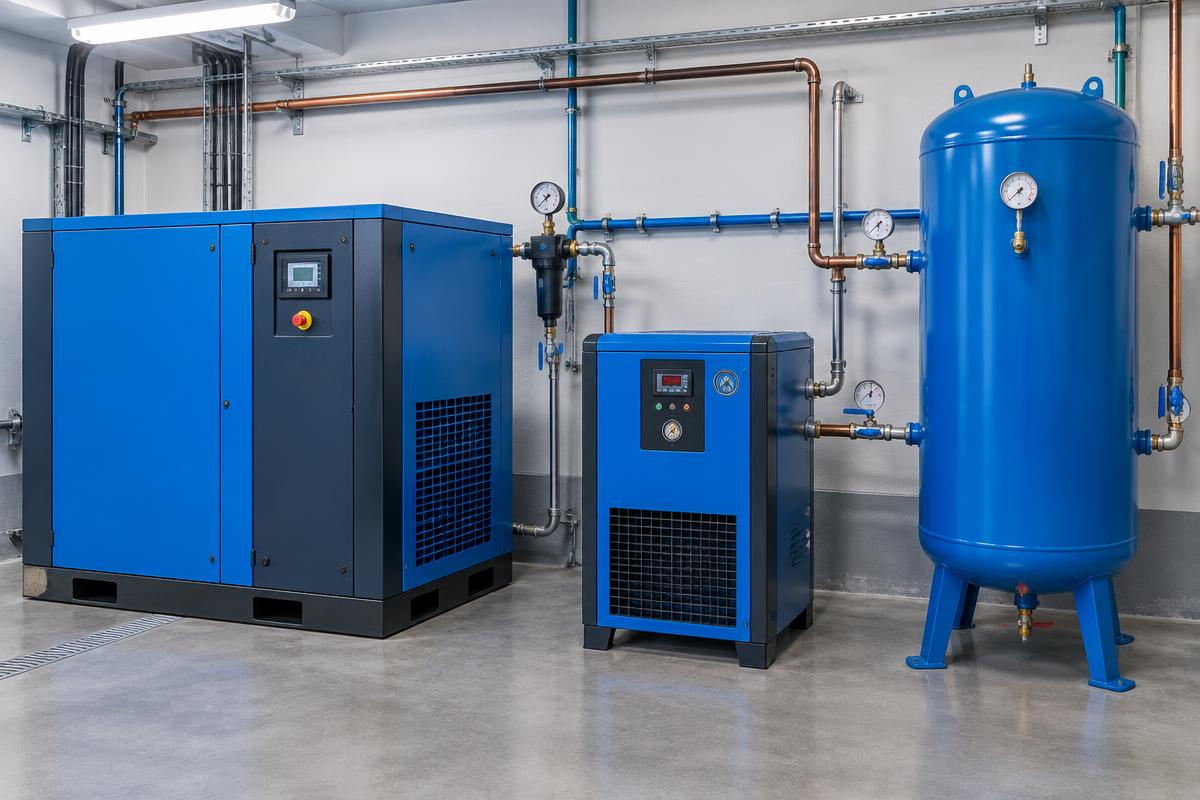
The air tank (receiver) stores compressed air, handles short consumption spikes, and can reduce frequent start-ups. It does not increase the pump's production capacity. A 100 L tank with low output will also empty when the tool consumes more air than is being produced.
As a guideline, 24–50 L tanks often suffice for occasional home tasks, while 50–100 L offer greater flexibility in a small workshop. This is a starting point for selection, not a guarantee of suitability. Consider space, weight, wheels, and access to the drain valve.
Oil-lubricated or oil-free?
A lubricated piston compressor requires checking and changing the lubricant. The oil-free type eliminates these tasks for the compression unit, but it still requires filter cleaning, draining, and inspections. The label "oil-free" does not mean that the produced air is automatically suitable for breathing, food, or medical use.
For long professional hours, a screw compressor or other continuous-duty equipment may be more suitable. Also, check the power supply: many small compressors run on 230 V, while larger assemblies often require a 400 V three-phase supply. The starting current, electrical line, and protections must be evaluated by an electrician. Avoid long, thin extension cords.
3. Installation and compressed air quality
Place the machine on a stable surface with free ventilation space as per the manual. A closed cabinet may temporarily reduce noise disturbance but can cause overheating. When comparing noise in dB(A), check whether sound pressure or sound power is declared and under what measurement conditions.
Atmospheric air contains moisture, which condenses as compressed air cools. For this reason, air quality requires separate provisions:
- Filter and water trap: these retain particles and some liquid water, not all water vapor.
- Pressure regulator: adjusts the pressure to the tool. Regulation is also checked under flow.
- Dryer: considered when consistently dry air is required, such as in demanding painting applications.
- Line lubricator: used only where specified by the tool manufacturer, never in a painting line.
Small diameter hoses, long lengths, and narrow quick-connectors cause pressure drops. Choose components suitable for compressed air, with a nominal pressure at least equal to the system's maximum pressure. For heating tasks, do not use the air compressor for improvised network tests: pneumatic tests store significant energy and require an approved procedure.
4. Preventive maintenance schedule
The manual defines the actual maintenance intervals. Dust, temperature, and operating hours may require more frequent checks. Keep a simple log with dates, operating hours, and spare parts.
Before every use and after work
- Check cable, hoses, connections, guards, and visible wear.
- For lubricated models, check the oil level with the machine stopped, as specified by the manufacturer.
- Observe for unusual noise, vibrations, or excessive temperature.
- Drain condensate after use or at the frequency specified by the manual, following the prescribed procedure and drainage pressure.
Periodic inspections
- Clean the cooling fins externally and check the intake filter. Replace it when required.
- Change the oil with the exact type and at the prescribed interval. Do not use generic automotive lubricant.
- Detect leaks with a suitable leak-detection fluid, avoiding electrical parts and hot surfaces.
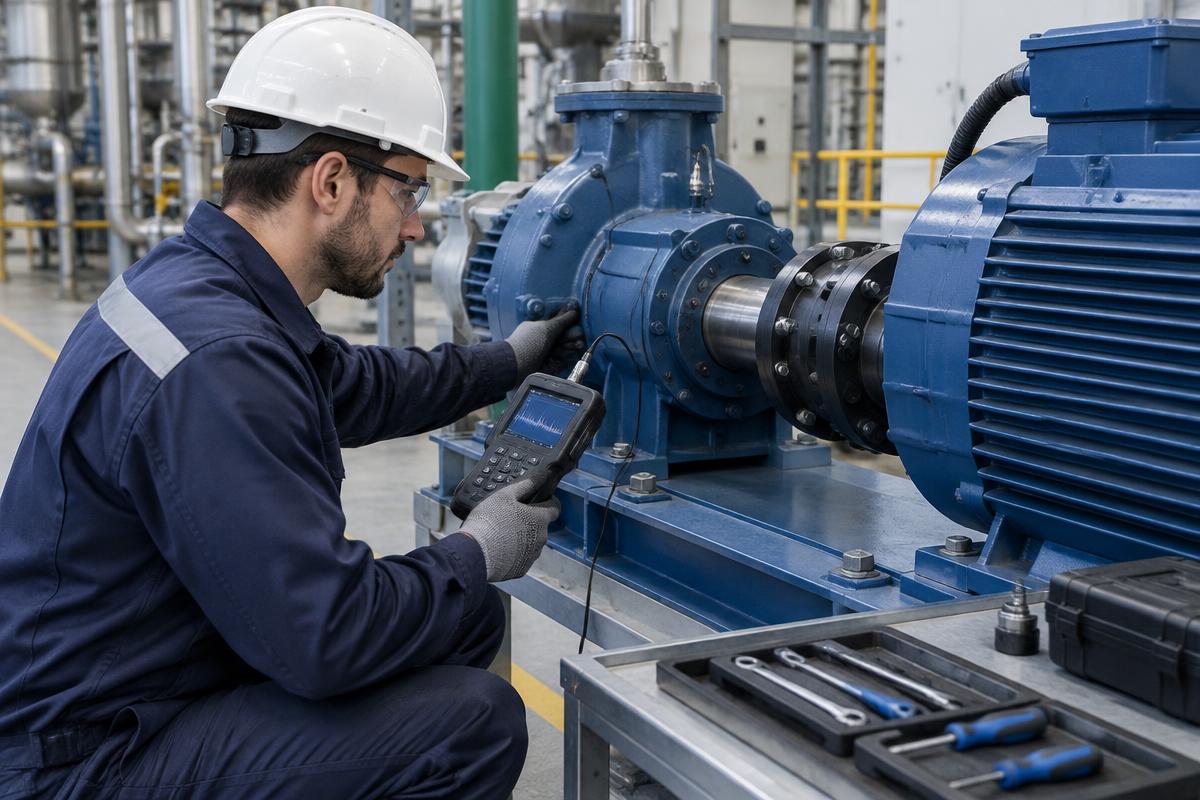
- Assign the inspection of belts, pressure switches, check valves, and safety devices to a qualified technician.
Before disassembly or repair, isolate the electrical power, prevent automatic start-up, fully depressurize, and allow hot parts to cool. Oily condensate must be collected and disposed of appropriately, not in the sewer. The air tank requires the inspections prescribed for the specific installation; never perform welding, drilling, or improvised repairs.
5. Signs that a technical inspection is needed
If the compressor fills noticeably slower, starts frequently without consumption, or fails to reach the normal cut-off pressure, there may be a leak, a clogged filter, or worn valves. Continuous operation does not always mean a fault: demand may simply exceed output.
Stop using the machine if you notice a burning smell, repeated tripping of protections, loud metallic noises, or severe corrosion on the tank. Do not increase the pressure switch setting and do not bypass the safety valve to "gain" pressure.
Frequently asked questions
Is a 50-liter air compressor enough for painting?
Not necessarily. Critical factors are delivered output, spray gun consumption, duty cycle, and air treatment. The tank only offers a temporary reserve.
How often should I change the oil?
According to the operating hours and the calendar limit set by the manufacturer. An earlier first change may be required, so there is no single interval for all models.
Why does water come out of the tool?
Usually, there is an accumulation of condensate or insufficient air treatment. Check drainage, the water trap, and piping. In demanding applications, a dryer may be necessary.
Can I clean clothes with compressed air?
Not while wearing them. There is a risk of injury and debris projection. For surface cleaning, use appropriate equipment, eye protection, and controlled pressure according to instructions.
Conclusion: Choose an air compressor based on actual consumption, pressure, and work duration. Proper installation, drainage, and systematic maintenance reduce downtime and support safe use.