
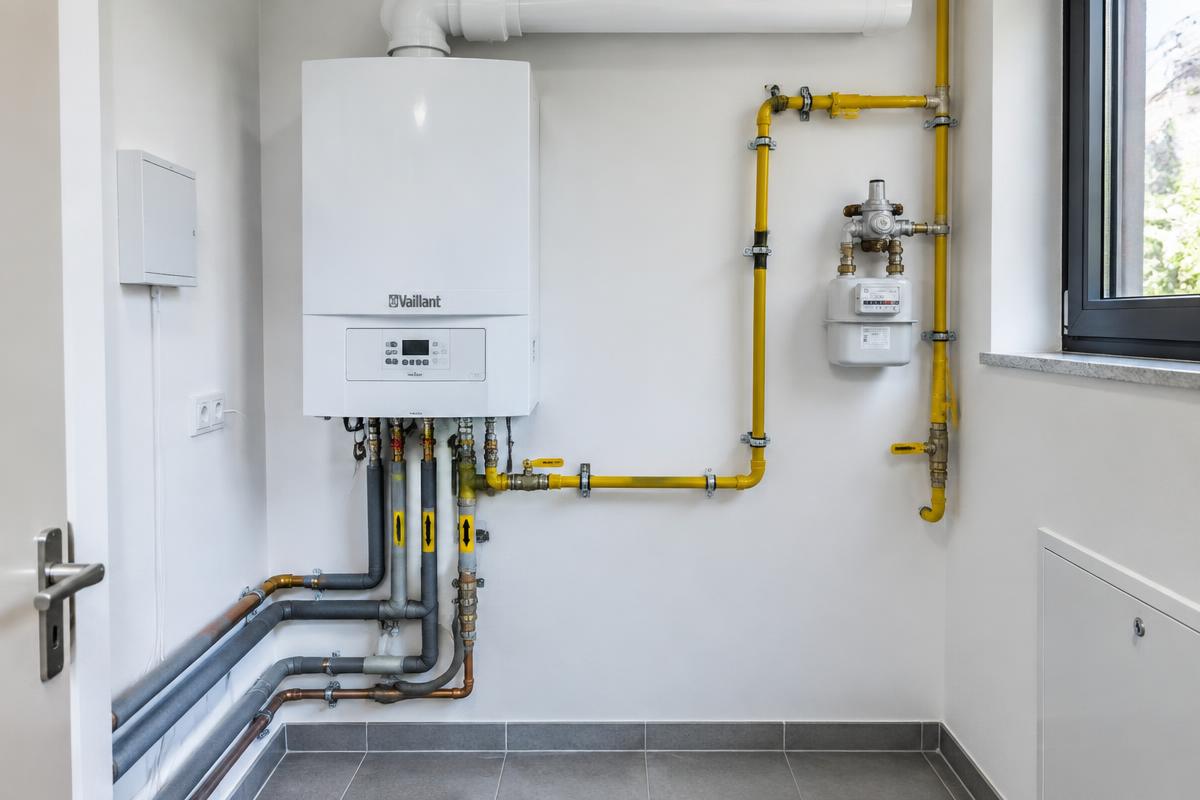
1. Clarify what the initial activation includes
The first activation of a residential natural gas connection is not the same as the first startup of the boiler. These are distinct stages that must be coordinated: completion of the network connection, inspection of the internal installation, activation of the supply, and putting the appliances into operation. The presence of a meter does not in itself mean that you can safely use the appliances.
The network operator is responsible for the connection and the activation of the supply in accordance with its procedure. The supplier handles the supply contract and billing. The authorized engineer, the licensed installer, and the commissioning technician undertake different tasks regarding the installation and appliances, depending on their responsibilities. Ask them to explain who does what and who must be present at the appointment.
Before setting a date, confirm that the contractual and technical requirements have been completed. Do not assume that signing the supply contract implies immediate gas availability or that the activation automatically includes boiler setup.
2. Check documents, pending issues, and access
The installation file must reflect the actual construction. Relocation of appliances, changes in piping routes, or a different type of boiler must not remain undeclared. The authorized engineer evaluates whether an update of the study and relevant supporting documents is required before proceeding with the process.
The exact list of documents depends on the operator, the type of connection, and the installation. Request written information in advance regarding what is required, instead of relying on a general list from another case.
- Confirm the status of the connection application and the supply contract.
- Check that the required technical documents, declarations, and test results have been submitted.
- Have the appliance manuals and the installer's contact details available.
- Ensure access to the meter, valves, boiler, and inspection points.
- Arrange for access to common areas, if necessary.
It is advisable to have someone present at the appointment who knows the work that was done and can receive instructions. Remove objects that block access, without interfering with piping, seals, regulators, or meter components.
3. Critical checks before using natural gas
The tightness of the internal installation is a basic safety requirement. The prescribed tests are performed by authorized professionals, with appropriate equipment and according to the procedure corresponding to the installation. The absence of smell does not prove tightness, nor does a rough home check replace the documented test.
Simultaneously, the support and protection of the piping, connections, isolation valves, and the suitability of the components are checked. Any unused pipe ends must have a safe, prescribed termination. If you notice a dented pipe, loose support, or a component that has moved during renovation, inform the installer before activation.
Equally important are combustion air and flue gas exhaust. The requirements depend on the type of appliance and the installation space. Necessary ventilation holes must not be covered with furniture, insulation, or decorative elements. For room-sealed appliances, the prescribed air intake and flue gas exhaust system is also checked; the closed chamber does not eliminate the need for inspection.
For a condensing boiler, an additional check of the condensate drain and the siphon is needed, according to the manufacturer's instructions. The flue, connections, and its terminal must be suitable for the specific appliance and the approved installation layout.
4. First startup and boiler setting
After the supply is activated, the appliance is put into operation by a suitably licensed technician, in compliance with manufacturer requirements. The initial gas introduction and related operations are not tasks for the user. Do not attempt to vent or purge a gas pipe and do not repeatedly attempt ignition when an error appears.
The technician confirms that the appliance is suitable and correctly configured for the supplied gas. They check, where applicable, the supply pressure during operation, ignition, safety devices, and combustion with a flue gas analyzer. The acceptable values and settings result from the appliance specifications and applicable requirements, not from a general setting for all boilers.
In the hydraulic circuit, filling, venting, circulation, tightness, and the condition of related components are checked. Correct water pressure depends on the installation and the manufacturer's instructions. The reading on the boiler's water pressure gauge does not indicate the natural gas pressure.
Request a test of heating and hot water production, where these functions exist. Check the thermostat, schedules, and operating temperatures with the technician. Weather compensation and lower appropriate water temperatures can improve the efficiency of a condensing boiler, but they must be adapted to the radiators or underfloor installation.
5. What to receive and what to monitor in the first days
Before the technician leaves, ask for a demonstration of normal operation and safe shutdown. You must know where the isolation valve is located, which controls you are allowed to use, and what the basic indicators mean. Collect the prescribed inspection and setting documents, the first-startup details, and the maintenance instructions.
Record the activation date, the meter number, and the initial reading. Keep these details together with the contract and the technical file so that you can check the first bill and facilitate future maintenance.
During the first few days, observe if recurring errors, unusual noises, water leaks, or frequent drops in heating circuit pressure occur. Do not cover up a persistent problem with constant resets or water refills. Inform the technician and do not change maintenance parameters.
If you smell gas, do not light a flame and do not handle switches, outlets, or electrical appliances. Do not use a telephone inside the suspicious area. As long as it is immediately safe, close the valve and manually open doors or windows, without delaying your exit. Go to a safe place and call the operator's emergency service or the emergency services. Do not return and do not restore the supply before approval is given.
Frequently Asked Questions
Can I turn on the supply myself if the meter has been installed?
No. The installation of a meter does not constitute a usage permit. Initial activation is done through the prescribed procedure, while the first startup of the appliance requires the authorized technician. Do not break seals or tamper with the equipment.
Is it normal to smell gas during the first startup?
The user should not consider any smell of gas normal, nor expect it to subside. Stop usage and follow the instructions for safe exit and notification from a safe point.
Do I need a gas or carbon monoxide detector?
These are different devices: a natural gas detector does not necessarily detect carbon monoxide, which is odorless. Discuss with the engineer what is required or advisable for your space. Detectors do not replace ventilation, inspections, and maintenance.
When should the first maintenance take place?
Request a specific schedule during the handover, based on the manufacturer's instructions and current requirements. The initial startup does not replace periodic maintenance, and any malfunction needs inspection without waiting for the scheduled appointment.