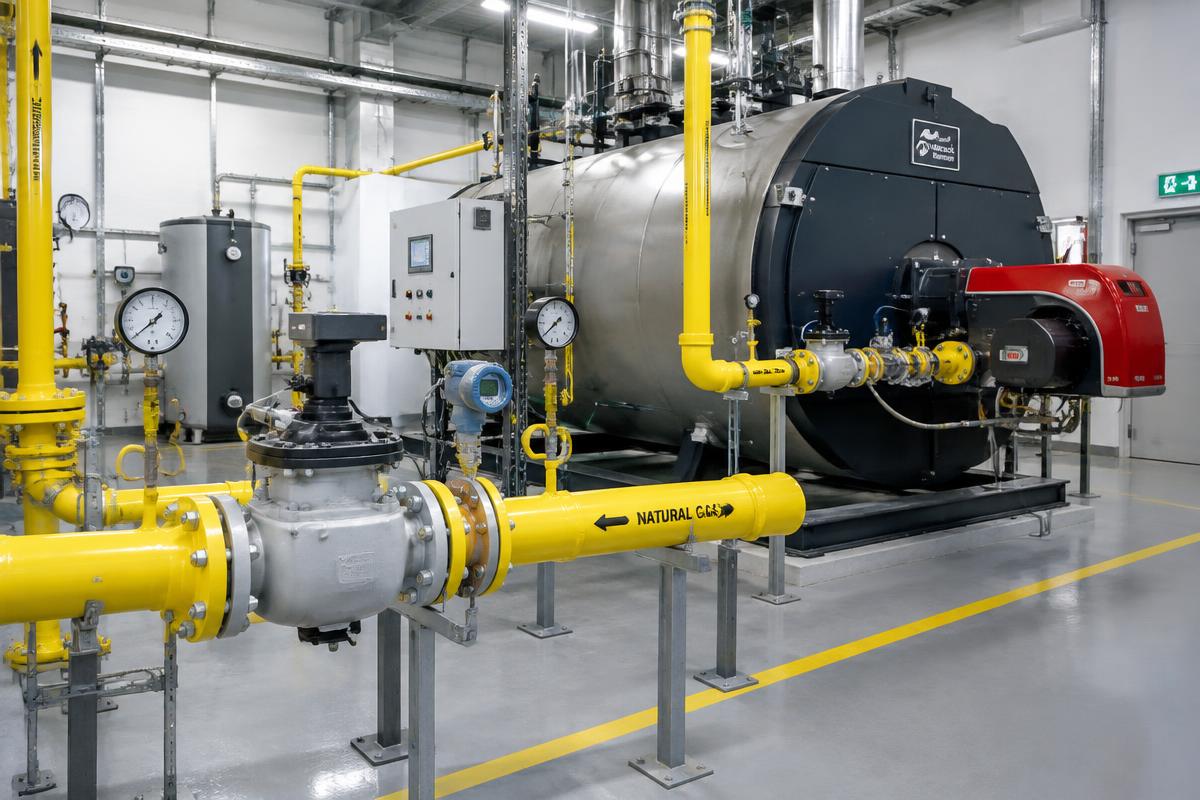
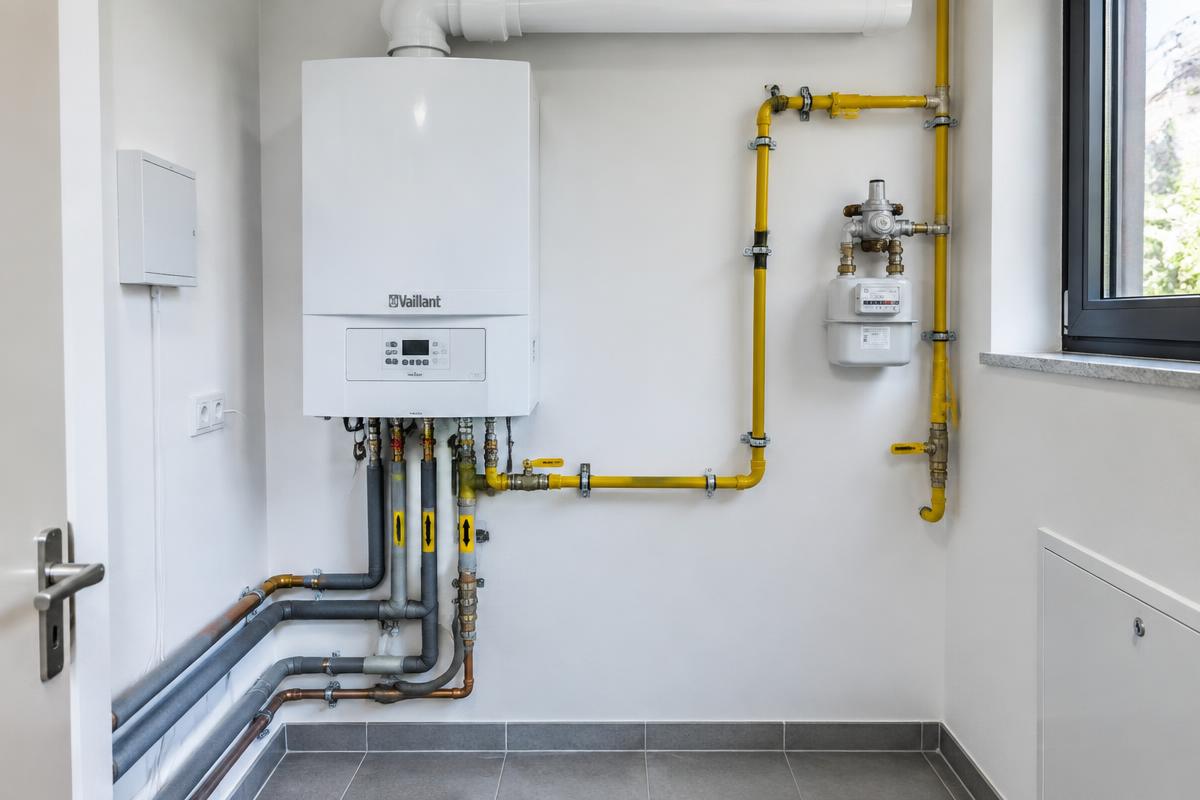
A residential natural gas installation consists of successive sections that must work together correctly: supply, meter, regulator where required, internal piping network, isolation valves, and final appliances such as a boiler or stove.
From the meter to the home
After the meter, the property's internal installation begins. From there, the piping is routed toward the points of consumption in a way that allows for easy access, inspection, and maintenance.
Main valve
The installation must have a clear isolation point so that the supply can be quickly shut off in case of emergency or maintenance.
Branches
Each appliance is supplied by an appropriate branch. The pipe diameter depends on the power of the appliance, the length, and the total pressure losses.
Final appliances
Boilers, water heaters, or gas hobs must be connected in accordance with the manufacturer's instructions and the approved design study.
Basic principle
A natural gas installation is not simple plumbing. Every section is related to safety, combustion, and the proper operation of the appliances.