
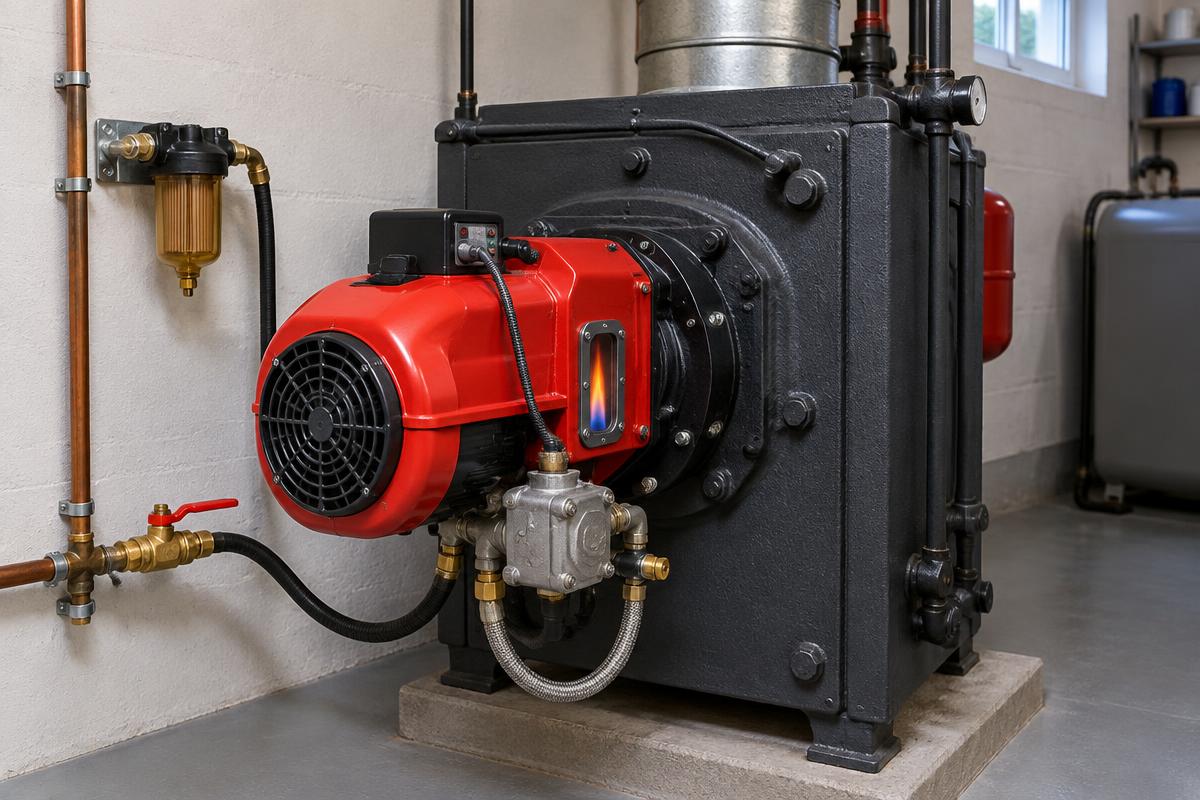
What black smoke and oil odors mean
An oil burner requires the correct fuel-to-air ratio, proper atomization, and safe exhaust venting. When any of these conditions are not met, black smoke, soot, strong odors, or unstable operation may occur. These symptoms do not always mean you simply need "a little more air." The cause must be identified first, and then adjustments should be made using proper instruments.
Black smoke is usually an indication of incomplete combustion and soot production. It can be related to insufficient air, excessive fuel supply, or poor mixing. Soot deposits on boiler surfaces, hinders heat transfer, and can increase consumption. If it restricts exhaust passages, it puts even more strain on the system's operation.
Odors require a different assessment. The smell of unburned oil can come from a leak or a failed ignition, while the smell of smoke can indicate exhaust leakage. Carbon monoxide is odorless: neither the presence nor the absence of an odor indicates whether the atmosphere is safe. Furthermore, the absence of visible black smoke does not prove proper combustion.
The most common causes behind the problem
Diagnosis involves the entire burner, boiler, and chimney system. An incorrect adjustment may be the cause, but it is often an attempt to compensate for another underlying problem.
- Insufficient air supply: A dirty fan, restricted air intake, incorrect damper position, or blocked boiler room ventilation openings affect combustion.
- Nozzle issues: Wear, contamination, or improper flow rate, angle, and spray pattern can cause poor atomization or flame impingement on the combustion chamber.
- Incorrect pump pressure: This alters the actual fuel flow and spray characteristics. It cannot be reliably corrected "by eye."
- Ignition or fuel cutoff malfunction: Problems with electrodes, the ignition system, or the solenoid valve can be linked to delayed ignition and unburned oil.
- Fuel supply issues: A dirty filter, air in the line, or water and sludge in the fuel can cause instability or operational shutdowns.
- Boiler or chimney with deposits: Restricted exhaust passages, improper draft, or sealing failures can lead to smoke and odors.
Useful information is knowing when the symptom appears. A cloud of smoke at startup directs the inspection differently than continuous smoke during operation. An odor after shutdown requires inspection for potential dripping, fuel residues, or faulty venting. These are indicators for the technician, not a safe remote diagnosis.
What to do immediately and what to avoid
If there is heavy black smoke, exhaust gases in the room, an obvious oil leak, a loud bang during startup, or repeated lockouts, do not continue operation for testing. Shut down the burner using the designated switch only if you can do so safely, without entering a room with smoke or strong fumes. Call a licensed burner technician.
If a carbon monoxide detector goes off or if you experience headaches, dizziness, nausea, or confusion, evacuate to fresh air immediately and call 112. Do not delay leaving to ventilate, find the fault, or turn off equipment. Do not re-enter before confirming that the area is safe.
- Do not press the reset button repeatedly. In case of failed ignition, unburned fuel can accumulate in the chamber.
- Do not change air settings, pump pressure, electrodes, or the nozzle yourself.
- Do not open the boiler door or combustion chamber to observe the flame.
- Do not cover odors with air fresheners and do not treat ventilation as a repair for the fault.
Without restarting the system, note when the problem occurred, whether there was a recent fuel delivery or maintenance, and which fault indicator appears. This helps the technician significantly.
How to properly adjust an oil burner
Proper adjustment begins with an inspection and cleaning where necessary. Adjusting a dirty boiler or a burner with a faulty nozzle can yield misleading results. The technician checks the combustion chamber, exhaust passages, seal integrity, fuel supply, and room ventilation. The chimney is assessed and cleaned if required.
Subsequently, they verify that the nozzle and the actual fuel delivery are suitable for that specific boiler and burner combination. They check pump pressure with a pressure gauge, the combustion head, electrode position, and ignition function. There is no single universal pressure, nozzle, or air setting that fits all installations.
Final adjustment requires a flue gas analyzer and the appropriate supplementary measurements. Depending on the installation, the following are checked:
- Oxygen or carbon dioxide content, to evaluate excess air.
- Carbon monoxide, as a critical indicator of combustion quality.
- The soot index, using a standard smoke test.
- Flue gas temperature and draft or pressure in the exhaust path.
Measurements are taken under specified conditions and evaluated according to the manufacturer and applicable regulations. Too little air promotes incomplete combustion, but excessive air can increase exhaust losses or affect flame stability. The goal is not just to make visible smoke disappear.
After adjustment, smooth startup, stable operation, and safe shutdown are verified. Request the required maintenance and inspection sheet, with recorded measurements and any observations.
Prevention: how to limit smoke, odors, and consumption
Schedule maintenance before the winter season, with a frequency that meets applicable requirements, manufacturer guidelines, and the usage of the installation. In installations with long operating hours, more frequent inspection may be necessary. Maintenance is not limited to changing the nozzle: it includes cleaning, safety checks, and documented combustion adjustment.
Keep designated ventilation openings clear and do not store objects around the burner. Report oil stains, new noises, more frequent lockouts, or soot at flue connections in a timely manner. A proper carbon monoxide detector, installed according to its instructions, adds protection but does not replace maintenance.
Frequently Asked Questions
If I increase the air, will the black smoke stop?
It may decrease, but this does not prove proper or safe combustion. If there is a problem with the nozzle, pressure, or chimney, changing the air may temporarily mask the symptom. Inspection with instruments is required.
Is it normal for it to smell like oil when the burner starts?
A recurring or strong odor should not be considered normal. It requires checking for leaks, delayed ignition, unburned fuel, or exhaust leakage, even if the odor subsides afterwards.
Why did black smoke appear after maintenance?
Possible causes include an unsuitable nozzle, incorrect adjustment, or an assembly and sealing problem. There may also be another fault. Notify the technician immediately and do not attempt corrections yourself.
Does proper adjustment reduce oil consumption?
It can limit losses when combined with a clean boiler and proper operation of the installation. There is no guaranteed percentage of savings without an evaluation of the initial state, usage conditions, and thermal needs.