When motor temperature is a cause for concern
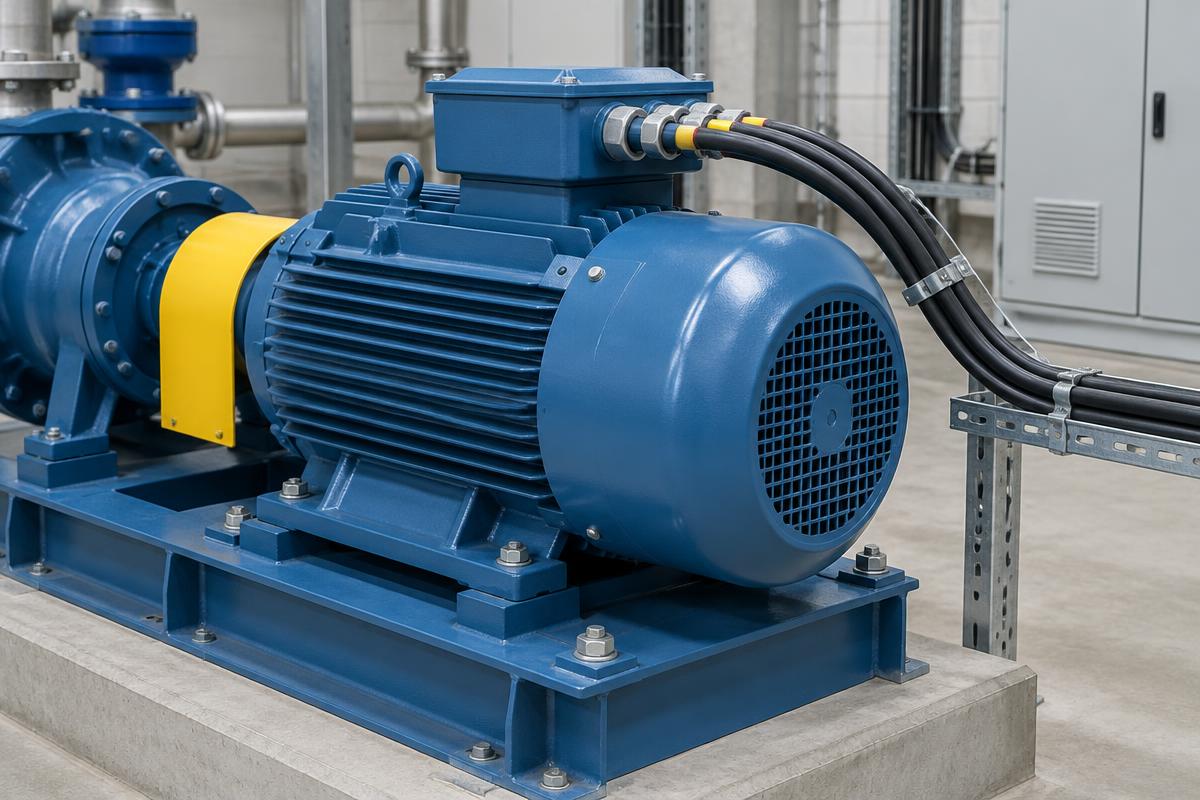
An electric motor generates heat during operation due to electrical and mechanical losses. This is normal, but continuous overheating accelerates the aging of winding insulation, stresses the bearings, and can lead to failure. In pumps, fans, compressors, and industrial machinery, identifying the cause early prevents major damage and prolonged downtime.
There is no single "safe shell temperature" for all motors. Assessment depends on the insulation class, expected temperature rise, environment, cooling method, and duty cycle. The insulation class does not represent an allowable external surface temperature. Furthermore, touching the motor is not a reliable check and may cause burns.
Signs requiring immediate shutdown include the smell of burnt insulation, smoke, unusual noise, severe vibration, sudden loss of speed, and repeated protective device trips. Do not continuously reset the thermal relay just to "get the job done."
Temperature measurement with appropriate instruments helps when compared with previous readings at the same point and under similar load. Infrared thermometers are affected by the condition and reflectivity of the surface, while the shell temperature does not necessarily reveal the internal winding temperature.
Common causes of overheating
Increased temperature often stems from a combination of problems. A motor with marginal ventilation may operate without an obvious issue in winter but overheat when ambient temperature or mechanical load increases.
- Mechanical overload: Blocked mechanisms, overtightened belts, misalignment, or an inappropriate pump operating point increase torque requirements.
- Faulty power supply: Voltage deviation, phase imbalance, phase loss, or loose connections can cause increased current and uneven heating.
- Inadequate cooling: Clogged fins, dust accumulation, a broken fan, or restricted space around the motor hinder heat dissipation.
- Bearing wear: Lack of lubrication, unsuitable lubricant, or excessive grease can increase friction and temperature.
- Frequent starts: Repeated starts or prolonged acceleration thermally stress the motor, even if the normal operating current appears acceptable.
- Internal electrical problem: Winding damage, incorrect wiring, or a faulty capacitor in a single-phase motor can cause overheating.
In centrifugal pumps, the relationship between flow rate and power consumption depends on the specific model's curve. Do not assume that every flow restriction necessarily increases the load. Evaluate the motor, pump, and hydraulic system together.
Checks before any restart
Before opening a cover, cleaning, or performing mechanical checks, safe isolation of the power supply, lockout/tagout, and confirmation of zero voltage by a qualified electrician are required. The stop button does not provide electrical isolation. Capacitors and frequency converters may retain dangerous voltage after disconnection; follow the manufacturer's waiting times and verification procedures.
You must also rule out movement from stored mechanical energy, pressure, or reverse flow. A non-expert may record external signs without removing guards or approaching dangerous areas. Electrical measurements and access to terminals are tasks for a qualified professional.
- Record conditions: When overheating occurs, after how much time, and whether it was preceded by a load change, repair, or configuration change.
- Read nameplate: Nominal voltage, current, frequency, power, wiring configuration, and expected duty cycle.
- Visual cooling check: Condition of the fan, cover, fins, and available ventilation space.
- Drive check: Alignment, coupling, belt tension, fastenings, and signs of wear on the bearings.
If there is a burnt smell or visible cable damage, it is not enough for the motor to cool down. Diagnosis is required before returning to operation. A temporary reduction in temperature does not mean the root cause has been addressed.
Electrical measurements that identify the problem
The electrician checks the supply voltage and, in a three-phase motor, the currents of all three phases under a representative load. Measuring only one phase can hide imbalance. Results are compared with the nameplate, specifications, and actual operating conditions.
Increased current in all phases may be related to overload, improper voltage, or incorrect wiring. A significant difference between phases requires investigation of the supply, contacts, and windings. No single measurement is sufficient for a safe conclusion. Live measurements are performed only with suitable instruments and required protective measures.
With equipment isolated, connections, contactors, and terminals are examined for looseness or thermal degradation. Tightening is performed according to the manufacturer's torque specifications. Where necessary, winding resistance and insulation resistance are measured. Before insulation testing, inverters and sensitive electronics are disconnected according to their manuals. An acceptable insulation resistance value does not rule out short-circuits between turns.
Thermal protection is also checked: type, setting, circuit placement, and compatibility with startup conditions. Do not arbitrarily increase the limit to stop trips. A simple fuse or miniature circuit breaker does not necessarily replace appropriate motor overload protection.
Inverters, restoration, and preventive maintenance
For a motor with an inverter, operation at low speeds requires special attention. When the cooling fan rotates with the shaft, cooling capacity decreases at low speeds. If the load still requires high torque, power derating or independent forced ventilation may be necessary, according to the manufacturer.
Check recorded motor parameters, current limits, acceleration times, and thermal monitoring. PTC sensors or other embedded sensors, if present, must work with an appropriate protection circuit. The inverter output requires instruments and procedures suitable for PWM waveforms.
After addressing the cause, perform a controlled test while recording current, temperature, and vibration. Maintenance includes cleaning the cooling system, checking connections and the drive system, and lubrication only as specified. A simple log of measurements helps identify gradual deterioration before serious failure occurs.
Frequently asked questions
The motor is very hot to the touch. Does it mean it's burning out?
Not necessarily, but it should not be checked by touch. It requires measurement and comparison with specifications. The smell of burning, noise, or activation of protection require shutdown and technical inspection.
Why does it overheat without the thermal protection tripping?
There may be inadequate cooling, localized bearing heating, or improper protection settings. Current-based protection does not detect every possible cause of increased temperature.
Can I install a larger thermal relay or a larger fuse?
No, this is not a solution for overheating. Arbitrary increases can leave the motor or the installation unprotected. Selection and adjustment require a check by an electrician.
Is it enough to clean the fan?
Only if inadequate cooling is the sole cause. Cleaning is performed under safe isolation, followed by re-testing. If the temperature remains high, investigate the power supply, load, and mechanical components.