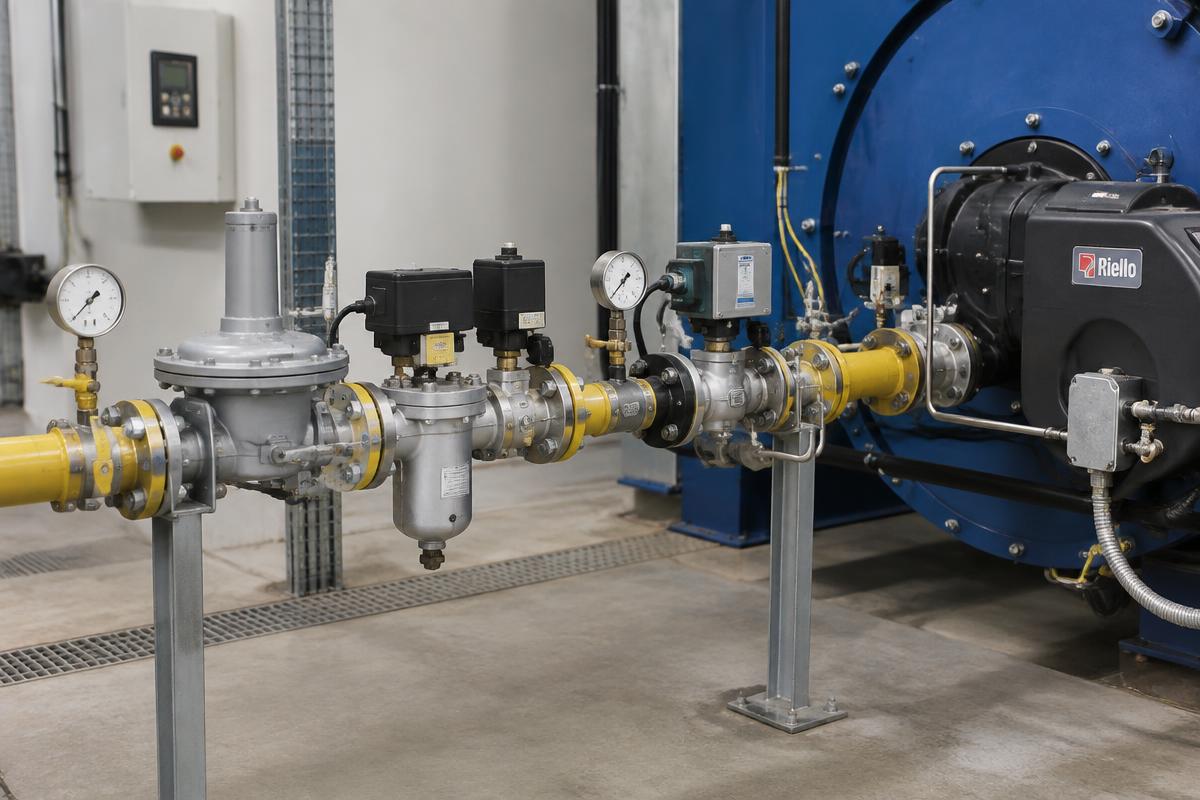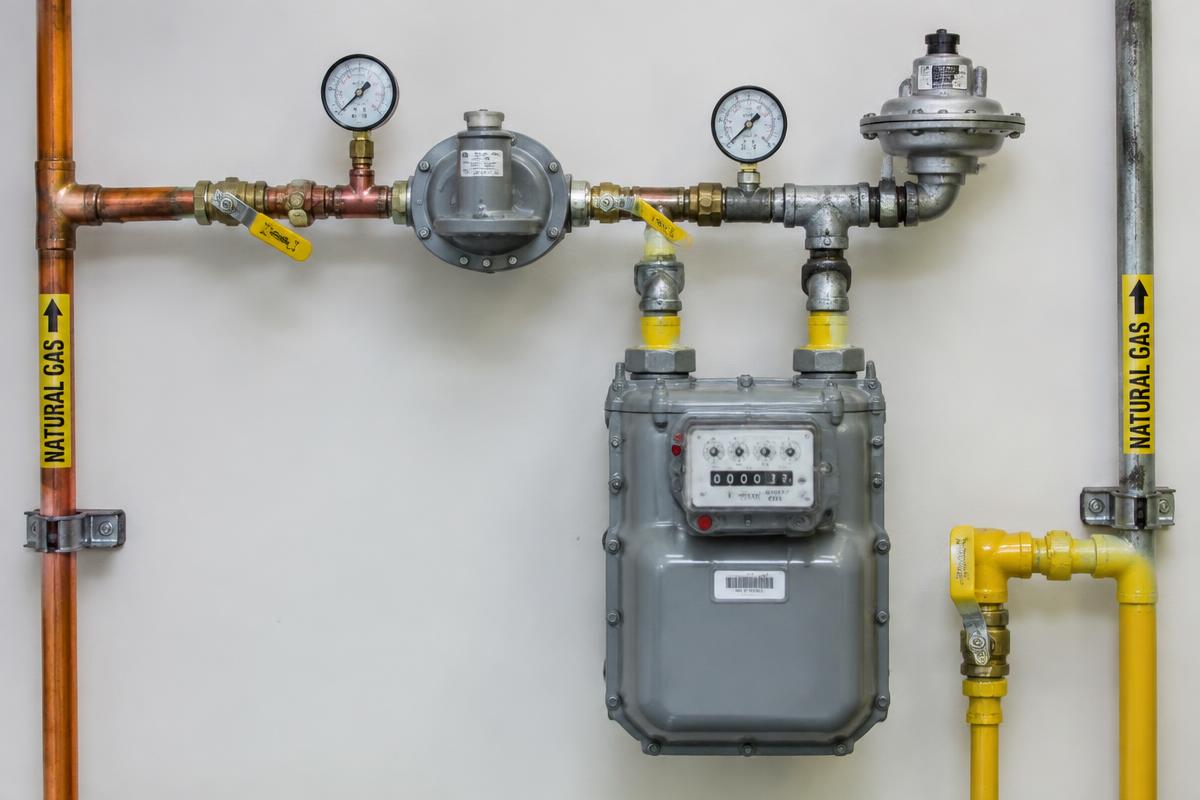
The correct selection of a natural gas solenoid valve is not based solely on the pipe diameter. A valve may physically 'fit' in the line, but it could be unsuitable regarding operating pressure, flow rate, coil voltage, or the burner's operating mode. The selection must be based on the technical data of the entire gas train.
1. Nominal diameter – DN
The DN indicates the nominal size of the connection, but it is not a guarantee in itself that the valve can handle the required flow. Two solenoid valves of the same DN may have different internal cross-sections and different pressure drops.
2. Flow rate and pressure drop
The valve must be selected so that, at the burner's required gas flow rate, the pressure drop across it remains within the limits allowed by the installation. If the valve is undersized, the burner may have sufficient static pressure when turned off, but will exhibit a significant pressure drop as soon as the flow is opened.
3. Permissible operating pressure
Every solenoid valve has a specific range or maximum allowable inlet pressure. This value must be compatible with the network pressure and the valve's position relative to the pressure regulator. It is not enough to only compare the nominal pipe pressure.
4. Coil voltage and frequency
Depending on the model, the coil can be 24 V AC/DC, 110 V, or 230 V AC. The voltage must exactly match the automation circuit. Incorrect voltage can lead to a failure to open, overheating, or damage to the coil.
5. Normally Closed and safety operation
In most combustion systems, Normally Closed safety valves are used so that they automatically close upon loss of electrical power. The operating mode must comply with the burner's logic and certification.
6. Fast or controlled opening
Some applications require fast closing but controlled or slow opening so that the amount of gas during ignition does not increase abruptly. This is a characteristic that must be checked on the datasheet and not assumed.
7. Ambient temperature and protection rating
The installation may be located in a hot boiler room, outdoors, or in an area with moisture and dust. The permissible temperature limits and the protection rating of the electrical part must be checked.
8. Compatibility and certifications
The valve must be suitable for the specific gas and for use in a combustion system. Do not replace a safety valve with a general-purpose solenoid valve just because it has the same thread or voltage.
Practical check before replacement
Before selecting a new component, we record: manufacturer and code of the old valve, DN, inlet pressure, required flow, coil voltage/frequency, operating mode, flow direction, and certification details. The safest choice is an equivalent or approved spare part according to the manufacturer's data for the gas train or burner.
Important: the solenoid valve is a safety device. Its selection and replacement must be performed by a qualified technician and followed by the required tightness and functional tests.