Radiator sizing for heat pump
Before assuming a radiator is small or problematic, it must be confirmed that it is properly supplied. This topic concerns the sizing of the radiator based on actual thermal losses.
In this article, emphasis is placed on the points sizing, radiators, and pump, so that the inspection follows the actual subject of the title.
What to check first
- Space thermal load.
- Radiator type.
- Water temperatures.
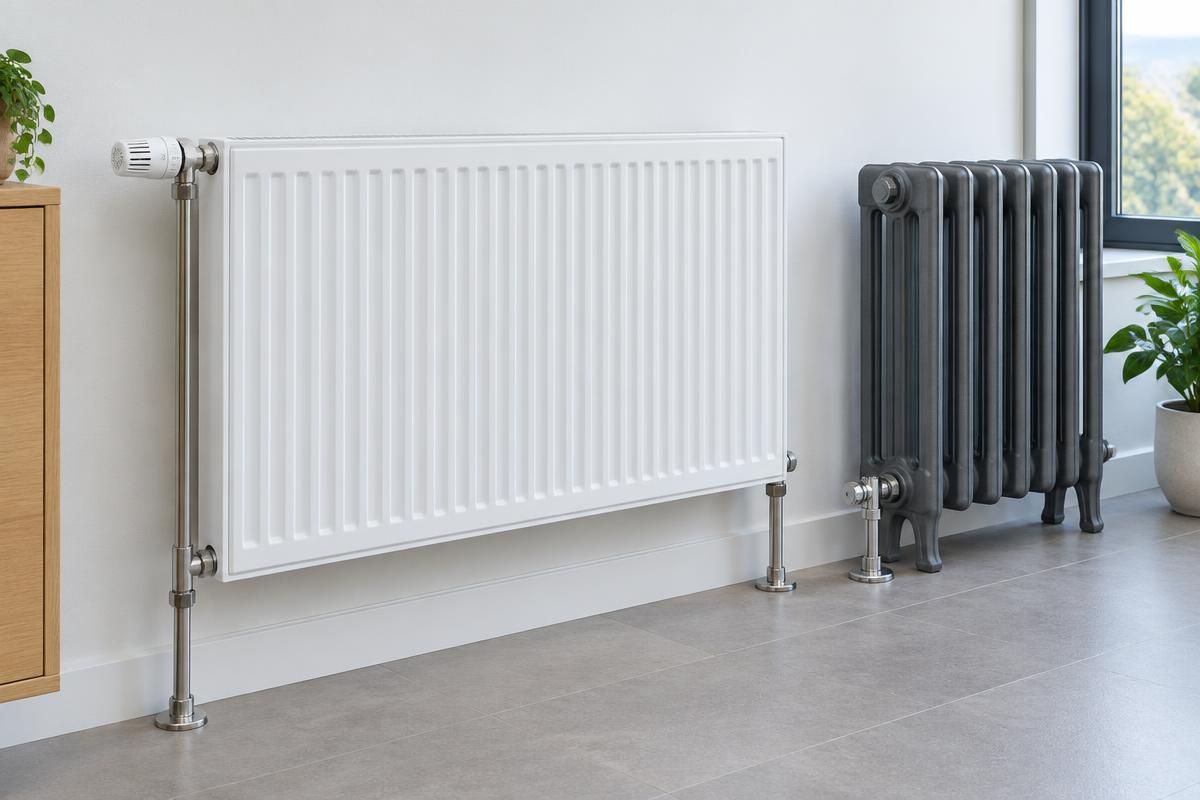
- Radiator dimensions.
If there is noise in the valve, the differential pressure and circulator setting are examined.
Potential causes
- Oversizing.
- Incorrect temperature regime.
- Incorrect manufacturer data.
- Undersizing.
Useful measurements
For this specific subject, water/space ΔT, dimensions, W, and kcal/h are helpful. Values are compared with the space's thermal load and the radiator's position in the network.
Practical application
In an installation with a heat pump, it is checked whether the radiators are sufficient at lower water temperatures. The radiator capacity must be corrected for actual supply and return temperatures.
Safety
Before loosening a valve, air vent, or connection, the radiator is isolated, the temperature is checked, and pressure is fully relieved. Do not open hot or pressurized connections. For electric fan coils or automation, safe electrical isolation must precede any work.
Conclusion
In "Radiator sizing for heat pump", the correct technical decision is based on the relationship between sizing, radiators, and pump, and not on a single indication.