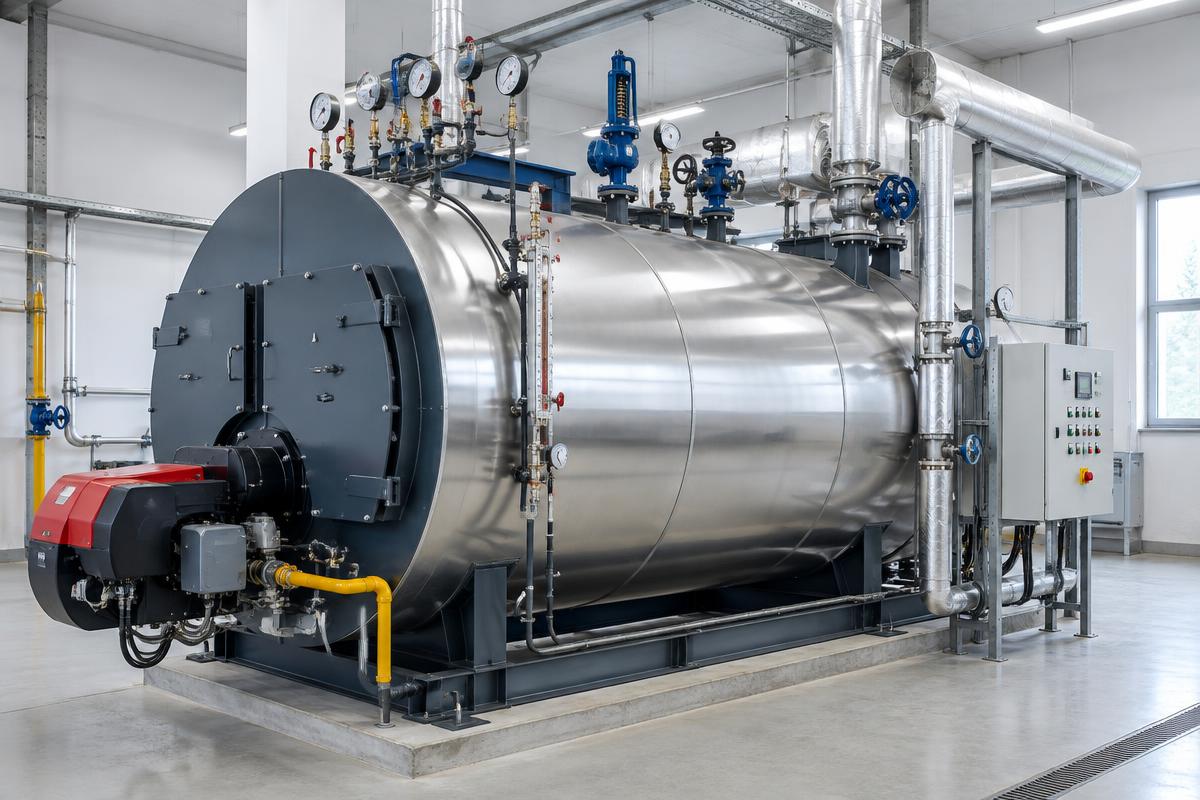
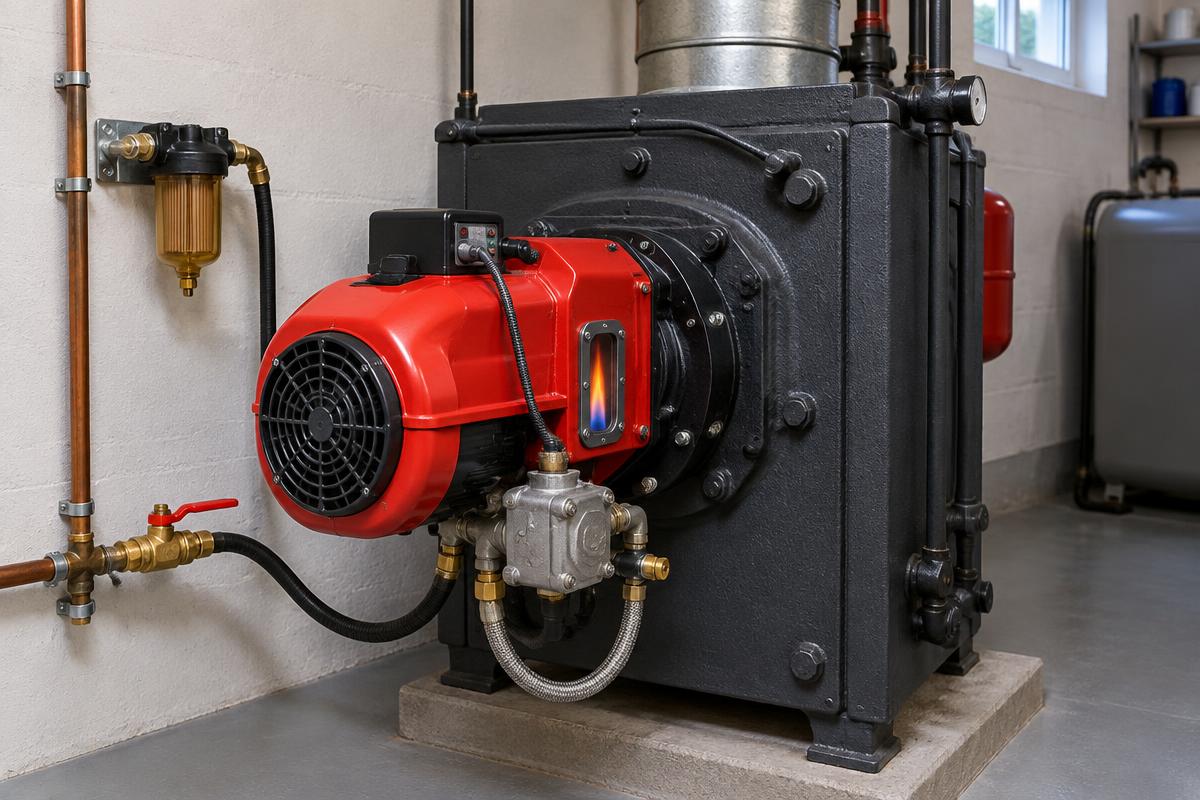
The industrial burner is critical equipment for steam boilers, hot water installations, thermal oil systems, furnaces, and other production applications. A malfunction can impact fuel consumption, production quality, and, most importantly, the safety of personnel and the facility. The technical inspection is not limited to whether the burner ignites; it examines the supply, combustion, automation, and operating conditions of the entire system.
The scope of the inspection depends on the fuel, capacity, application, and manufacturer's instructions. A properly licensed technician, where required, with experience on the specific equipment is necessary. Burner inspection does not replace any independent checks of the boiler, pressure equipment, or the fuel installation.
1. What to prepare before the technical inspection
Proper preparation reduces delays and helps diagnose problems that appear only under specific conditions. Appoint an installation manager who knows the system operation and can coordinate the visit with production. Agree in advance which checks require downtime and which require operation under load.
- Gather technical data: manufacturer, model, serial number, fuel, manuals, electrical diagrams, and the fuel supply line schematic.
- Prepare the history: previous combustion measurement sheets, maintenance work, parts replacements, and alarm logs.
- Record symptoms: when jams occur, if there is noise, difficulty in ignition, or instability at a specific load.
- Ensure access: keep paths to the burner, control panel, valves, and measurement points clear.
- Schedule safe conditions: plan for cooling time, isolation procedures, and required site work permits.
For measurements at different loads, there must be a safe way to absorb the generated heat. Also, provide information on recent changes to fuel, ventilation, flue, or the production process. Do not rush to clean the equipment or delete the fault history before the visit, as useful diagnostic data might be lost.
2. Visual inspection, mechanical condition, and fuel supply
The inspection begins with the general condition of the installation. Supports, connections, wiring, visible wear, corrosion, and signs of overheating are examined. It is also checked whether there are soot deposits or signs of exhaust leaks near the burner connection and accessible ports.
Mechanical parts are evaluated depending on the burner type, including the fan, motor, couplings, air dampers, and actuators. Unusual vibrations or noises may be linked to wear, contamination, or alignment problems, but they require investigation rather than conclusions based on sound alone.
In gas or LPG burners, the required gas line components are checked, such as filters, regulators, safety valves, and pressure switches. Tightness is checked with the appropriate procedure and instruments, not with a flame. In liquid fuel burners, the pump, filters, piping, returns, and atomizing components are examined. Where fuel preheating is present, its operation is also checked.
The adequacy of combustion air and exhaust extraction is of particular importance. Blocked openings, new extractor fans, or changes in the flue can alter operating conditions even if the burner itself has undergone no modifications.
3. Inspection of automation, ignition, and safety devices
The combustion automation monitors the startup and operation of the burner. The technician examines the prescribed sequence, such as air supply confirmation, pre-purge where required, ignition, and flame detection. The times and acceptance conditions are evaluated based on the specific system, not on generic settings applied to every installation.
The check includes the flame detector, ignition electrodes where present, pressure switches, and related electrical connections. The integration with external safety devices of the equipment is also examined, such as temperature or pressure limiters and level or flow monitoring, depending on the application.
Functional tests confirm that a predicted unsafe condition leads to the correct fuel supply shutoff and the corresponding fault indicator. These are performed under the control of the responsible technician, in accordance with the manufacturer's instructions and site procedures. Bridging safety devices to continue production is not allowed.
Repeated lockouts should not be addressed with continuous resets. The cause must be diagnosed. If there are signs of leaks, fuel odors, or loud bangs during ignition, follow the site emergency procedure and do not attempt a new startup before an inspection.
4. Combustion measurements and evaluation at actual load
Exhaust gas analysis shows how the burner operates under the conditions of the measurement. Using a suitable, maintained, and calibrated analyzer, parameters such as oxygen, carbon monoxide, and exhaust gas temperature are recorded. Depending on the fuel and requirements, soot, draft, or other pollutants may also be examined.
Values are evaluated together with the load, combustion air temperature, and equipment condition. There is no single ideal oxygen value suitable for all industrial burners. Acceptable levels are derived from specifications, the application, and applicable requirements. Calculated efficiency readings from the analyzer do not equate to the total energy efficiency of the installation.
In two-stage or modulating burners, checks are needed at representative operating points and during transitions where possible. A good measurement at a single load does not prove smooth operation across the entire range. Flame stability and behavior during power increases or decreases are also monitored.
Increased exhaust gas temperature or poor combustion does not automatically mean a simple adjustment is sufficient. It may require cleaning of heat exchange surfaces, restoration of supply, or inspection of the combustion chamber. After any such intervention, verification with new measurements is required.
5. What the inspection result should include
The technical report must link findings with specific actions. It is useful to record equipment identity, operating conditions, measurements, safety tests, and parts needing repair or replacement. Checks that were not performed, along with the reason, must also be mentioned.
- Critical safety findings: require immediate attention and, where necessary, shutdown.
- Operational deviations: affect reliability and are scheduled for restoration.
- Energy improvements: are evaluated once safe operation is confirmed.
Inspection, cleaning, and repair are different tasks, and it should be clarified which are included in the visit. The re-inspection frequency is determined by applicable requirements, manufacturer instructions, operating hours, and fault history.
Frequently Asked Questions
Does production need to stop for the inspection?
Certain checks require immobilization, isolation, and cooling, while combustion measurements require operation. Proper scheduling combines both phases and limits downtime.
Is exhaust gas analysis enough to consider the burner safe?
No. Analysis evaluates combustion under measurement conditions but does not replace the check of tightness, safety devices, electrical installation, and exhaust extraction.
When is an emergency technical check needed?
When repeated lockouts, flame instability, soot, unusual noises, or unexplained consumption increases occur. A check may also be required after substantial changes to supply, automation, or the installation.
What can staff do before the technician arrives?
Gather files, record indications, and ensure safe access. Fuel adjustments, work on the electrical panel, and bypassing safety devices are not preparation tasks.