Introduction to the low pressure problem
Low water pressure is one of the most common and frustrating problems faced by homeowners in Greece. Whether it is an old apartment in the center of Athens or a detached house in the countryside, the inability of the water to reach the shower or the washbasin with force affects daily life and the operation of appliances such as water heaters and washing machines. As technicians, the first thing we examine is whether the problem is located throughout the area's network or if it is confined to the building's internal installation.
1. Common causes for pressure reduction
Before proceeding to expensive solutions, we must understand what causes the pressure drop. The main factors are:
- Accumulation of scale and deposits: In Greece, water in many areas is "hard." Limescale accumulates in the pipes (especially in old galvanized ones) and in faucet aerators, restricting their diameter.
- Problems with the Pressure Reducing Valve: Many installations have a pressure reducer after the EYDAP meter or that of the respective municipality. If the mechanism gets stuck or fails, the pressure drops vertically.
- Closed or semi-closed valves: Often, after maintenance work, a central valve has not been fully opened, obstructing flow.
- Leaks: A hidden leak in the basement or the garden can "steal" the pressure intended for the interior of the house.
- Altitude difference: If the house is located on a high floor or on a hill, the network pressure may not be naturally sufficient.
2. How to perform an initial check yourself
Before calling a plumber, there are a few steps you can follow to isolate the problem:
Check the filters (Perlators)
Unscrew the filters from the washbasin and sink faucets. If you see sand or limescale, clean them with vinegar or replace them. If the pressure returns, the problem was local.
Comparison of cold and hot water
If the pressure is low only with hot water, then the problem is likely located in the solar water heater, the gas boiler, or the safety valve of the water heater, which may be clogged with limescale.
Water meter check
Ensure that the central valve next to the meter is fully open. Check if the meter is spinning while all faucets are closed, which indicates a leak.
3. Technical solutions for permanent restoration
When simple cleanings do not yield results, we move on to technical interventions:
- Replacement of the Pressure Reducing Valve: If the reducer is old, replacing it with a reputable brass reducer can solve the problem immediately.
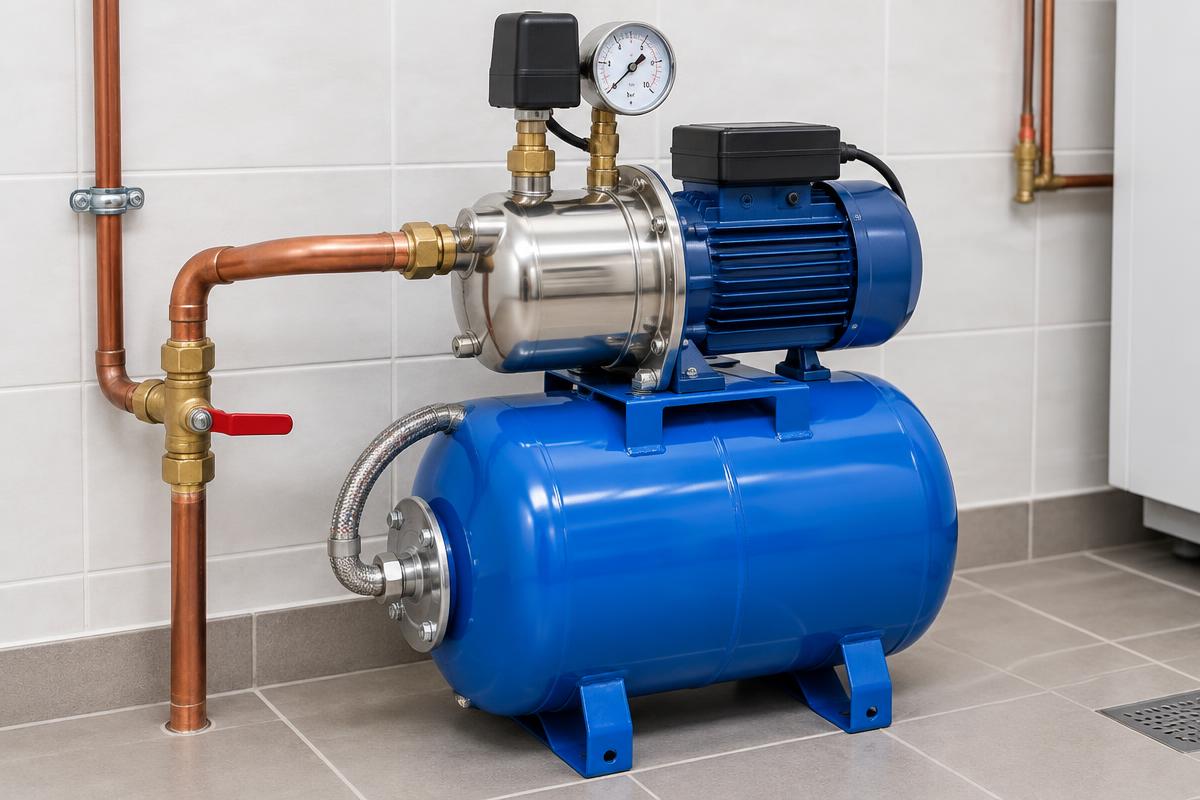
- Installation of a Booster Pump Set: This is the most effective solution for detached houses and floors with a chronic problem. A pump with an expansion vessel or an inverter takes over to increase water pressure to the desired levels (usually 3-4 bar).
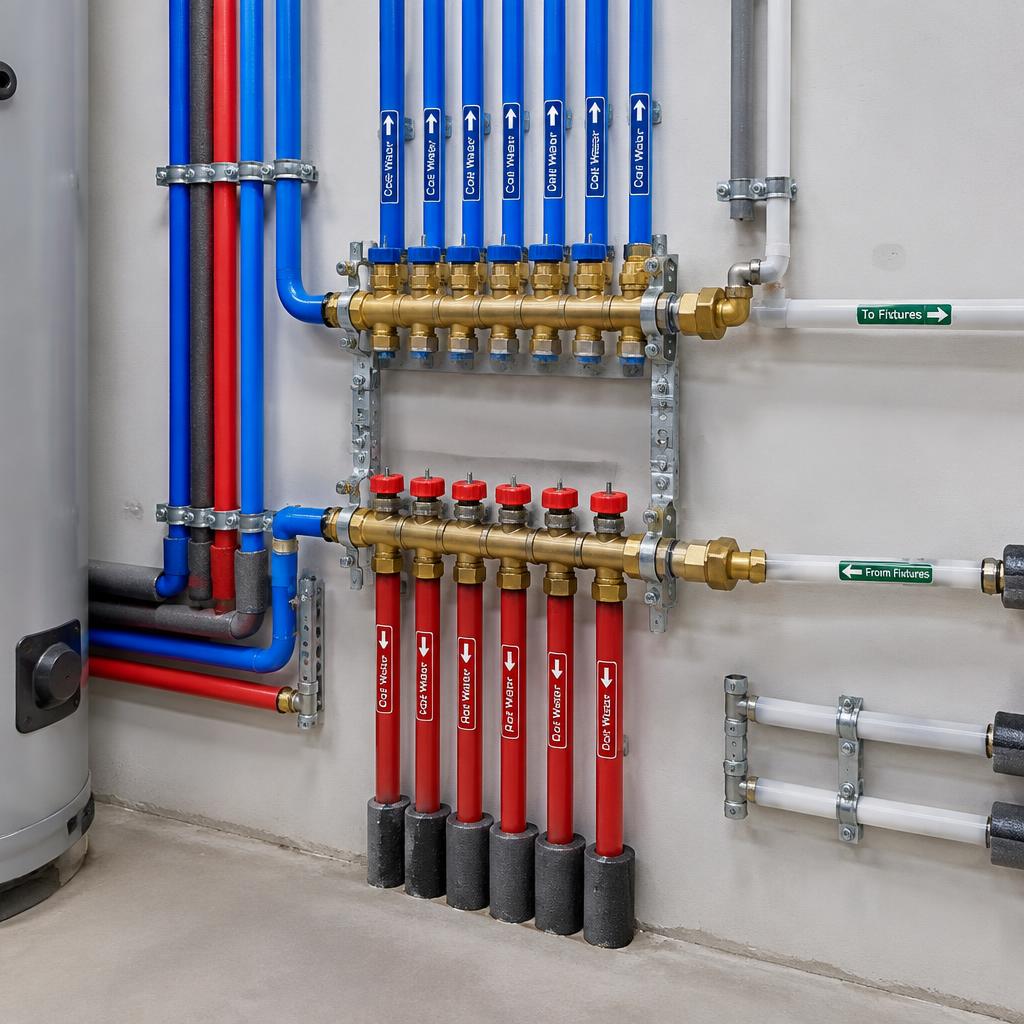
- Pipe Replacement: In old buildings with steel pipes that have been "closed" by rust, the only definitive solution is external or internal replacement with multi-layer or PPR pipes.
4. The importance of Inverter technology in pumps
In modern installations, we recommend pumps with Inverter technology. Unlike traditional boosters that work in an ON/OFF state, the inverter adjusts the motor speed according to demand. This offers constant pressure (without fluctuations in the shower), quiet operation, and significant electricity savings.
Frequently Asked Questions (FAQ)
What is the normal water pressure for a house?
The ideal pressure ranges between 3 and 4.5 bar. Above 5 bar, there is a risk to appliances and pipe joints, while below 2 bar, the flow is considered insufficient.
Can I install a booster pump in an apartment building?
Yes, there are small, silent pumps (flow switch type) that can be installed under the sink or in the loft, provided they do not create a flow problem for other apartments.
Why do I have low pressure only in the shower?
Usually, the shower head is at fault, having clogged from limescale, or the hose has kinked internally. Try removing the head and checking the flow directly from the hose.
Does the central supply filter affect pressure?
Absolutely. If you have a central supply filter and have not changed the replacement cartridge for a long time, the accumulated mud and particles will drastically reduce the supply.
Conclusion
Low water pressure is not something you have to accept. Start with simple checks on filters and valves, and if the problem persists, consult a licensed plumber. A properly designed installation with a quality reducer or a modern inverter booster pump can transform the water usage experience in your home, while protecting your plumbing systems.