
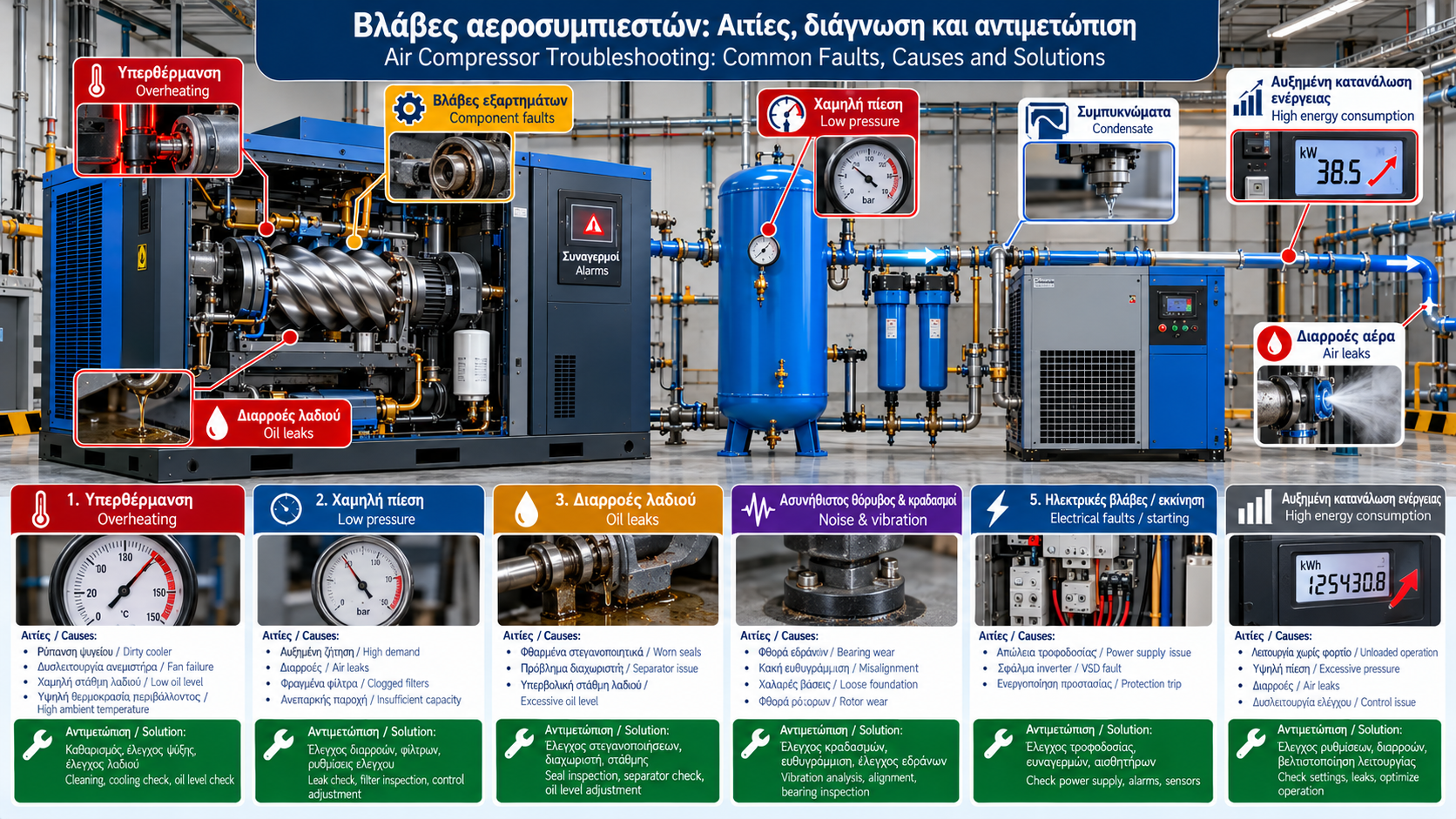
Air Compressor Troubleshooting: Common Faults, Causes and Solutions
Industrial air compressors are essential to manufacturing processes, automation systems and pneumatic equipment. Unexpected compressor failures can interrupt production, increase energy costs and damage downstream components.
Effective troubleshooting requires systematic analysis rather than replacing components without identifying the root cause. Operating temperature, pressure, electrical power, vibration and controller alarms provide valuable diagnostic information.
Safety Before Troubleshooting
Air compressors combine electrical energy, pressurized air, rotating components and hot surfaces.
Before maintenance, apply appropriate lockout/tagout procedures, isolate all relevant energy sources, depressurize the equipment and verify that hazardous stored energy has been eliminated.
Electrical and pressure-system interventions must be performed by qualified and authorized personnel.
Never bypass protective devices to maintain compressor operation.
Compressor Overheating
Overheating is a common cause of automatic compressor shutdown.
In oil-injected rotary screw compressors, possible causes include restricted cooling airflow, contaminated coolers, cooling fan malfunction, incorrect lubricant level and thermostatic valve problems.
In reciprocating compressors, overheating may result from inadequate ventilation, excessive compression ratios, lubrication problems or defective valves.
Troubleshooting should begin with recorded temperatures, ambient conditions and alarm history.
Cleaning and lubrication-system maintenance must only be undertaken after safe shutdown, cooling and isolation.
Low Compressed Air Pressure
Low system pressure does not necessarily indicate an internal compressor failure.
Possible causes include excessive air demand, distribution leaks, clogged filters, insufficient compressor capacity and incorrect control settings.
Pressure should be measured at several locations, including the compressor outlet, downstream of the dryer and near critical points of use.
This helps distinguish insufficient air production from excessive distribution pressure losses.
Compressor discharge pressure should not be increased without identifying the underlying cause.
Excessive Electricity Consumption
Higher electricity consumption may result from prolonged unloaded operation, excessive discharge pressure, compressed air leaks or inefficient compressor control.
Assessment should consider measured electrical input, operating hours and delivered airflow.
Comparisons against historical measurements under similar operating conditions can reveal performance deterioration.
High energy consumption alone does not prove a mechanical defect.
Oil Carryover into the Compressed Air System
In lubricated compressors, excessive oil carryover may indicate separator problems, excessive oil level, unsuitable operating pressure or worn components.
Oil-injected rotary screw compressors require inspection of the oil separator, oil return system and operating conditions according to manufacturer instructions.
Excessive downstream oil contamination may affect filters, dryers and pneumatic equipment.
Normal oil-lubricated compressor operation must be distinguished from abnormal oil carryover.
Unusual Noise and Vibration
Changes in noise or vibration can indicate bearing deterioration, alignment problems, loose mounting components or rotating equipment defects.
Condition assessment may include vibration measurements and comparison with historical trends.
Severe metallic noise or a sudden increase in vibration requires safe shutdown and technical evaluation before restarting.
Starting Problems and Electrical Faults
Failure to start may be associated with power supply problems, activated protection devices, variable frequency drive faults, defective sensors or active shutdown commands.
Initial diagnosis should examine controller fault history and externally accessible status indicators.
Electrical panel inspection and testing must be performed by authorized personnel using appropriate electrical safety procedures.
Repeatedly resetting protection devices without investigating the cause can lead to further equipment damage.
Frequent Starting and Stopping
Frequent compressor cycling may result from inadequate receiver capacity, narrow pressure control settings, air leaks or unstable demand.
Excessive cycling can increase stress on motors and electrical components.
Control adjustments must follow manufacturer specifications and the measured demand profile.
Condensate and Air Quality Problems
Water in compressed air distribution systems may indicate defective condensate drains, insufficient drying, dryer overload or low piping temperatures.
Troubleshooting should include inspection of condensate management, dryer operation and pressure dew point.
Compressed air purity requirements should be determined according to the application and relevant ISO 8573-1 classes.
Preventive Maintenance
An effective maintenance program includes operating-hour records, temperature and pressure monitoring, leak inspections, filter condition checks and controller alarm reviews.
Lubricants, filters and other consumables should be replaced according to manufacturer intervals and actual operating conditions.
Critical installations may benefit from condition monitoring, vibration analysis and energy performance assessments.
Systematic Troubleshooting Method
Begin by identifying the symptom and recording the operating conditions under which it occurs.
Review controller alarms, operating parameters and maintenance history.
Rank possible causes using the available evidence.
Qualified personnel should then perform the appropriate inspections, correct the confirmed cause and verify normal operation.
Maintenance records should document the fault, confirmed root cause, corrective action and post-repair measurements.
Conclusion
Many compressor problems can be identified early through systematic monitoring of operating conditions.
Overheating, low pressure, oil carryover and electrical faults require different diagnostic approaches.
Proper maintenance, accurate operating data and strict safety procedures improve equipment reliability and reduce unexpected production interruptions.