Introduction to Electrical Appliance Installation
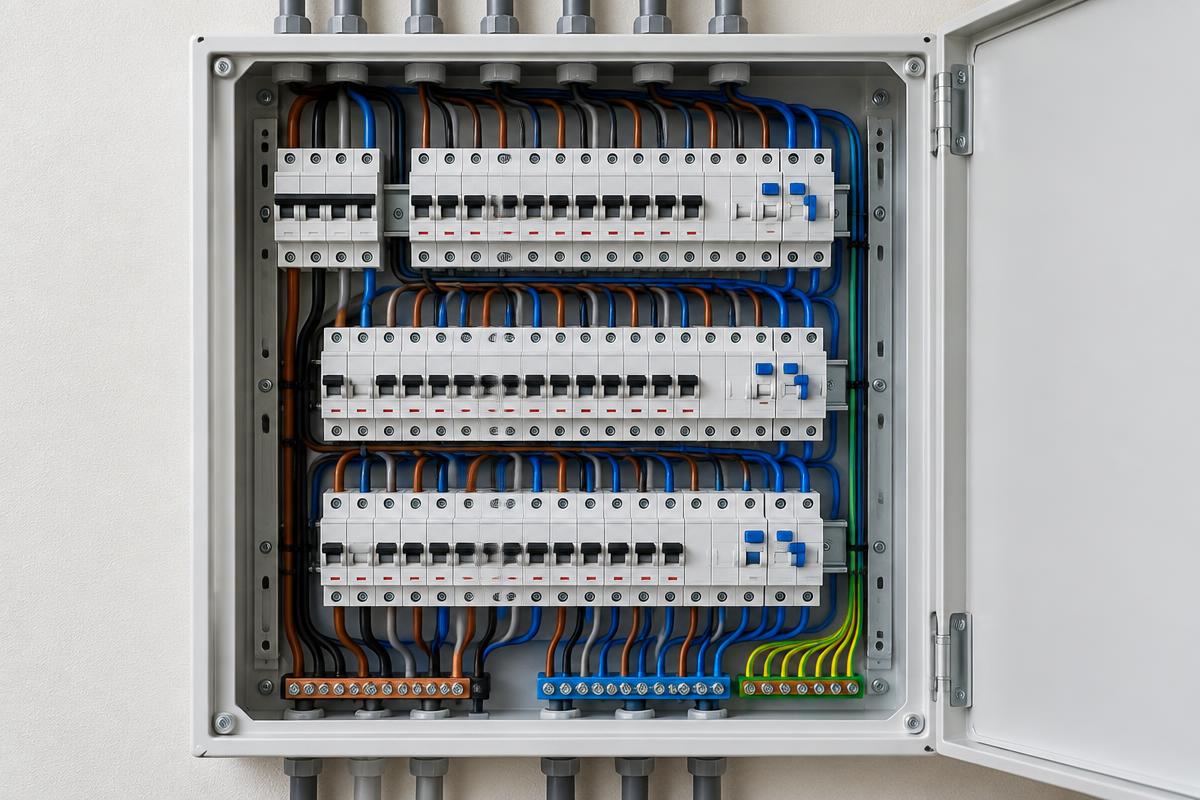
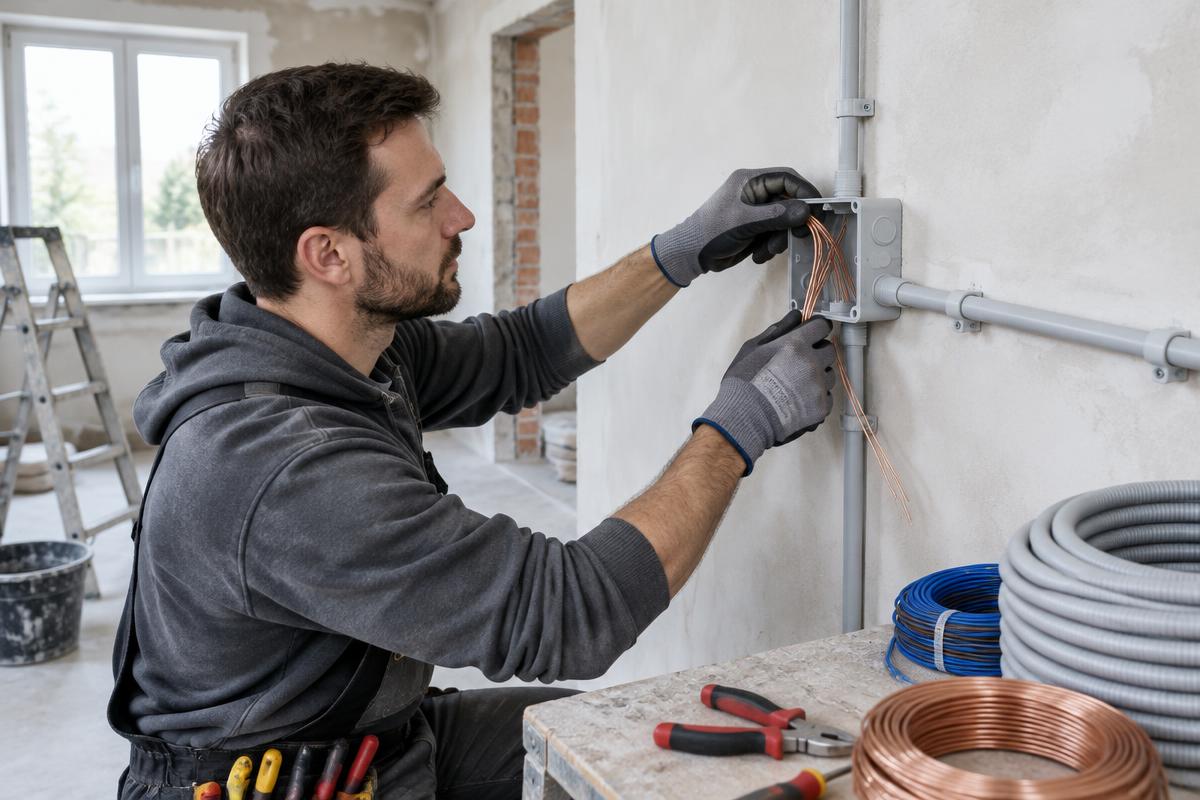
Choosing the right cable cross-section is not just a formal procedure, but a critical safety factor for every Greek home. According to the Greek regulation for indoor electrical installations (ELOT HD 384), every high-power appliance must be powered by its own independent line from the electrical panel. In this article, as technicians, we will analyze the specifications for the three most demanding appliances: the electric stove, the water heater, and the air conditioner.
1. Electric Stove: The Highest Consumption in the Home
The electric stove is the appliance with the highest nominal power, which usually ranges between 7,000W and 10,500W if all burners and the oven are operating simultaneously. For this reason, the wiring requirements are the strictest.
Required Cross-Section and Circuit Breaker
- Cable Cross-Section: A 6mm² cross-section conductor is required (single-core NYM or flexible NYL in conduit).
- Panel Circuit Breaker: We use a 25A or 32A automatic circuit breaker, depending on the appliance's power.
- Switch: Installing a 32A-40A bipolar load switch on the panel is mandatory.
In older installations (pre-1980), we often encounter 4mm² cables, which, however, barely meet the needs of modern induction cooktops. Upgrading to 6mm² is imperative to prevent contact overheating.
2. Electric Water Heater: Steady Power and Humidity
The typical electric water heater in Greece has a 4,000W (4kW) heating element. Although its power is lower than that of a stove, its operation is continuous for 20-40 minutes, which stresses the cable due to thermal accumulation.
Technical Specifications
- Cable Cross-Section: The standard cross-section is 4mm².
- Panel Circuit Breaker: Secured with a 20A automatic circuit breaker.
- Indicator Light: The regulation mandates a bipolar switch with an operation indicator light on the panel.
Caution: Grounding in the water heater is the most important part of the installation. Due to the contact of water with the electrical resistance, the continuity of the protective conductor (yellow-green wire) must be checked periodically with a measuring instrument.
3. Air Conditioner: Differentiation by BTU
For air conditioners, the choice of cable depends directly on the cooling capacity of the unit. Modern Inverter air conditioners have lower starting currents but remain appliances that require an autonomous line.
Analysis by Size
- 9,000 - 12,000 BTU: Usually, a 1.5mm² cable with a 10A breaker is sufficient. However, many technicians prefer 2.5mm² to reduce voltage drop.
- 18,000 - 24,000 BTU: A 2.5mm² cable and a 16A breaker are definitely required.
- Above 24,000 BTU (Semi-central): A 4mm² cable and a 20A breaker may be required, especially if the distance from the panel is large (over 25 meters).
Important detail: In most new models, the power supply goes to the outdoor unit and from there is transferred to the indoor unit. Ensure that the supply cable reaches the correct point.
4. Why Does Cross-Section Matter? (Voltage Drop & Fire)
When current passes through a conductor, it encounters resistance. If the cable is too thin for the load it carries:
- Overheating: The cable insulation melts, causing a short circuit or fire.
- Voltage Drop: The device does not receive the 230V it needs. In Inverter air conditioners, this can cause damage to the electronic boards.
- Energy Loss: Part of the current you pay for is consumed as heat in your walls instead of powering the device.
Frequently Asked Questions (FAQ)
1. Can I plug the stove into a regular socket?
No. Common sockets (Schuko) can withstand up to 16A. The stove draws much more current and will melt the socket in no time. A special connection box (terminal block) or industrial-type connection is required.
2. What cable do I need for an instantaneous water heater?
Instantaneous water heaters have enormous power (from 5kW to 12kW single-phase). For 7-9kW models, a 10mm² cable and a 40A breaker are required, which often also requires upgrading the home's main power supply.
3. Is it allowed to use the same cable for two air conditioners?
It is prohibited by the HD 384 regulation. Each air conditioner must have its own line and its own circuit breaker on the panel to prevent overloading.
4. What does the color of the cables mean?
In modern installations: Brown or Black is the Phase, Blue is the Neutral, and Yellow-Green is the Ground. Never change the use of the ground wire.
Conclusion
The safety of the electrical installation is the foundation of home comfort. For the stove, we choose 6mm², for the water heater 4mm², and for the air conditioner 1.5mm² to 2.5mm² depending on the BTU. In any case, the work must be performed by a licensed electrical installer who will issue the necessary certificate (YDE) for DEDDIE.