
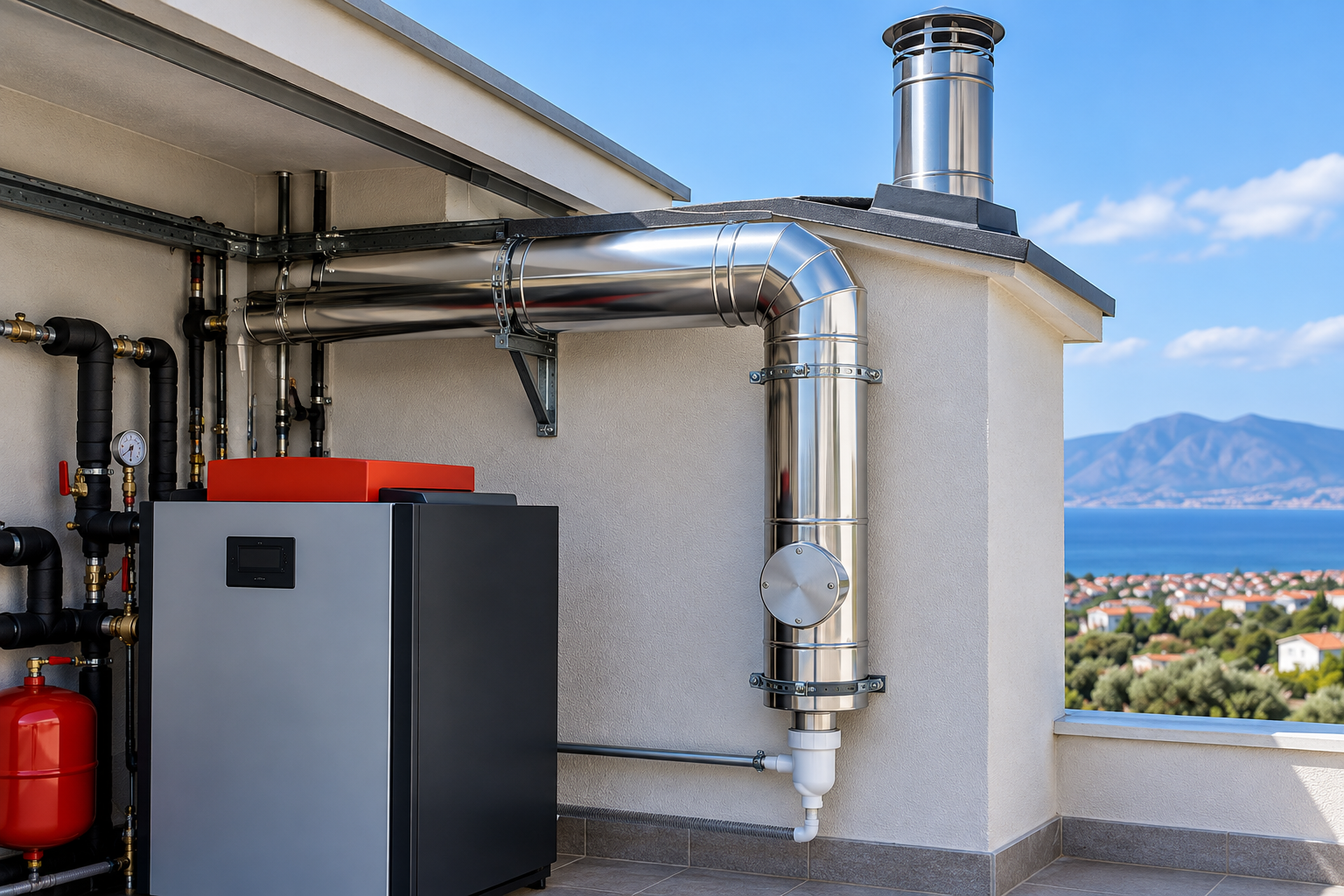
Chimney Condensation: Causes, Problems and Solutions
Water or moisture appearing inside a chimney is a phenomenon encountered in heating installations using natural gas, heating oil and other fuels. In many cases, the cause is not rainwater entering the chimney but condensation of water vapour contained in the flue gases.
Condensate can cause corrosion, material deterioration and leakage, particularly when a chimney system is not designed for operation under wet conditions.
Understanding chimney condensation is important for heating professionals, installers and property owners.
What Is Flue Gas Condensation?
During combustion, fuels produce flue gases containing carbon dioxide, water vapour and other combustion products.
As the flue gases travel through the chimney, they transfer heat to the chimney walls and the surrounding environment.
When the temperature falls below the dew point, some of the water vapour changes from a gaseous state into liquid water.
This liquid is known as condensate.
The dew point depends on the composition of the flue gases, the partial pressure of water vapour and the operating conditions.
For natural gas combustion products, the water vapour dew point is often approximately 50–60°C, depending on the fuel composition and excess combustion air. This is an indicative range rather than a fixed value applicable to every installation.
What Causes Condensation in a Chimney?
1. Low Flue Gas Temperature
When flue gases leave a boiler at relatively low temperatures, they are more likely to cool below their dew point while travelling through the chimney.
This may occur during low-load operation or when heating equipment operates at reduced output.
2. Insufficient Chimney Insulation
External chimneys are exposed to changing outdoor temperatures.
If thermal insulation is inadequate, heat is lost more rapidly, increasing the likelihood of condensation forming on internal surfaces.
Where appropriate, insulated twin-wall chimney systems can help reduce heat losses.
3. Incorrect Chimney Sizing
An oversized chimney can affect flue gas velocity and thermal performance.
In some installations, excessive cross-sectional area contributes to increased cooling and condensate formation.
Chimney dimensions should be determined through appropriate calculations considering heat output, flue gas flow rate, temperature, chimney height and flow resistance.
4. Frequent Boiler Start-Up and Shutdown
When a conventional boiler starts operating, the internal chimney surfaces may still be cold.
Contact between warm flue gases and these surfaces can cause temporary condensation.
If the heating system shuts down before the chimney reaches a sufficiently high temperature, the process may occur repeatedly.
5. Condensing Boiler Operation
In condensing boilers, water vapour is intentionally condensed inside a specially designed heat exchanger.
This process recovers part of the latent heat contained in the flue gases, improving energy efficiency.
As a result, flue gases generally leave condensing boilers at lower temperatures than those produced by many conventional boilers.
The flue system must therefore be suitable for the expected temperature, pressure and moisture conditions.
What Problems Can Chimney Condensation Cause?
Corrosion of Metal Components
Condensate may contain dissolved acidic compounds.
Its chemical composition depends on the fuel, combustion products and operating conditions.
When condensate comes into contact with unsuitable metallic materials, it can accelerate corrosion.
Deterioration of Joints and Connections
The presence of liquid in chimney systems designed exclusively for dry operation may affect the integrity of joints and seals.
This deterioration can compromise the safe removal of combustion gases.
Moisture Damage to Walls and Building Materials
In older masonry chimneys, moisture penetration can cause staining, discolouration and deterioration of plaster or masonry.
These problems may become more severe when the chimney lacks a suitable internal liner.
Reduced Service Life
Prolonged exposure of unsuitable materials to condensate may result in premature deterioration and the need to replace chimney components.
How Can Chimney Condensation Be Managed?
The appropriate solution depends on the heating appliance and whether the flue system is designed for dry or wet operation.
Select a Suitable Chimney System
Chimney materials must be compatible with the fuel and expected operating conditions.
Where condensation is anticipated, the system must be suitable for wet operation and provide the required corrosion resistance and gas tightness.
Provide Appropriate Thermal Insulation
In conventional heating installations where unwanted condensation must be avoided, suitable insulation can help maintain higher flue gas temperatures.
The correct solution should be determined according to the installation specifications.
Ensure Proper Condensate Drainage
Systems designed for wet operation must include appropriate condensate collection and drainage arrangements.
Drainage components, pipe gradients and any need for condensate neutralisation should follow the manufacturer’s instructions and applicable requirements.
Check Chimney Diameter and Height
Correct chimney sizing contributes to suitable flue gas flow and thermal performance.
Where applicable, the calculation methods described in the EN 13384 series can be used.
Perform Regular Inspection and Maintenance
Chimney inspections should include checks of materials, joints, drainage arrangements and areas where leakage may occur.
Water inside a chimney should not automatically be attributed to condensation. Rainwater penetration or other defects may also be responsible.
What Does European Standard EN 1443 Specify?
European standard EN 1443 establishes general requirements and performance characteristics for chimneys.
These include classification according to resistance to condensate.
Class D (Dry): Intended for operation under dry conditions.
Class W (Wet): Intended for operation under wet conditions.
A W classification alone does not establish that a chimney is suitable for every heating appliance.
Temperature classification, pressure classification, corrosion resistance and other relevant performance requirements must also be considered.
When Is Professional Inspection Necessary?
A chimney system should be inspected when any of the following conditions are observed:
Water leaking from chimney joints.
Significant corrosion of metal components.
Moisture stains around the chimney route.
Unusual flue gas odours.
Repeated heating system malfunctions.
Inspection and corrective work should be carried out by appropriately qualified professionals.
If a flue gas leak is suspected, the appliance should be taken out of service until the installation has been checked and confirmed safe.
Conclusion
Chimney condensation occurs when flue gases cool below their dew point, causing water vapour to change into liquid form.
In systems specifically designed for wet operation, condensate formation is expected and managed through suitable materials, sealing and drainage.
However, in unsuitable or older chimney systems, condensation can lead to corrosion, moisture damage and premature deterioration.
Correct design, appropriate material selection, compatibility with the heating appliance and regular inspection are essential for safe and reliable operation.
Technical References
EN 1443:2019 — Chimneys: General requirements.
EN 13384-1 — Chimneys: Thermal and fluid dynamic calculation methods, Part 1.
EN 15287-1 — Chimneys: Design, installation and commissioning, Part 1.
EN 1856-1 — Chimneys: Requirements for metal chimneys, Part 1.
These standards provide a technical reference framework. The applicable editions, national requirements and manufacturer instructions should be verified for each installation.