
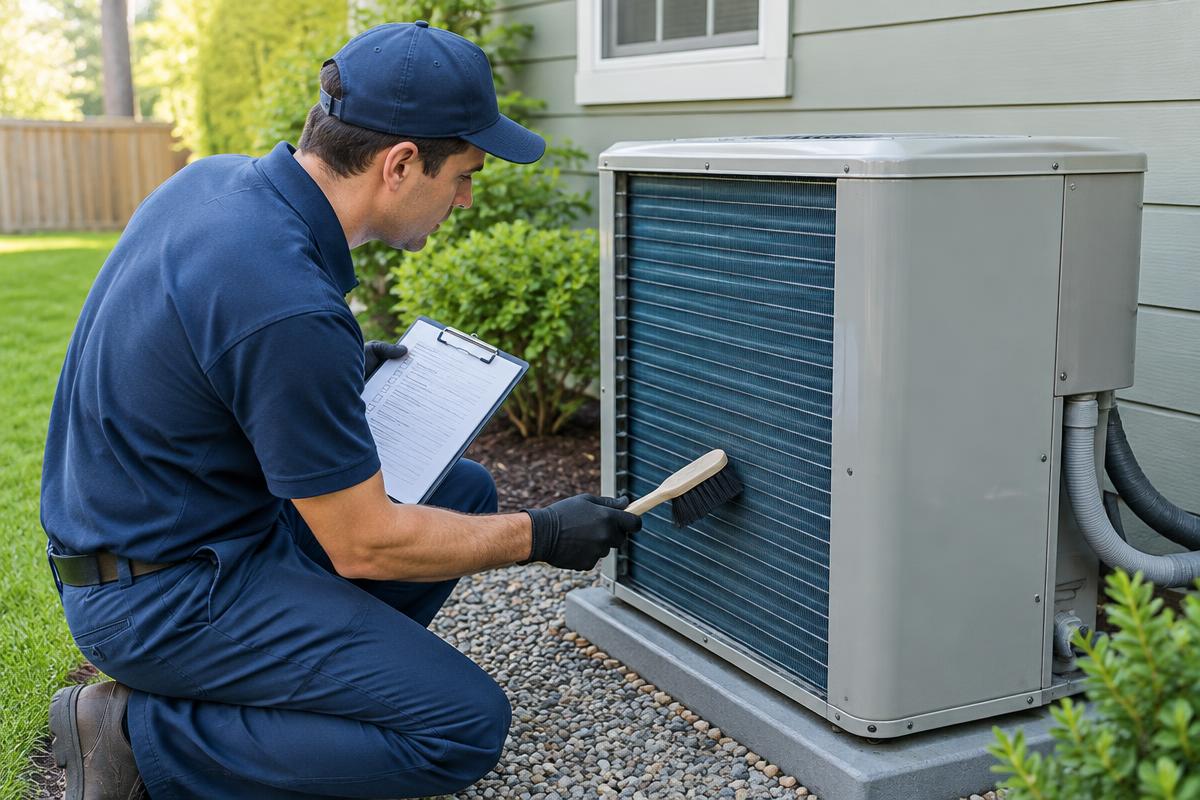
Why is heat pump maintenance necessary?
The heat pump is the most modern and efficient solution for heating and cooling a building in Greece. However, like any high-tech mechanical device, it requires regular care to maintain its high Coefficient of Performance (COP) and to avoid costly breakdowns. Lack of maintenance does not only lead to increased electricity consumption but also drastically reduces the lifespan of the compressor, which is the “heart” of the system.
A properly executed service ensures that the refrigerant circulates correctly, the heat exchangers are clean for optimal heat transfer, and the electronic control systems operate without errors. Given Greek conditions, with dust and high summer temperatures, the need for technical inspection becomes even more imperative.
What a complete heat pump service includes
A professional service is not limited to a simple cleaning. It includes a series of specialized checks on both the outdoor and indoor units (if it is a split system).
1. Inspection and cleaning of the outdoor unit
- Heat exchanger (coil) cleaning: Removal of dust, leaves, and debris that obstruct airflow. Specialized chemical cleaners that do not corrode aluminum are used.
- Fan inspection: Inspection of the blades and motor for any vibrations or noises that indicate bearing wear.
- Drainage check: Cleaning of the condensate drain pipes, which is particularly important during cooling operation in the summer.
2. Refrigerant circuit inspection
- Pressure and temperature measurement: The technician checks if the operating pressures are within the manufacturer's specifications.
- Leak detection: Checking the pipe connections for any refrigerant (freon) leaks, which would reduce efficiency and put a strain on the compressor.
3. Hydraulic and electrical connections
- Circulator check: Ensuring that water is circulating with the correct flow rate through the system.
- Water filter (Y-strainer) cleaning: Perhaps the most critical point. A clogged filter reduces flow, causing flow switch errors and system shutdown.
- Tightening electrical contacts: Vibrations can loosen the contacts in the unit's panel, causing sparking or damage to the circuit boards.
How often should maintenance be performed?
The general recommendation from manufacturers and experienced technicians is annual maintenance. The best time for service is in autumn (before the start of the heating season) or spring (if the pump is used intensively for cooling as well).
In areas with high dust levels, near the sea (due to salinity), or in professional applications where the pump runs non-stop, checking the outdoor unit may need to be done twice a year. Do not forget that annual maintenance is often a condition for the validity of the warranty from the official representative.
Signs that your pump needs a technician immediately
In addition to scheduled service, you should call a technician if you notice the following:
- Unjustified increase in consumption: If your electricity bill rises sharply without any change in usage conditions.
- Short cycling: The unit switches on and off very frequently, which indicates a problem with the settings or the hydraulic network.
- Strange noises: Metallic sounds or intense vibrations from the outdoor unit.
- Error Codes: Codes on the remote control screen related to pressure or flow.
Service cost and savings
In the Greek market, the cost of a typical service for a residential heat pump usually ranges from 80€ to 150€, depending on the unit's capacity (kW) and the technician's distance. Although it may seem like an additional expense, the payback is immediate through energy savings.
An unmaintained pump with dirty heat exchangers can consume up to 20% more electricity to achieve the same result. Furthermore, the cost of replacing a burnt-out compressor due to poor maintenance can exceed 1,500€ - 2,500€, making annual service the best “insurance” for your investment.
Frequently Asked Questions (FAQ)
1. Can I clean the heat pump myself?
As an owner, you can remove visible obstacles (leaves, branches) around the outdoor unit and gently wash the coil with low-pressure water. However, the inspection of fluids, water filters, and electronics must be done exclusively by a certified refrigeration or heating technician.
2. What will happen if I don't service it for years?
The performance will gradually drop, the unit will run for more hours (thus consuming more electricity), and there is a high risk that the heat exchanger will suffer permanent damage or the compressor will develop a mechanical failure due to overheating.
3. Does service include topping up the refrigerant?
Not necessarily. In a correctly installed and sealed system, the refrigerant does not “run out”. If a top-up is needed, it means there is a leak that must first be identified and repaired, with additional labor and material costs.
4. How long does the maintenance take?
A proper service takes about 1 to 2 hours, depending on the complexity of the installation and the accessibility of the units.
Conclusion
The heat pump is the most efficient heating system, provided it operates according to the manufacturer's specifications. Annual maintenance by a specialized technician is not a luxury, but a necessity to protect the device, reduce operating costs, and ensure comfort in your home for many years.