
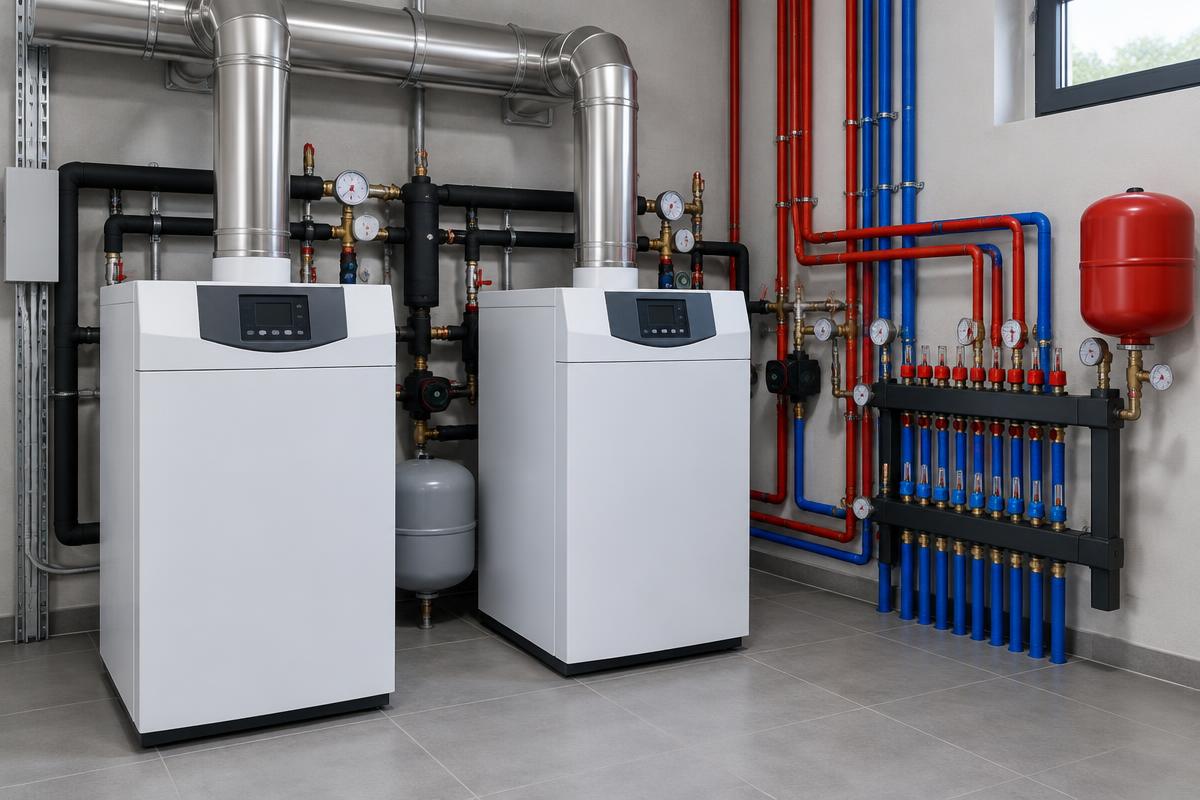
Introduction: The critical decision regarding the heating system
As heating technicians, the most frequent question we receive during the annual inspection is: "How much longer will this boiler last?" The truth is that a boiler is not just an appliance, but the heart of your home during the winter months. The decision to replace it should not be made in the heat of the moment, nor should it be postponed until you are left without heating in the middle of winter.
In this article, we will analyze the technical and economic criteria that indicate your boiler has reached the end of its life cycle, helping you make a sound investment for the future.
1. The age of the system and technological obsolescence
In the Greek market, most oil or gas boilers have a life expectancy of 15 to 20 years, provided they are properly maintained. If your boiler is approaching or exceeding 15 years, it is entering the "danger zone".
Why does age matter?
- Efficiency drop: Over the years, corrosion and scale deposits on the heat exchanger reduce the heat transfer capacity.
- Availability of spare parts: For models over 20 years old, finding circuit boards, pumps, or nozzles can become difficult and expensive.
- New standards: Modern condensing gas boilers offer efficiency levels reaching 108%, while older atmospheric boilers rarely exceed 85-90%.
2. Frequency and cost of repairs
A general rule we use in the industry is the "50% Rule". If the cost of a single repair exceeds 50% of the value of a new, modern boiler, replacement is the only logical choice.
However, you should also be aware of "hidden" costs. If you call a technician two or three times each season for minor faults (e.g., sensors, valves, leaks), the sum of these expenses over two years often equals the down payment for a new system. Furthermore, frequent breakdowns are a sign that the internal parts of the boiler have suffered structural fatigue.
3. Visual signs and functional warnings
Often, the boiler itself "speaks" about its condition. As owners, you should be observant of the following signs:
- Corrosion and rust: If you see obvious signs of rust on the boiler body or water leaks from the combustion chamber, this means the metal has begun to erode.
- Unusual noises: Metallic sounds, "knocking," or loud humming during the start of combustion indicate problems with the pump or serious scale deposits.
- Change in flame color: In gas boilers, the flame should be steadily blue. A yellow or orange flame can mean incomplete combustion and carbon monoxide production, which is extremely dangerous.
- Increased consumption: If your bills are increasing without any change in usage or energy unit price, the boiler is simply "burning" money without delivering performance.
4. The transition to condensation and savings
Today, legislation and the market are shifting towards condensing boilers. This technology exploits the latent heat of flue gases, which older boilers simply "threw" into the atmosphere.
Replacing an old oil boiler with a new natural gas condensing boiler or a state-of-the-art condensing oil boiler can result in a reduction in consumption of 20% to 40%. In an average Greek home, the investment can pay for itself within 4 to 7 years, solely from the difference in fuel consumption.
5. When does repair still make sense?
Not every failure is a death sentence. Replacement can wait if:
- The boiler is under 10 years old.
- The damage concerns a peripheral component (e.g., an expansion tank or a room thermostat) and not the boiler block itself.
- The general condition of the piping network is good and performance remains stable.
Frequently Asked Questions (FAQ)
1. How much does a standard boiler replacement cost in Greece?
The cost varies depending on power (kW) and fuel type. For a wall-mounted natural gas boiler, the cost including installation usually ranges between €1,200 and €2,500. For an oil boiler, prices start from €1,500 and can reach €3,500 for complete condensing systems.
2. Is it mandatory to install a condensing boiler?
According to European ErP directives, manufacturers now produce almost exclusively condensing units. Although there are exceptions for specific types of installations, condensation is the standard that ensures legal and efficient operation.
3. Can I change only the burner and not the whole boiler?
Yes, if the boiler (the metal body) is in excellent condition. However, the heart of efficiency is the combination of both. Changing only the burner offers partial improvement but does not reach the economy of a new integrated system.
4. What is the best time for replacement?
The ideal period is from May to September. Technicians have greater availability, prices may be more competitive due to off-season offers, and there is no pressure from the cold.
Conclusion
Boiler replacement is a strategic decision that affects the comfort and economy of your home for the next twenty years. If your boiler is experiencing frequent breakdowns, is over 15 years old, or has visible signs of damage, investing in a new condensing system is the smartest move. Always consult a licensed heating technician to perform a heat loss study and suggest the appropriate power for your needs.