
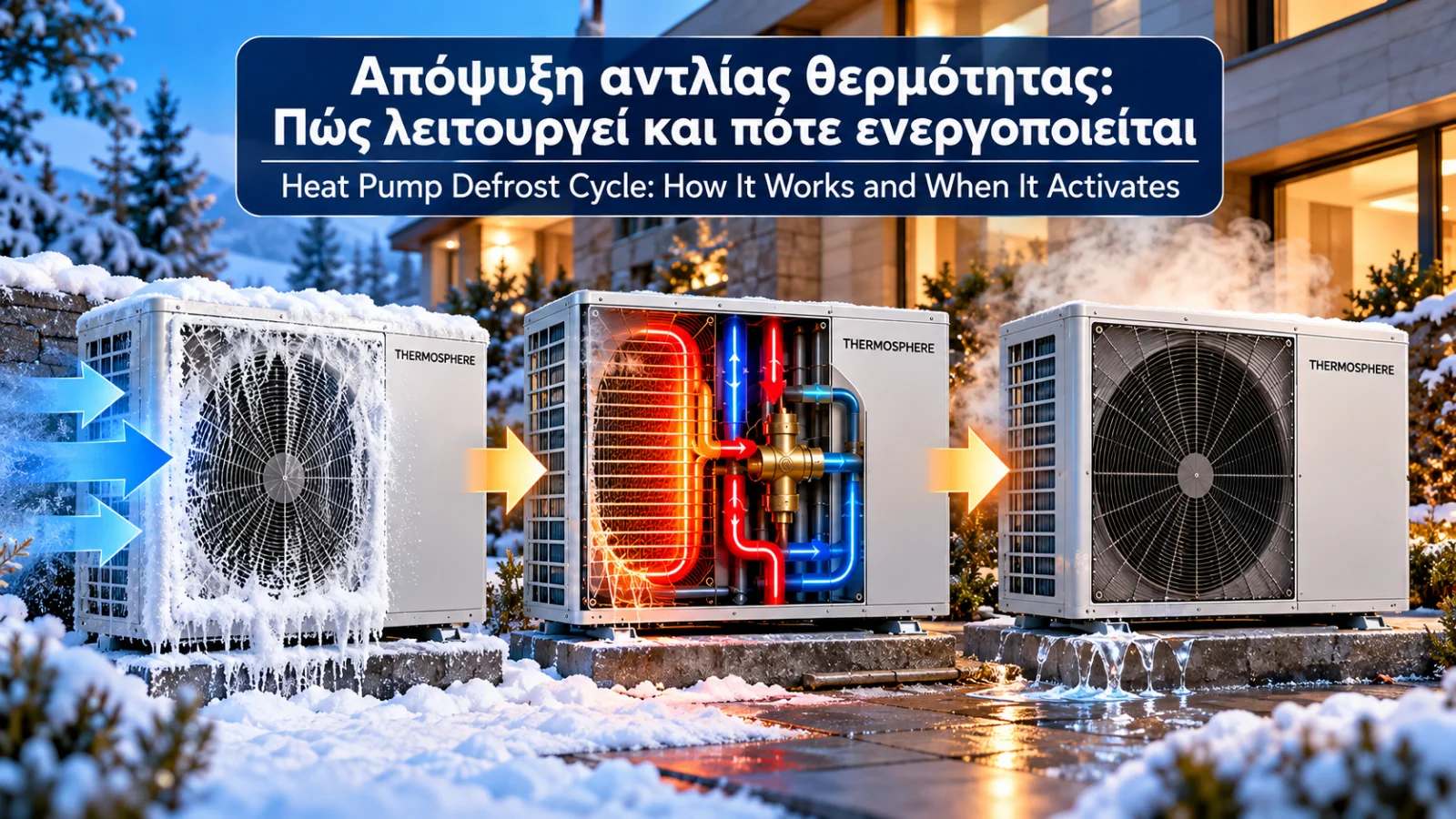
Heat Pump Defrost Cycle: How It Works and When It Activates
Air-to-water heat pumps extract thermal energy from outdoor air, even when temperatures are low.
During winter operation, frost may form on the outdoor heat exchanger. To remove this frost, the heat pump activates a process known as the defrost cycle.
Defrosting is a normal operating function of many heat pumps and does not automatically indicate a fault.
This guide explains why frost forms, how defrost works, how long it takes and when professional inspection may be necessary.
1. Why Does Frost Form on the Outdoor Unit?
During heating operation, the outdoor heat exchanger absorbs energy from the surrounding air.
To transfer heat, the exchanger surface often operates at a temperature below the outdoor air temperature.
When the surface is sufficiently cold, moisture from the air can condense and freeze.
Frost formation depends on several factors:
Outdoor air temperature.
Relative humidity.
Heat exchanger surface temperature.
Operating duration.
Airflow conditions.
Important: Frost can form even when outdoor air temperatures are above 0°C, provided the heat exchanger surface is below freezing.
2. What Is a Heat Pump Defrost Cycle?
The defrost cycle is an automatic process designed to remove ice from the outdoor heat exchanger.
Accumulated frost restricts airflow and reduces heat transfer.
If excessive ice remains on the coil, heating performance can decrease.
Manufacturers therefore incorporate defrost control into their systems.
Many reversible heat pumps use temporary refrigerant cycle reversal to warm the outdoor coil.
3. How Does Defrost Work Step by Step?
Step 1: Frost Condition Detection
The controller monitors operating parameters that may include:
Outdoor air temperature.
Heat exchanger temperature.
Operating time.
Refrigerant circuit conditions.
The exact detection algorithm depends on the manufacturer and model.
Step 2: Defrost Activation
When the required conditions are met, the heat pump initiates defrost.
In reverse-cycle systems, the four-way reversing valve changes the refrigerant flow path.
Step 3: Outdoor Heat Exchanger Heating
Hot refrigerant is directed toward the outdoor heat exchanger.
The coil temperature rises, allowing accumulated ice to melt.
The outdoor fan often stops or follows a special operating sequence during defrost.
Step 4: Meltwater Drainage
As the ice melts, water must drain away from the outdoor unit.
Poor drainage may allow water to refreeze around the base of the unit.
Step 5: Return to Heating
After defrost is complete, the system returns to normal heating operation.
4. What Does the Four-Way Reversing Valve Do?
The four-way reversing valve is used in many reversible refrigeration systems to redirect refrigerant flow.
During normal heating, the outdoor heat exchanger absorbs heat from the air.
During reverse-cycle defrost, the outdoor heat exchanger receives heat to melt accumulated frost.
The reversing valve is therefore a key component in this defrost method.
However, not every heat pump uses the same defrost technology.
5. When Does Defrost Activate?
There is no single outdoor temperature at which every heat pump starts defrosting.
Defrost demand depends on temperature, humidity and actual operating conditions.
For example, significant frost may develop at approximately 2°C when humidity is high.
At lower temperatures with dry air, frost accumulation may be less severe.
The controller determines when defrost is necessary according to the manufacturer's programmed logic.
6. How Long Does Defrost Last?
Defrost duration depends on:
Amount of accumulated frost.
Outdoor temperature.
Unit design and capacity.
Control strategy.
Available thermal conditions.
In many installations, defrost lasts a few minutes, often around 3–10 minutes, but this is not a universal operating limit.
Actual duration and termination criteria are determined by the manufacturer.
7. What Happens to Indoor Heating During Defrost?
In an air-to-water heat pump using reverse-cycle defrost, heat may temporarily be extracted from the hydronic circuit to warm the outdoor coil.
As a result:
Heating output to the building may temporarily decrease or stop.
Water temperature may fall.
An auxiliary electric heater may operate if fitted and permitted by the control logic.
Normal heating resumes after defrost.
Correct system sizing and adequate water volume help support stable operation.
8. Is Steam from the Outdoor Unit Normal?
Yes, under certain conditions.
During defrost, ice melts and the outdoor coil becomes warmer.
A visible white cloud of water vapor may appear around the unit, particularly in cold weather.
This can be completely normal.
However, smoke accompanied by a burning smell, unusual noise or electrical fault indications requires professional attention.
9. Why Does a Heat Pump Defrost Frequently?
Defrost frequency depends on outdoor conditions and unit operation.
Potential causes of frequent defrost include:
High humidity.
Weather conditions favorable to frost formation.
Restricted airflow.
Unsuitable installation location.
Ice accumulation caused by poor drainage.
Possible sensor or control faults.
Frequent defrost does not necessarily indicate a malfunction.
However, repeated defrost accompanied by poor heating performance or fault codes should be investigated.
10. What Happens When Defrost Is Not Working Properly?
If defrost does not operate effectively, ice may remain on the outdoor heat exchanger.
Possible symptoms include:
Continuous ice accumulation.
Reduced heating output.
Repeated fault indications.
Unusually long defrost cycles.
Restricted airflow.
Potential causes may involve sensors, controls, the outdoor fan, refrigerant circuit or installation conditions.
Accurate diagnosis requires suitable equipment and technical expertise.
11. How Can Proper Drainage Be Maintained?
Meltwater must drain safely without creating hazardous ice accumulation.
Important installation considerations include:
Outdoor unit positioning.
Unobstructed water drainage.
Clearance above ground level.
Refreezing risk.
Manufacturer requirements for drainage and frost protection.
Some installations use dedicated base-pan or drain heaters where approved by the manufacturer.
12. What Should You Avoid When Ice Appears?
Do not:
Strike the coil to remove ice.
Use sharp tools.
Pour boiling water onto the outdoor unit.
Interfere with the refrigerant circuit.
Bypass sensors or safety devices.
Improper intervention may damage coil fins, refrigerant tubing or electrical components.
13. Frequently Asked Questions
Is frost on the outdoor unit normal?
Yes. Temporary frost formation can be normal during winter heating operation.
How often should a heat pump defrost?
There is no fixed interval applicable to all units. Frequency depends on weather conditions and control logic.
Does defrost increase electricity consumption?
Defrost requires energy and temporarily interrupts normal heat delivery. It therefore affects seasonal efficiency.
Can a heat pump operate below freezing?
Yes, provided the specific model is designed for those temperatures. Operating limits are specified by the manufacturer.
When should I call a technician?
Professional inspection is recommended if ice remains for extended periods, defrost fails to complete, fault codes appear or heating performance decreases significantly.
Conclusion
Defrosting is an essential operating function of air-to-water heat pumps working in low outdoor temperatures.
Frost formation on the outdoor heat exchanger is often normal and is automatically managed through the defrost cycle.
Proper installation, adequate airflow, effective drainage and regular maintenance support reliable operation.
Unusual defrost behavior should be investigated according to the manufacturer's technical documentation.
Thermosphere.gr — Technical knowledge for heating and building systems.