
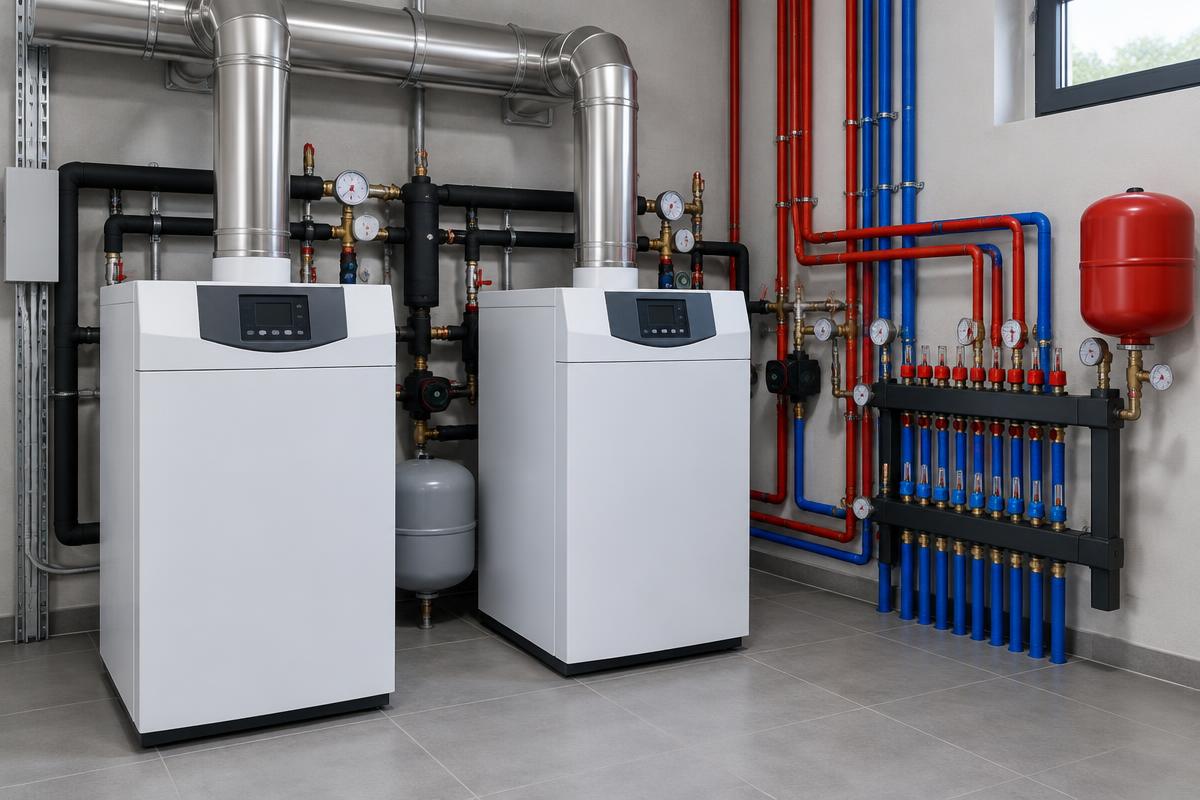
Introduction to Condensing Technology
Choosing a heating system is one of the most important decisions for a property owner in Greece, especially with fluctuating energy prices. In recent years, the market has been flooded with so-called condensing boilers, while old conventional boilers are gradually being phased out. In this article, we will examine from a technical perspective their differences, the actual operating cost, and which investment pays for itself faster under Greek climatic conditions.
What is a Conventional Boiler and how does it work?
The conventional (non-condensing) boiler represents traditional heating technology. During fuel combustion (natural gas or oil), exhaust gases are produced which are expelled directly through the chimney into the environment. These exhaust gases have very high temperatures, often exceeding 150-180°C.
- Simplicity of construction: Fewer electronic parts and simple heat exchangers.
- Energy losses: A significant percentage of thermal energy is literally "thrown away" into the atmosphere via the exhaust gases.
- Efficiency rate: Usually ranges between 88% and 92%.
Condensing Technology: Why is it considered superior?
The basic difference of a condensing boiler lies in its ability to utilize the latent heat of the water vapor contained in the exhaust gases. Instead of letting the steam escape, it cools it until it liquefies (condensation), releasing additional thermal energy into the heating system.
How is the saving achieved?
When water vapor liquefies, it returns energy to the boiler's heat exchanger. Thus, the exhaust gases exit the chimney at much lower temperatures (approximately 50-60°C). This allows condensing boilers to reach a nominal efficiency rating of up to 108% or 109% (based on the lower heating value of the fuel).
Cost Comparison: Purchase, Installation, and Operation
In the Greek market, the price difference between the two types has now decreased significantly, mainly due to the European Union's ErP legislation which mandates the use of condensing boilers for new installations.
- Purchase Cost: A quality condensing boiler for a 100sqm home ranges from 900€ to 1,600€, while remaining conventional ones (where allowed) cost 600€-900€.
- Installation Cost: A condensing boiler requires a drain for the condensate (the liquids produced) and a special plastic (PP) chimney, which may increase labor costs by 100-200€.
- Fuel Savings: In practice, a condensing boiler offers 15% to 30% savings compared to an old conventional boiler, especially if combined with external weather compensation.
When is replacement worth it?
The choice depends on the building's usage profile. If the heating operates for many hours a day and the system includes panel radiators or underfloor heating, a condensing boiler is the only way to go.
Low-Temperature Conditions
A condensing boiler performs at its best when the return water from the radiators is below 54°C. If you have old, small radiators that require very high temperatures (e.g., 80°C) to heat the space, the boiler will operate as a conventional one for a large part of the time, reducing the benefit of condensation.
Frequently Asked Questions (FAQ)
1. Can I install a condensing boiler in an old apartment building?
Yes, it is possible. However, proper management of the condensate drain will be needed, as well as potential replacement of the chimney section concerning your apartment.
2. What maintenance does a condensing boiler require?
It requires an annual cleaning of the heat exchanger and inspection of the condensate siphon. Also, it is important to check the combustion analysis to ensure that the boiler remains in condensation mode.
3. Is external weather compensation necessary?
Although not mandatory, weather compensation allows the boiler to adjust the water temperature according to the weather, maximizing the hours the machine performs condensation, and therefore, the economy.
4. How long does it take for the extra expense to pay off?
With current energy prices in Greece, the purchase cost difference between a conventional and a condensing boiler is usually recovered within 2 to 3 heating seasons.
Conclusion
Although the conventional boiler appears to be a cheaper solution initially, the condensing boiler is the most rational investment for the future. High efficiency, reduced consumption, and environmental friendliness make it the ideal choice for every modern Greek home. Before purchasing, consult a licensed engineer or gas technician to study the needs of your space.