
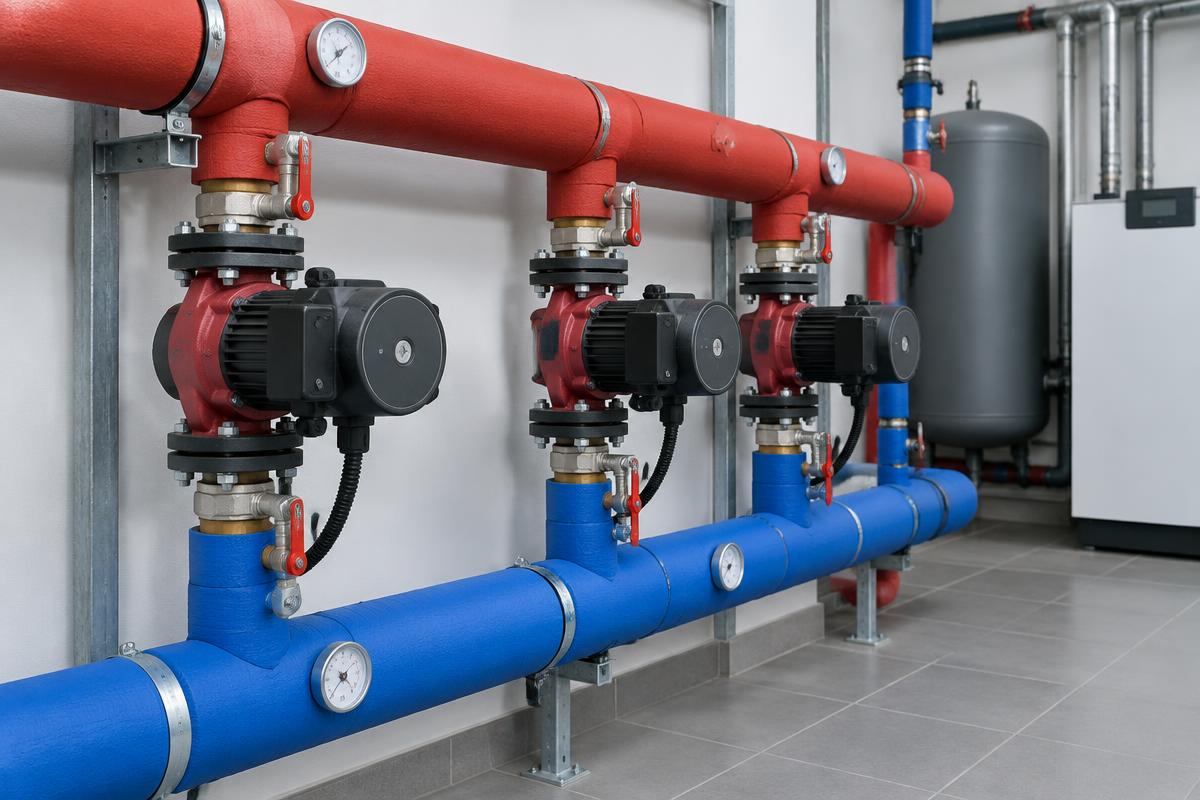
Introduction: The silent “heart” of heating
In every central or individual heating system, the circulator plays the most critical role: it is the pump that transports hot water from the boiler to the radiators or underfloor heating system. Although it is a small device, it operates continuously for 6 to 8 months a year in Greece. Older fixed-speed circulators are among the biggest energy “thieves” in a home, as they consume energy as if a 100W light bulb were running 24 hours a day.
The difference between old-style and Inverter technology
Traditional circulators usually operate at 3 fixed speeds. This means they consume the same amount of electricity regardless of whether the thermostatic valves in the rooms are open or closed. Conversely, modern high-efficiency circulators use permanent magnet motors and inverter technology.
- Old circulator: Constant consumption of 60W - 100W, low efficiency, increased noise in the piping.
- New circulator (ErP): Variable consumption of 4W - 45W, automatic adjustment to system needs, silent operation.
According to the European Ecodesign (ErP) directive, only circulators with an Energy Efficiency Index (EEI) ≤ 0.23 have been permitted for sale since 2013.
Calculation of savings: How much electricity do you save in Greece?
Let’s look at a realistic example for an average 100 sq.m. Greek home with 150 days of heating operation per year.
Scenario A: Old 3-speed circulator
An old circulator set to medium speed consumes about 75 Watts. If it operates 12 hours a day:
- Daily consumption: 0.075 kW x 12 h = 0.9 kWh
- Annual consumption: 0.9 kWh x 150 days = 135 kWh
Scenario B: High-efficiency Inverter circulator
A new circulator in a similar installation, due to its variable speed capabilities, consumes an average of 15 Watts.
- Daily consumption: 0.015 kW x 12 h = 0.18 kWh
- Annual consumption: 0.18 kWh x 150 days = 27 kWh
Conclusion: The savings reach 80%, which is approximately 108 kWh per year. With current electricity prices (approximately €0.18 - €0.22/kWh), the gain is €20-€25 annually per circulator. In apartment buildings with larger circulators, the benefit can exceed €150 per year.
Technical advantages beyond energy consumption
The replacement not only offers savings on your electricity bill, but also improves the overall system operation:
- Noise reduction: Eliminates the “whistling” in the pipes and radiators when valves close, as the circulator automatically reduces its speed.
- Motor protection: They feature self-diagnosis and anti-blocking functions (start-up with high torque).
- Longer service life: Less strain due to lower operating speeds means less wear and tear on seals and bearings.
Practical installation tips
As a technician, I always recommend the following during replacement:
1. Proper sizing
Do not install a larger circulator than the system requires. A circulator with a head of 4 or 6 meters (e.g., 25-40 or 25-60) covers most detached houses and apartments.
2. System flushing
Before installing the new circulator, a thorough flushing of the pipes is essential. New circulators have magnetic motors that attract iron filings (sludge) from the system, which can destroy them if a magnetic filter is not present.
3. Operational setting
Select the correct curve (constant pressure for underfloor, variable pressure for radiators with thermostatic heads) to maximize efficiency.
Frequently Asked Questions (FAQ)
How much does a high-efficiency circulator cost?
Prices for a quality residential inverter circulator range from €110 to €180, depending on the head and brand. Installation labor is usually simple and ranges from €40 to €70.
Can I install it myself?
Although it seems simple, installation by a licensed plumber or heating technician is recommended. Proper venting and electrical connection are required, as well as checking for potential leaks that could damage the electronic components.
When will the purchase pay for itself?
In an average home, the payback period is 4-6 years from electricity savings alone. If we include boiler protection and improved comfort, this is considered one of the most efficient investments in heating.
Summary
Replacing an old circulator with a modern, high-efficiency one is a “smart” upgrade. With minimal cost, you reduce your home’s energy footprint, ensure silent heating, and protect your installation from future damage. It is perhaps the only heating component that “pays for itself” so quickly.