
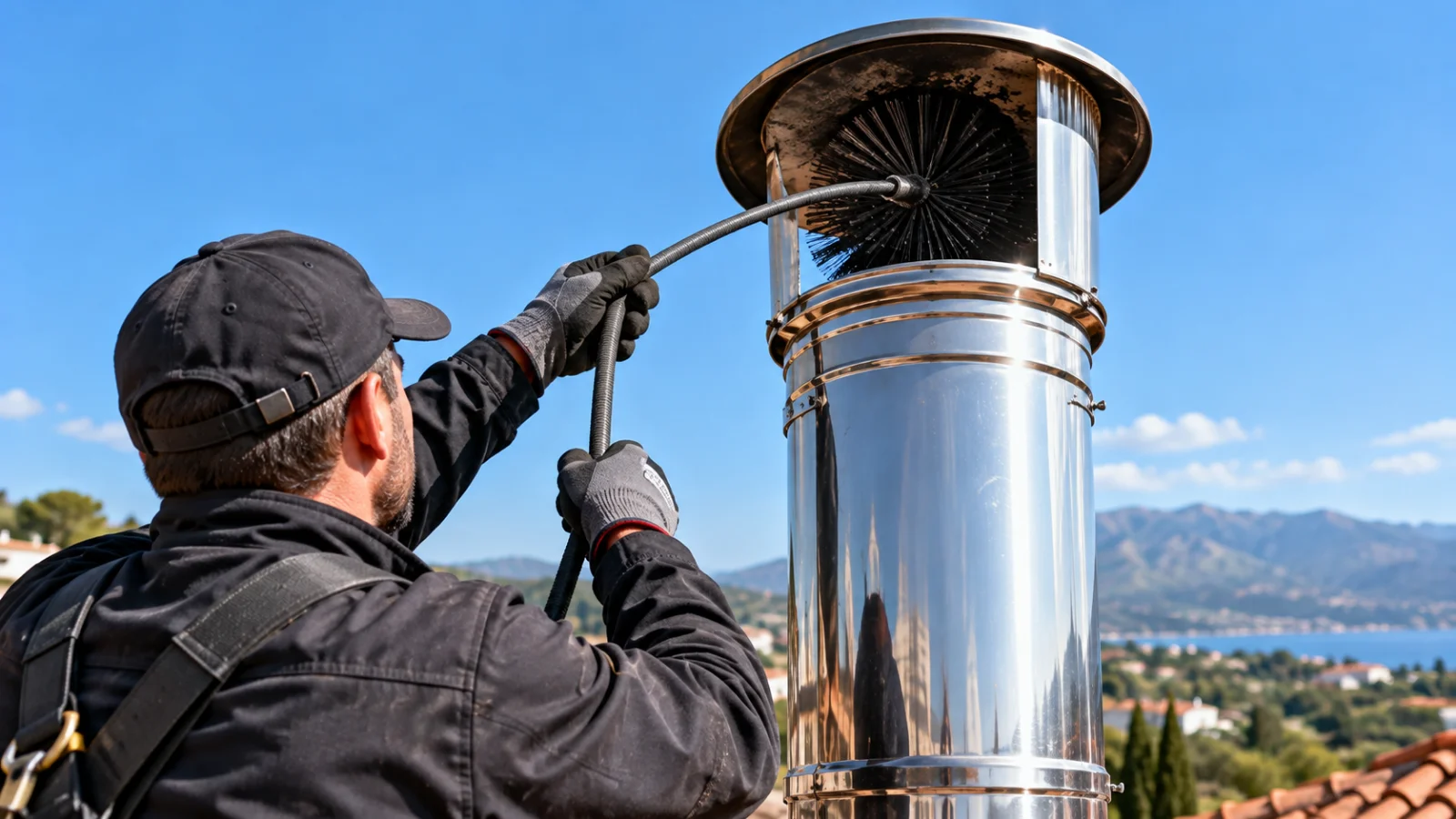
Chimney Cleaning: When Is It Necessary, How Is It Done and What Are the Risks?
Chimney cleaning is an essential part of maintaining heating appliances that burn fuel and use a flue system to discharge combustion gases.
During the operation of a fireplace, wood-burning stove or other combustion appliance, soot, tar-like substances and other deposits may accumulate inside the chimney.
These deposits can reduce the available flue cross-section, increase resistance to flue gas flow and, particularly in solid-fuel installations, create a fire hazard.
Proper chimney cleaning involves more than removing soot. It should be combined with an inspection of the chimney and its components.
Why Does a Chimney Need Cleaning?
Combustion produces gases and particles that travel through the chimney.
Some particles and condensable substances may adhere to the internal chimney walls.
The accumulation of deposits depends on factors such as:
Type of fuel.
Combustion quality.
Flue gas temperature.
Chimney wall temperature.
Frequency of appliance use.
Chimney geometry and thermal insulation.
As deposits accumulate, they may restrict flue gas flow and create unfavourable operating conditions.
What Is Soot?
Soot consists mainly of fine carbon-containing particles produced during incomplete combustion.
It can accumulate on chimney walls, particularly when combustion conditions are poor.
The presence of soot does not necessarily mean that the chimney is blocked. However, significant deposits require inspection and removal.
What Is Creosote and Why Is It Dangerous?
Creosote is a general term used for combustible deposits containing organic compounds that form inside chimneys connected to wood-burning appliances.
These deposits may appear in different forms:
Dry, loose residues.
Dark, sticky deposits.
Hard, glossy coatings.
Their composition and appearance depend on combustion conditions and flue gas cooling.
The main danger is that these deposits can ignite.
A chimney fire may generate extremely high temperatures and damage the flue system or nearby building materials.
When Should a Chimney Be Cleaned?
There is no single cleaning interval suitable for every chimney.
The required frequency depends on:
Type of heating appliance.
Fuel used.
Frequency and duration of operation.
Combustion quality.
Amount and type of deposits.
Manufacturer's instructions.
Applicable maintenance requirements.
For regularly used fireplaces and wood-burning stoves, arranging a professional inspection before the heating season is a sensible practice.
Depending on usage and inspection findings, cleaning may be necessary more than once a year.
The appropriate cleaning frequency should be based on actual operating conditions rather than the calendar alone.
What Are the Signs That a Chimney Needs Inspection?
Possible warning signs include:
Difficulty evacuating smoke.
Smoke entering the room.
Unusual chimney odours.
Visible deposits inside the flue.
Soot or debris falling from the chimney.
Changes in appliance operation.
However, a chimney may require cleaning even when no obvious symptoms are present.
The absence of smoke in the room does not prove that the chimney is clean or safe.
How Is Professional Chimney Cleaning Performed?
The exact procedure depends on chimney construction and manufacturer requirements.
Professional chimney cleaning may include the following steps.
1. Initial Inspection
The chimney's general condition, accessibility and possible obstructions are assessed.
2. Protection of the Surrounding Area
Appropriate precautions are taken to prevent soot and dust from spreading into the building.
3. Mechanical Removal of Deposits
Suitable brushes or other approved tools are used according to the chimney material and internal dimensions.
4. Collection and Removal of Residues
Dislodged soot and debris are collected and removed using appropriate equipment.
5. Final Inspection
The chimney is checked for remaining deposits, damage, blockages or other maintenance requirements.
Cleaning does not replace a more detailed inspection when structural damage or operating problems are suspected.
Can Chemical Chimney Cleaners Replace Professional Sweeping?
Various products are marketed as chimney cleaning aids.
However, using such products does not guarantee complete deposit removal or safe chimney operation.
Hard, glossy creosote deposits may require specialist treatment.
Chemical cleaning products should not be considered a substitute for professional chimney inspection and sweeping.
What Happens If a Chimney Is Not Cleaned?
Neglecting chimney maintenance can lead to:
Accumulation of soot and creosote.
Reduction of the available flue cross-section.
Increased flow resistance.
Poor chimney draft.
Smoke entering the occupied space.
Increased risk of a chimney fire.
The severity of these problems depends on the appliance type and condition of the flue system.
Chimney Fires: What Are the Warning Signs?
A chimney fire may be accompanied by:
Loud roaring or unusual noises.
Sparks or flames emerging from the chimney termination.
Abnormally high temperatures in parts of the chimney.
A strong burning smell.
Not all signs are necessarily present, and some chimney fires may go unnoticed initially.
Safety warning: If you suspect a chimney fire, evacuate the building and contact the fire service immediately. Do not attempt to extinguish the fire by pouring water into the chimney. Do not use the appliance again until the entire installation has been professionally inspected.
Do Gas and Oil Boiler Flues Also Need Cleaning?
Yes. Flue gas evacuation systems should be inspected and maintained according to the requirements of the specific installation.
However, the type of deposits and maintenance needs vary depending on the fuel and appliance.
For example, inspection of a gas boiler flue system may focus on:
Obstructions.
Corrosion.
Joint integrity.
Component condition.
Correct condensate drainage, where applicable.
Cleaning methods used for solid-fuel chimneys should not automatically be applied to other flue systems.
How Does Chimney Cleaning Affect Draft?
Deposits reduce the available cross-sectional area and can increase pressure losses.
In natural-draft installations, this may affect the chimney's ability to evacuate combustion gases.
However, if draft problems continue after cleaning, other factors should also be investigated, including:
Chimney diameter.
Chimney height.
Thermal insulation.
Termination position.
Combustion air supply.
Cleaning is an important maintenance measure, but it cannot correct fundamental chimney design or installation defects.
Common Chimney Maintenance Mistakes
Cleaning Only After Smoke Problems Appear
Waiting until the chimney malfunctions may create unnecessary safety risks.
Using Unsuitable Cleaning Tools
Some tools can damage metal chimney liners or other components.
Ignoring the Chimney Termination
Bird nests, leaves and other objects can create obstructions.
Overlooking Cracks and Leaks
A clean chimney is not necessarily structurally sound or gas-tight.
Using an Appliance After a Chimney Fire
The installation must be inspected before being returned to service, even if no visible damage is apparent.
Conclusion
Chimney cleaning is an essential maintenance and safety measure.
Soot and creosote accumulation can restrict flue gas flow and increase the risk of fire, particularly in wood-burning installations.
The appropriate cleaning frequency depends on the appliance, fuel, usage and manufacturer requirements.
Professional inspection and correct cleaning help identify developing problems and support safer operation of the heating installation.
Technical References
EN 15287-1 — Chimneys: Design, installation and commissioning — Part 1.
EN 1443 — Chimneys: General requirements.
EN 1856-1 — Chimneys: Requirements for metal chimneys — Part 1: System chimney products.
Appliance and chimney manufacturer instructions concerning inspection, cleaning and maintenance.
The applicable editions of standards and relevant national regulations should be verified for each installation.