
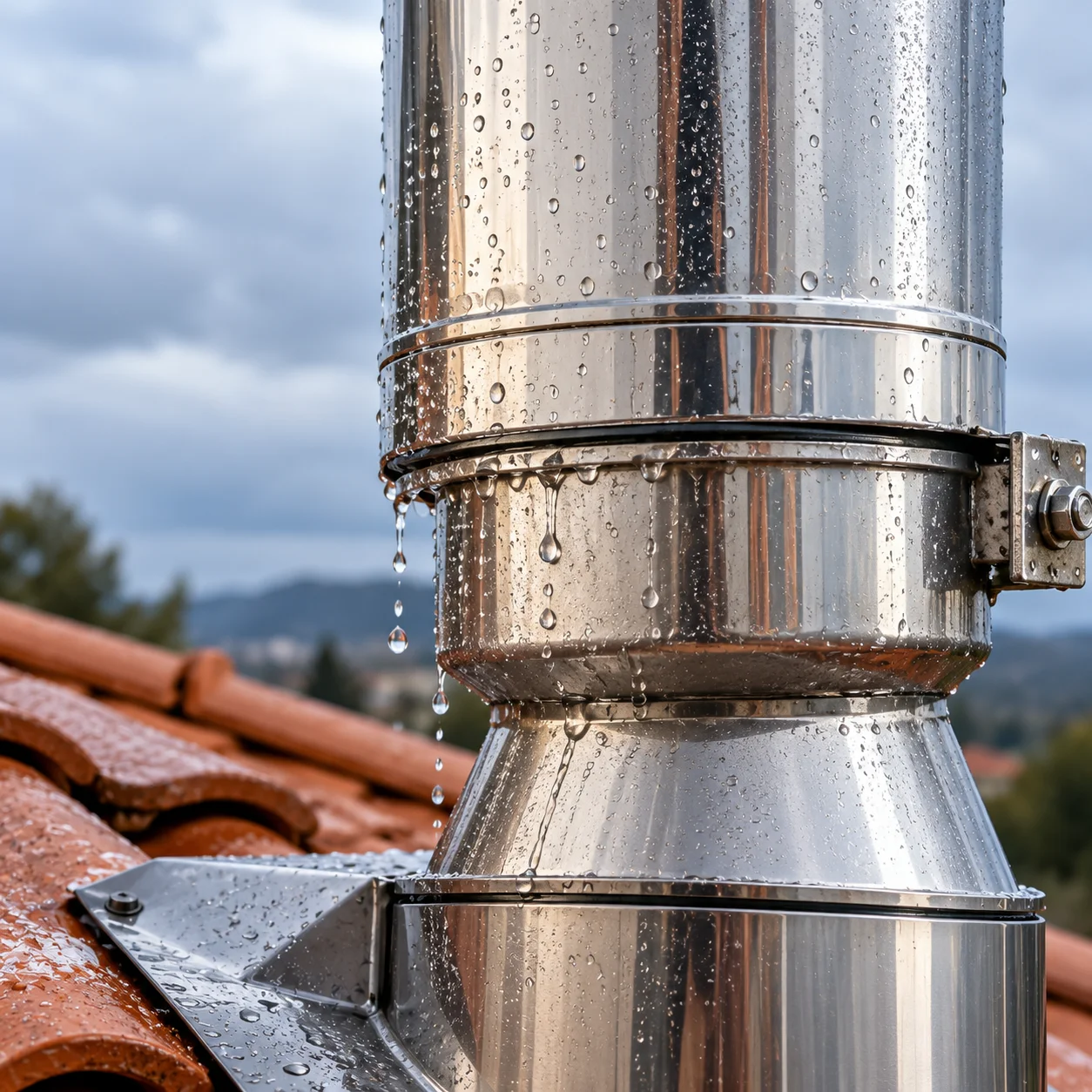
Water Leaking from a Chimney: Causes, Diagnosis and Solutions
Water leaking from a chimney may indicate a waterproofing defect, unwanted flue gas condensation or a failure in one of the components of the combustion gas evacuation system.
Water may appear at the bottom of the chimney, around the heating appliance connection, on the ceiling or on walls near the chimney's passage through the roof.
In some heating systems, condensate production is a normal part of operation. In others, water inside the chimney may indicate that the installation is not operating as intended.
The first step in solving the problem is identifying where the water comes from.
Rainwater intrusion, flue gas condensation and leakage through defective joints require different technical solutions.
Why Is Water Appearing in the Chimney?
The most common causes include:
Rainwater entering through the chimney outlet.
Failed waterproofing where the chimney passes through the roof.
Flue gas condensation inside the chimney.
Insufficient chimney insulation.
Incorrect condensate collection or drainage.
Damaged joints or sealing gaskets.
Incorrect assembly of chimney components.
Cracks or deterioration in masonry chimney structures.
Each situation requires a different technical assessment.
1. Rainwater Entering Through the Chimney Outlet
The chimney terminal is exposed to outdoor weather conditions.
In certain systems, rainwater may enter through the upper opening or an unsuitable terminal design.
The amount of water entering depends on several factors:
Terminal geometry.
Rainfall intensity.
Wind direction.
Chimney cap design.
Internal flue configuration.
How Can This Problem Be Solved?
The chimney outlet should be inspected to determine whether the system requires a rain cap or another specific terminal.
Installing a generic chimney cap without checking compatibility is not recommended.
This is particularly important for fan-assisted boilers and concentric air/flue systems, where the terminal is often an approved component of the complete installation.
Any replacement must comply with the manufacturer's instructions.
2. Water Leaking Around the Chimney at Roof Level
One of the most common causes of water appearing around a chimney is defective roof waterproofing.
A chimney penetration interrupts the continuous waterproof surface of the roof.
Suitable components are therefore used to protect this area.
Depending on the roof construction, these may include:
Metal chimney flashing.
Special roof penetration assemblies.
Weatherproof collars.
Roof-specific waterproofing components.
If these elements are damaged, displaced or incorrectly installed, rainwater may enter the building structure.
How Can You Recognise a Roof Flashing Leak?
Typical warning signs include:
Dampness around the chimney penetration.
Water stains on an interior ceiling.
Dripping after heavy rainfall.
Deterioration of roof timber.
Moisture appearing even when the heating appliance is switched off.
What Is the Correct Solution?
The roof penetration and its waterproofing components must be inspected.
Applying sealant to the visible wet area is not always a reliable or permanent solution.
The actual water entry point must be identified and repaired without compromising the chimney's fire safety requirements.
3. Flue Gas Condensation Inside the Chimney
Combustion gases contain water vapour produced during the combustion process.
When the gases cool sufficiently, some of this vapour may condense on the internal surfaces of the flue.
Condensation is particularly relevant in installations operating with relatively low flue gas temperatures.
In systems designed for wet operation, condensate production may be expected.
However, persistent condensation in a chimney designed for dry operation may indicate a technical problem.
What Factors Increase Condensation?
Low flue gas temperatures.
Excessive cooling of the chimney.
Insufficient thermal insulation.
Incorrect chimney sizing.
Long external chimney sections.
Frequent appliance starts and stops.
Condensation cannot always be prevented simply by increasing operating temperature.
In condensing boilers, condensate production is part of normal operation and requires appropriate collection and drainage.
4. Insufficient Chimney Insulation
Thermal insulation influences how quickly combustion gases cool as they travel through the chimney.
A chimney running through an exposed outdoor environment may experience greater heat loss than a similar chimney located inside a building.
Depending on the operating conditions, this may increase the likelihood of condensation.
Is an Insulated Chimney the Solution?
In some installations, a suitable insulated chimney system can reduce flue gas cooling.
However, insulation is not the correct solution for every situation.
If the heating appliance is designed to operate with condensation, the primary requirement is a suitable flue system with proper condensate management.
Insulation must be selected as part of the overall chimney design.
5. Incorrect Condensate Drainage
In systems where condensate production is expected, there must be an appropriate method for collecting and removing it.
Depending on the installation, the system may include:
Condensate collectors.
Drainage and inspection fittings.
Condensate discharge pipes.
Traps.
Condensate neutralisation devices, where required.
Incorrect drainage may cause liquid to accumulate inside the flue system.
Possible Consequences
Leakage at joints.
Moisture around the heating appliance.
Corrosion of unsuitable components.
Blocked drainage pipes.
Condensate flowing into unintended areas.
The drainage arrangement must comply with the manufacturer's instructions and applicable requirements.
6. Damaged Joints and Sealing Gaskets
Some flue gas systems use specially designed sealing gaskets at their connections.
These components must be suitable for the system's operating conditions, including:
Temperature.
Pressure.
Exposure to condensate.
Chemical composition of the flue gases.
Wear, incorrect installation or the use of incompatible components may lead to leakage.
A joint that leaks water may also have a problem maintaining flue gas tightness.
For this reason, the issue should not be treated as a moisture problem alone.
The integrity of the flue system must be checked by a suitably qualified professional.
7. Incorrect Chimney Assembly
Metal chimney components must be assembled according to the instructions for the specific system.
Joint orientation, sealing arrangements and condensate management vary depending on the design.
Incorrect assembly can allow water to escape through the connections.
There is no single universal assembly method that applies to every chimney.
The correct joint orientation and installation procedure must be confirmed using the manufacturer's technical documentation.
8. Cracks in a Masonry Chimney
Older masonry chimneys may allow water to enter through cracks or deteriorated mortar joints.
Potential failure points include:
The chimney crown.
Protective coverings.
Masonry joints.
The connection with the roof.
External rendering.
The repair method must be based on an inspection of the actual defect.
In some cases, masonry repairs or more extensive reconstruction may be required.
How Can You Distinguish Rainwater from Condensation?
The timing of water appearance is a useful indicator, although it does not provide a definitive diagnosis.
Observation | Possible cause |
|---|---|
Water appears after heavy rain | Rainwater intrusion or defective roof waterproofing |
Water appears while the appliance operates | Condensation or leakage from a joint |
Water appears mainly in cold weather | Increased likelihood of condensation |
Dampness around the roof penetration | Possible flashing or waterproofing defect |
Water collects at the chimney base | Rainwater or condensate accumulation |
These observations can guide an inspection, but they cannot replace a technical assessment.
Is Water Inside a Chimney Dangerous?
The level of risk depends on the cause and consequences of the leakage.
Water may lead to:
Corrosion of metal components.
Deterioration of masonry.
Moisture damage to structural elements.
Degradation of insulation.
Damage to joints.
Heating appliance operating problems.
In flue gas systems, liquid leaking through a joint may also indicate a loss of gas tightness.
This is especially important in positive-pressure systems.
If there are signs of combustion gas leakage, smoke odours or a carbon monoxide alarm, the appliance should not continue operating until the installation has been checked and made safe.
If a carbon monoxide alarm activates or occupants experience symptoms consistent with exposure, leave the affected area immediately and contact emergency services.
Why Can Condensate Cause Corrosion?
Flue gas condensate is not necessarily pure water.
Its chemical composition depends on the fuel and combustion conditions.
It may contain acidic compounds capable of attacking unsuitable materials.
For this reason, chimney selection must take the required corrosion resistance into account.
The use of stainless steel does not automatically mean that a chimney is suitable for wet operation.
What Do the W and D Classifications Mean?
European chimney classifications include designations describing operating conditions.
W — Wet Operation
The W designation indicates that the product is classified for wet operating conditions.
D — Dry Operation
The D designation indicates that the product is classified for dry operating conditions.
The correct classification depends on the expected conditions of the installation.
A chimney classified for dry operation should not automatically be considered suitable for continuous wet operation.
How Is a Chimney Water Leak Diagnosed?
A professional inspection may include the following steps:
Establishing when the water appears.
Inspecting the chimney terminal.
Checking the roof flashing and waterproofing.
Inspecting metal chimney joints.
Checking the condensate collector.
Inspecting drainage pipes and traps.
Looking for corrosion or component damage.
Confirming whether the chimney is suitable for wet or dry operation.
Testing flue gas tightness where required.
The inspection should be carried out by a professional with appropriate technical qualifications.
Which Solution Is Appropriate for Each Cause?
When Rainwater Enters the Chimney
Inspect the terminal and apply a compatible, approved rain protection solution where appropriate.
When Water Leaks Through the Roof
Repair the roof penetration using suitable flashing and waterproofing components.
When Unwanted Condensation Occurs
Assess the chimney's thermal performance, sizing and suitability for the appliance.
When Condensate Drainage Is Blocked
Inspect and clean the designated drainage components according to the manufacturer's instructions.
When a Joint Is Defective
Repair or replace the affected components using parts approved for the system.
When Masonry Cracks Are Present
Assess the extent of deterioration and carry out appropriate structural or waterproofing repairs.
Common Mistakes When Dealing with Chimney Water Leaks
Installing a Chimney Cap Without Diagnosing the Problem
A chimney cap cannot solve condensation or leakage caused by defective joints.
Applying Sealant to Every Leak
Sealing materials must be suitable for the temperature, pressure and chemical conditions of the installation.
Blocking the Condensate Drain
Condensate drainage is an essential part of systems designed for wet operation.
Ignoring a Small Leak
A minor leak may develop into more serious damage or indicate a flue gas tightness problem.
Replacing Components with Incompatible Products
All replacement parts must be compatible with the approved chimney system.
How Can Chimney Water Leaks Be Prevented?
Prevention depends on correct system design and regular maintenance.
Important measures include:
Choosing a suitable chimney system.
Correct chimney sizing.
Inspecting roof penetration waterproofing.
Providing appropriate condensate management.
Using compatible components.
Periodically inspecting the chimney terminal.
Checking the condition of joints.
Following the manufacturer's maintenance instructions.
Frequently Asked Questions
Is It Normal for Water to Come Out of a Chimney?
Condensate production is expected in properly designed condensing systems. However, the liquid must be discharged through the intended drainage system rather than leaking uncontrollably.
Why Does My Chimney Leak Only When It Rains?
Possible causes include rainwater entering through the chimney outlet or defective waterproofing where the chimney passes through the roof.
Why Does Water Appear When I Light My Wood Stove?
Condensation may occur, particularly during start-up when the chimney is cold. Repeated or substantial leakage requires professional inspection.
Will Installing a Chimney Cap Solve the Problem?
Only if the actual cause involves rainwater entering through the outlet and the selected cap is suitable for the installation.
Can I Continue Using the Heating Appliance?
If the cause of the leakage is unknown, the installation should be checked before further use, particularly when water appears at flue gas system joints.
Conclusion
Water leaking from a chimney does not necessarily have the same cause in every installation.
It may originate from rainwater, condensation, failed waterproofing or damaged connections.
Effective treatment depends on identifying the underlying cause and applying the appropriate technical solution.
A correct diagnosis is more important than a temporary seal or the arbitrary installation of additional components.
The chimney must remain suitable for the heating appliance, maintain the required tightness under its intended operating conditions and safely discharge combustion gases.
Technical References
EN 1443 — Chimneys: General requirements.
EN 1856-1 — Chimneys: Requirements for metal chimneys — Part 1: System chimney products.
EN 1856-2 — Chimneys: Requirements for metal chimneys — Part 2: Metal flue liners and connecting flue pipes.
EN 13384-1 — Chimneys: Thermal and fluid dynamic calculation methods — Part 1.
EN 15287-1 — Chimneys: Design, installation and commissioning — Part 1.
The applicable editions of these standards, national requirements and manufacturer instructions must be verified for each installation.