
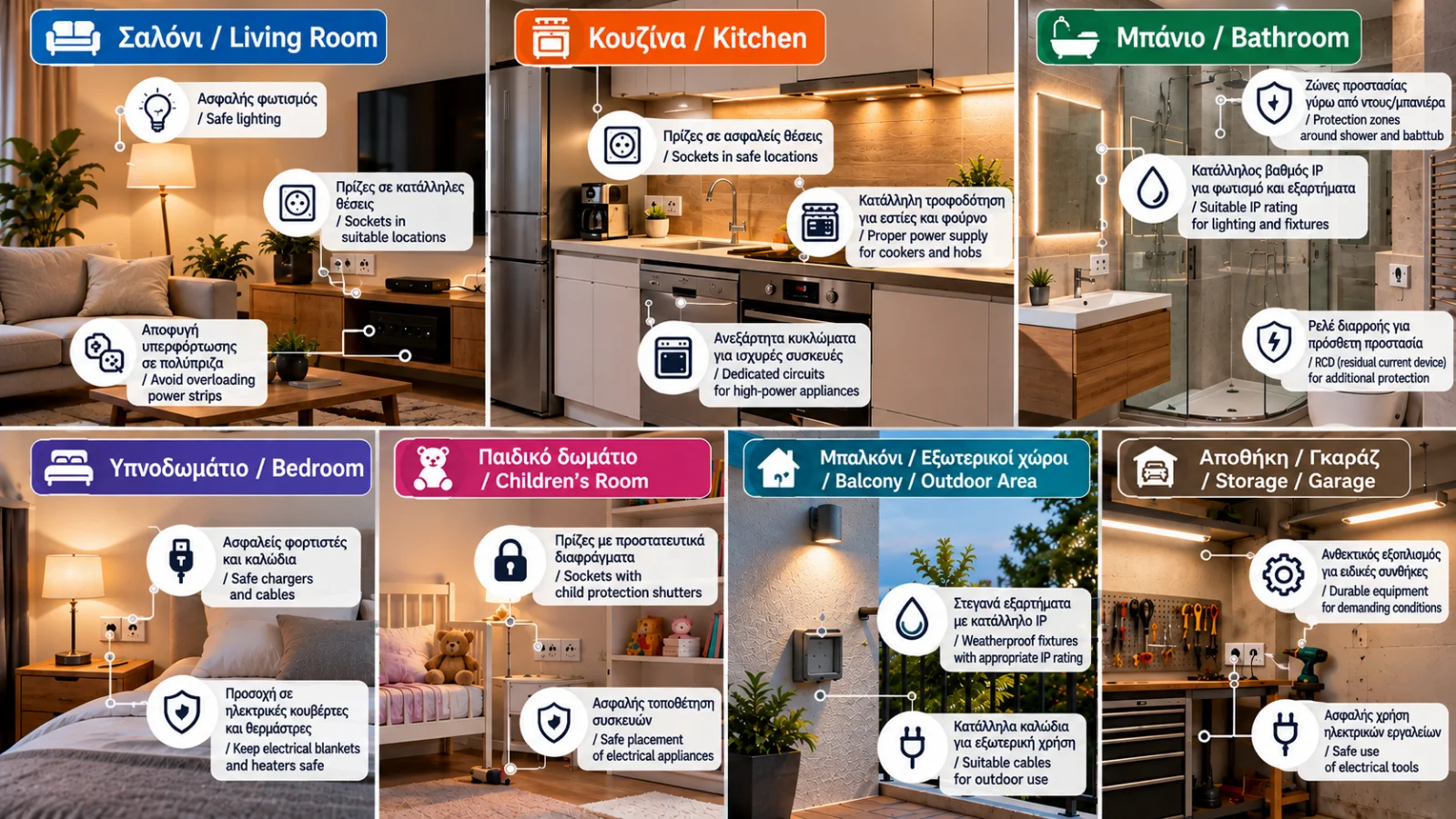
Electrical Safety at Home: Outlets, Lighting, Protection and Common Hazards
Electricity is essential to everyday life. From lighting and household appliances to heating systems, computers and mobile phone chargers, almost every room in a modern home relies on a safe and reliable electrical installation.
However, damaged outlets, overloaded power strips, unsuitable electrical equipment and inadequate protective measures can create serious hazards.
Electrical safety is not limited to the distribution board. It concerns every room, every outlet and every appliance connected to the electrical system.
A properly designed installation provides an important foundation for safety, but safe everyday practices and appropriate maintenance are equally important.
This guide explains the main electrical hazards in different areas of the home, how to recognize warning signs and when professional electrical inspection is necessary.
1. Why Is Electrical Safety Important?
An electrical installation that appears to function normally is not necessarily safe.
Some defects can remain unnoticed for years, particularly in older properties or installations that have undergone multiple modifications.
The main electrical hazards include:
Electric shock caused by contact with dangerous electrical parts.
Fire resulting from overheated conductors or connections.
Damage to household appliances.
Overloaded electrical circuits.
Deteriorated cable insulation.
Electrical faults associated with water or moisture.
Inadequate earthing or protective arrangements.
Preventing these risks requires appropriate electrical design, suitable protective devices, regular inspection and responsible everyday use.
2. Electrical Safety in the Living Room
The living room often contains several electrical and electronic devices.
Common examples include:
Televisions.
Computers.
Audio systems.
Phone chargers.
Floor lamps.
Electric heaters.
Gaming consoles.
Internet routers.
Although many electronic devices consume relatively little electricity, connecting numerous appliances to unsuitable extensions or power strips can still create problems.
Avoid Overloading Power Strips
Every power strip has a maximum rated current or power.
The number of available sockets does not determine how much electrical load it can safely support.
Connecting several high-power appliances to the same power strip may cause overheating.
Protect Electrical Cables
Avoid running cables:
Under carpets.
Beneath heavy furniture.
Through doorways where they may be crushed.
Close to hot surfaces.
Across walking areas where they create a tripping hazard.
Use Portable Heaters Carefully
Portable electric heaters require particular attention.
Keep them away from curtains, furniture and combustible materials.
Follow the manufacturer's instructions and avoid using unsuitable extension leads.
3. Electrical Safety in Bedrooms
Bedrooms frequently contain chargers, bedside lamps, electric blankets and small electrical appliances.
Common Hazards
Damaged charging cables.
Overheating chargers.
Power strips hidden behind furniture.
Cables compressed by beds.
Electrical appliances covered with fabrics.
Improper use of electric blankets.
Practical Safety Recommendations
Use chargers and cables that are suitable for the device and remain in good condition.
Avoid covering chargers or other equipment that generates heat.
Do not use electric blankets with damaged cables, visible defects or signs of overheating.
If an outlet produces sparks, becomes unusually hot or emits a burning smell, stop using it and arrange a professional inspection.
4. Electrical Safety in the Kitchen
The kitchen is one of the most electrically demanding areas of a home.
It combines water, heat and appliances that may consume substantial amounts of electricity.
Typical appliances include:
Electric cookers.
Induction hobs.
Ovens.
Dishwashers.
Refrigerators.
Microwave ovens.
Coffee machines.
Electric kettles.
Outlets Near the Sink
Electrical outlets must be positioned appropriately, considering the possibility of exposure to water.
Avoid operating electrical appliances with wet hands.
If an outlet or appliance becomes wet, do not use it until its safety has been assessed.
Electric Cookers and Induction Hobs
High-power cooking appliances require an appropriate electrical supply.
Do not connect them using ordinary power strips or improvised extension arrangements.
Their installation must follow the manufacturer's electrical requirements.
Dishwashers
Dishwashers combine electricity and water within the same appliance.
Check for visible cable damage and water leaks.
If water is leaking near electrical connections, avoid touching potentially affected electrical equipment and seek professional assistance.
5. Electrical Safety in the Bathroom
Bathrooms require particular attention because water and moisture can increase the risk of electric shock.
Electrical installations in locations containing a bath or shower are subject to specific requirements.
Bathroom Protection Zones
IEC 60364-7-701 defines special zones around baths and showers.
These zones establish restrictions on the types of electrical equipment that may be installed.
The suitability of outlets, lighting fixtures and other equipment depends on:
The exact location.
The bathroom layout.
The applicable protection zone.
The equipment specifications.
The relevant electrical installation requirements.
The precise boundaries must be determined according to the applicable edition of the standard and the actual bathroom configuration.
Bathroom Lighting
Lighting fixtures must be suitable for their installation location and potential exposure to water.
The IP protection rating is important, but it is not the only safety consideration.
Electrical Appliances
Never use portable mains-powered appliances where they could fall into a filled bathtub or shower.
Avoid using electrical equipment in conditions where it may come into contact with water.
The presence of an RCD does not make unsafe practices acceptable.
6. Electrical Safety in Children's Rooms
Children may come into contact with outlets, cables and electrical appliances without understanding the risks.
Important Precautions
Use suitable socket outlets with integrated safety shutters where appropriate.
Keep damaged or exposed cables out of use.
Avoid leaving portable heaters operating without supervision.
Position electrical equipment safely.
Secure cables to prevent pulling or accidental damage.
Teach children that outlets and electrical cables are not toys.
Not all removable plastic socket covers provide the same level of protection.
Suitable, properly manufactured outlets with integrated safety shutters are generally preferable to relying on unsuitable accessories.
7. Electrical Safety on Balconies and Outdoors
Outdoor electrical equipment is exposed to conditions that can accelerate deterioration.
These include:
Rain.
Moisture.
Sunlight.
Temperature changes.
Dust.
Mechanical damage.
Outdoor sockets, lighting fixtures and electrical accessories must be suitable for their intended environment.
Understanding IP Ratings
An IP rating describes the protection provided by an enclosure against the ingress of solid objects and water.
For example, IP44 indicates protection against solid objects larger than 1 mm and splashing water.
However, the required protection level depends on the actual exposure conditions.
There is no single IP rating suitable for every outdoor application.
Outdoor Extension Cables
Use only extension cables designed for outdoor use.
Keep electrical connections away from water.
Avoid routing cables where they may be crushed, cut or otherwise damaged.
8. Electrical Safety in Storage Rooms and Garages
Garages and storage areas often contain power tools, chargers, lighting equipment and electrical accessories.
Typical hazards include:
Dust accumulation.
Moisture.
Mechanical damage.
Unsuitable extension cables.
Overloaded sockets.
Improper operation of electrical tools.
Electrical equipment should be selected according to the actual environmental conditions.
Power Tools
Before using electrical tools:
Check the cable and plug.
Inspect for visible damage.
Follow the manufacturer's operating instructions.
Avoid use in wet conditions unless the equipment is specifically suitable.
Do not bypass protective devices.
Electric Vehicle Charging
Charging an electric vehicle requires particular consideration.
A charging installation must be compatible with the available electrical supply and the requirements of the charging equipment.
Regular household sockets should not automatically be assumed suitable for prolonged high-current charging.
A qualified electrician should assess the proposed installation.
9. How to Use Power Strips Safely
Power strips are convenient, but they have specific electrical limitations.
Practices to Avoid
Connecting several high-power appliances.
Plugging one power strip into another.
Using damaged cables.
Covering power strips with fabrics.
Using ordinary indoor power strips in wet environments.
Exceeding the manufacturer's rated current or power.
A power strip with six outlets does not necessarily have sufficient capacity to supply six high-power appliances simultaneously.
The total electrical load must remain within the limits of both the product and the supplying circuit.
Power strips should not replace a properly designed permanent electrical installation.
10. What Is a Residual Current Device (RCD)?
A residual current device, commonly called an RCD, is an important electrical protective device.
It detects an imbalance between currents flowing through the live conductors of a protected circuit.
When the residual current reaches the device's operating conditions, the RCD disconnects the electrical supply.
Additional protection using an appropriately selected RCD with a rated residual operating current not exceeding 30 mA is required for specified circuits and applications under relevant electrical installation standards.
However, an RCD:
Does not replace protective earthing.
Does not replace overcurrent protection.
Cannot eliminate every possible electric shock hazard.
Must be of a suitable type for the installation.
RCDs should be checked in accordance with manufacturer instructions and applicable inspection requirements.
11. Why Is Electrical Earthing Important?
Protective earthing is a fundamental part of electrical safety.
Together with appropriate protective devices, it helps reduce dangerous conditions arising from electrical faults.
However, the presence of an earth contact on an outlet does not prove that the earthing arrangement is functioning correctly.
Its effectiveness must be verified through appropriate inspection and electrical testing.
A qualified electrician may need to assess:
Protective conductor continuity.
Earthing arrangements.
Fault protection measures.
Relevant electrical test results.
Electrical earthing should never be modified through improvised connections.
12. Warning Signs of Electrical Problems
Certain symptoms should never be ignored.
Overheating Outlets
An unusually hot outlet may indicate overloading, poor contact or another electrical defect.
Burning Smells
A burning smell can indicate overheating electrical components or insulation.
Frequent Circuit Breaker Trips
Repeated operation of a circuit breaker may indicate overload, short circuit or another fault.
Repeated RCD Trips
Repeated RCD operation may indicate leakage current, an appliance defect or another installation problem.
Flickering Lights
Flickering may result from a faulty lamp, unsuitable control equipment or an electrical supply problem.
Electric Shock or Tingling from Appliances
A tingling sensation or electric shock from a metal appliance is a serious warning sign.
Stop using the appliance and arrange professional inspection.
Sparks or Discoloration
Blackened outlets, unusual sparking and deformed electrical accessories require immediate attention.
Emergency warning: If there is smoke, fire or an immediate electric shock hazard, move away from the affected equipment, avoid touching it and contact the appropriate emergency services. Do not use water on an electrical fire.
13. When Is a Professional Electrical Inspection Necessary?
A professional electrical inspection may be required when:
There are visible signs of damage.
Protective devices trip repeatedly.
High-power appliances have been added.
Significant electrical modifications are planned.
There are concerns about earthing.
The installation is old and its inspection history is unknown.
A required periodic inspection is due.
Inspection intervals and documentation requirements depend on the applicable national regulations and the type of installation.
In Greece, electrical installation inspection and certification requirements should be assessed under the current regulatory framework, including the applicable provisions concerning the electrician's declaration (ΥΔΕ).
14. What Does an Electrician Check?
Depending on the installation and purpose of the inspection, electrical verification may include:
Visual inspection.
Protective conductor continuity testing.
Insulation resistance measurements.
Polarity verification.
Verification of automatic disconnection conditions.
RCD testing.
Distribution board inspection.
Assessment of circuit suitability.
The exact testing procedure depends on the characteristics of the installation and the applicable requirements.
These tests require appropriate instruments and professional competence.
15. Common Electrical Safety Mistakes
Using Damaged Cables
Damaged insulation may expose users to dangerous electrical conditions.
Overloading Outlets
Connecting several powerful appliances to one outlet or power strip can cause overheating.
Attempting Improvised Electrical Repairs
Unqualified modifications can create serious hazards.
Ignoring Warning Signs
Burning smells, unusual heat, sparks and repeated protective device operation should be investigated.
Using Unsuitable Outdoor Equipment
Outdoor electrical installations require equipment suitable for moisture and environmental exposure.
Assuming an RCD Prevents Every Accident
No single protective device replaces a correctly designed, installed and verified electrical system.
16. Frequently Asked Questions
Is It Safe to Leave a Phone Charger Plugged In?
A suitable, undamaged charger may remain connected in accordance with the manufacturer's instructions. However, damaged or overheating chargers should not be used.
Can I Connect an Electric Heater to a Power Strip?
High-power portable heaters should be used according to manufacturer instructions. Direct connection to a suitable wall outlet is often recommended.
Why Does My RCD Keep Tripping?
Possible causes include leakage current, a defective appliance or another electrical fault. Repeated tripping requires professional investigation.
Is a Warm Electrical Outlet Dangerous?
Unusual heating may indicate an electrical problem. Stop using the outlet and have it inspected.
Are Bathroom Outlets Safe?
Bathroom outlets are safe only when their location, type and protective arrangements comply with applicable requirements.
Do I Need a Special Outlet on My Balcony?
Electrical accessories must be suitable for the expected environmental conditions and intended use.
How Can I Tell Whether My Home Is Properly Earthed?
The presence of an earth contact is not sufficient evidence. Appropriate electrical testing is necessary.
Can I Replace a Damaged Electrical Outlet Myself?
Electrical work carries significant risks. Replacement should be performed by an appropriately qualified professional.
How Often Should My Electrical Installation Be Inspected?
Inspection requirements depend on the installation, its condition, use and applicable national regulations.
Is an RCD Enough to Protect My Home?
No. Electrical safety relies on multiple protective measures, including suitable wiring, earthing, overcurrent protection, RCDs where required, and proper verification.
Conclusion
Electrical safety at home depends on a combination of correct installation, suitable protective devices and responsible everyday use.
Each area of the home presents different risks.
In bathrooms, particular attention must be given to water exposure and protection against electric shock.
In kitchens, high-power appliances and electrical outlets near sinks require careful consideration.
In bedrooms, living rooms and children's rooms, safe use of chargers, cables, power strips and electrical appliances is essential.
Outdoor spaces, storage rooms and garages also require equipment appropriate for their environmental and operating conditions.
Regular inspections, prompt attention to warning signs and professional electrical maintenance all contribute to a safer home.
Thermosphere.gr — Technical knowledge for safer and more efficient installations.
Disclaimer: This article provides general educational information and does not replace professional electrical inspection, engineering design or advice. Electrical installation work must be carried out by appropriately qualified professionals in accordance with applicable regulations.
Technical References
ELOT 60364 — Requirements for Electrical Installations in Greece.
IEC 60364-4-41 — Protection Against Electric Shock.
IEC 60364-5-52 — Selection and Erection of Wiring Systems.
IEC 60364-6 — Verification.
IEC 60364-7-701 — Locations Containing a Bath or Shower.
IEC 60529 — Degrees of Protection Provided by Enclosures (IP Code).
HEDNO — Hellenic Electricity Distribution Network Operator: https://www.deddie.gr/
ELOT — Hellenic Organization for Standardization: https://www.elot.gr/