
Choosing a water filtration system in Greece is not a luxury, but often a necessary investment for our health and the longevity of our plumbing systems. From city chlorine to salts and nitrates in rural areas, every home faces different challenges. As heating and plumbing technicians, we see daily how water quality affects everything from the taste of our coffee to the performance of our boilers and piping.
Understanding your needs: What’s coming out of your tap?
Before purchasing, the first step is diagnosis. Water in Greece varies dramatically depending on the region. In Athens, EYDAP water is generally of good quality but often has a strong chlorine odor. On islands or in rural areas, the main problem is hardness (limescale) or the presence of heavy metals and nitrates due to agricultural activities.
- Odor and taste: Usually caused by the chlorine added for disinfection.
- Turbidity and sediment: Soil, rust from old pipes, and microparticles.
- Limescale: White marks on faucets and buildup on washing machine heating elements.
Central Supply Filters: The first line of defense
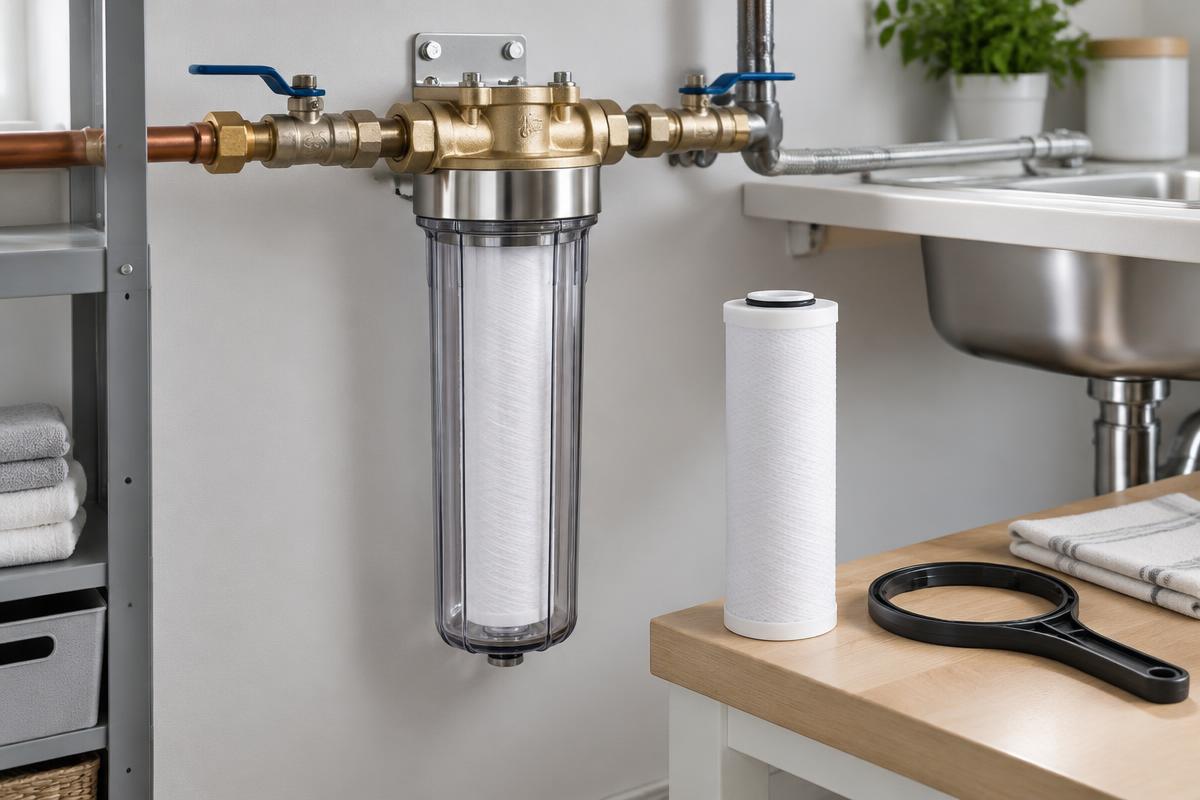
Central supply filters are installed immediately after the water meter or at the entrance of the building. Their role is not necessarily to make the water 100% drinkable, but to protect the entire house.
String and Polypropylene Filters
They are affordable (device cost €30-€60) and retain solid particles like sand and rust. They are necessary if you have a solar water heater or delicate bathroom faucets, as they prevent damage to internal mechanisms.
Quartz and Polyphosphate Filters
These are mainly used to tackle limescale, not by removing it, but by keeping it in suspension so it does not settle on surfaces. They are ideal for protecting gas boilers and electric water heaters.
Above-Counter and Under-Counter Carbon Filters
These are the most popular systems for drinking water. Activated carbon is the "gold standard" for removing chlorine, organic compounds, and pesticides.
- Above-counter: Easy installation directly to the tap. Ideal for rental homes.
- Under-counter: Installed under the sink and connected either to their own dedicated faucet or a three-way faucet. They offer higher flow rates and better aesthetics.
Prefer Solid Carbon Block type filters with a permeability of 0.5 to 5 microns for maximum effectiveness.
Reverse Osmosis: The definitive solution
In areas with very hard water, high conductivity, or contamination from heavy metals, simple carbon filters are not enough. Reverse osmosis is a multi-stage system that includes a semi-permeable membrane.
This system removes up to 99% of dissolved salts, nitrates, arsenic, and microbes. It typically consists of 5 to 7 filtration stages, including a "remineralization" stage to return essential trace elements to the water and balance its pH.
Important note: Reverse osmosis involves a small amount of water rejection into the drainage during its operation, which the owner should be aware of for proper resource management.
Maintenance and Cost: What to watch out for
A filter that is not changed on time is worse than having no filter at all, as it becomes a breeding ground for bacteria. In Greece, typical replacement intervals are:
- Particle filters: Every 3-6 months (depending on turbidity).
- Carbon filters: Every 6-12 months or after a specific volume of water (usually 3,000-6,000 liters).
- Osmosis membranes: Every 2-4 years.
The annual maintenance cost for a good under-counter system ranges from €40 to €80, an amount much lower than buying bottled water, while also drastically reducing the household's plastic footprint.
Frequently Asked Questions (FAQ)
1. Can I install the filter myself?
Above-counter and tap filters can be easily installed by anyone. Under-counter and central supply systems require basic plumbing knowledge and tools, so calling a technician is recommended to avoid leaks.
2. Does the filter reduce water pressure?
Yes, all filters cause a slight pressure drop. If the pressure in your home is already low (below 2.5 bar), you might need a reverse osmosis system with an integrated booster pump.
3. How do I know if my filter needs changing?
Signs include a noticeable decrease in water flow, the reappearance of a chlorine odor, or a change in taste. Always follow the manufacturer's schedule.
4. Is filtered water suitable for infants?
Yes, especially water from reverse osmosis which removes nitrates, which are particularly dangerous for infants. Always consult your pediatrician regarding trace mineral content.
Conclusion
There is no single "best" filter for everyone. For cities with a good network, a quality under-counter activated carbon filter is the most practical solution. For areas with very hard or contaminated water, reverse osmosis is the only way to go. Investing in a proper filtration system pays for itself quickly, protecting both your health and your household appliances.