
Chimney Smoke Backdraft: Causes, Risks and Solutions
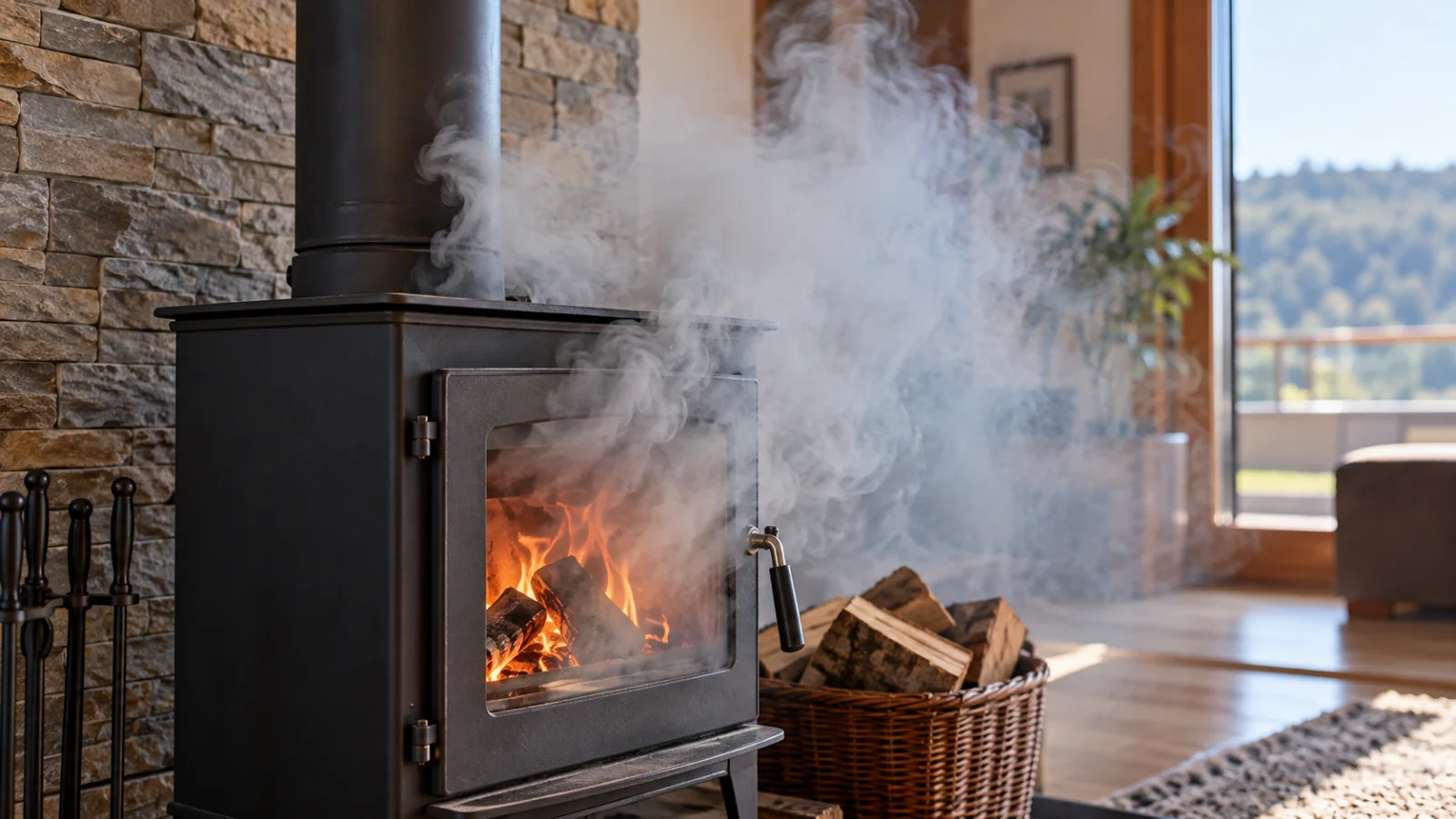
Smoke entering a room from a chimney is a problem that can occur with fireplaces, wood-burning stoves and other combustion appliances.
In a properly functioning installation, combustion products are safely discharged through an appropriate flue system. When the flow is disrupted, smoke or combustion gases may escape into the occupied space.
This is more than an inconvenience. It may indicate a potentially dangerous malfunction, particularly because combustion gases can contain carbon monoxide (CO), a colourless and odourless gas.
Solving the problem requires identifying the underlying cause rather than simply adding accessories to the chimney termination.
What Is Chimney Smoke Backdraft?
Chimney smoke backdraft occurs when combustion products are not properly discharged through the chimney and instead enter the room.
In natural-draft systems, the upward movement of flue gases depends on the available pressure difference between the chimney and its surroundings.
If the available draft pressure is insufficient to overcome system resistance, or if adverse pressure conditions develop inside the building, inadequate or even reverse flue gas flow may occur.
Smoke entering a room should never be considered a normal characteristic of a heating appliance.
1. Insufficient Natural Chimney Draft
One of the main causes of smoke backdraft is insufficient natural draft pressure.
Natural draft is primarily generated by the density difference between warm flue gases inside the chimney and cooler outdoor air.
Chimney performance can be affected by:
Insufficient effective chimney height.
Incorrect internal diameter.
Excessively long horizontal flue sections.
Too many bends or changes in direction.
Excessive flue gas cooling.
High pressure losses within the system.
Increasing chimney height is not always the correct solution. The entire flue system must be evaluated.
2. Insufficient Combustion Air Supply
Every combustion appliance requires an adequate supply of air for proper operation.
In buildings with airtight windows, doors and limited natural ventilation, the available combustion air may be insufficient.
The problem can become more severe when the following operate simultaneously:
Kitchen extractor hoods.
Bathroom or ventilation fans.
Mechanical exhaust ventilation systems.
Other equipment that changes indoor air pressure.
These conditions can create negative pressure inside the building.
If the negative pressure becomes sufficiently strong, it may overcome the natural chimney draft and cause combustion gases to spill into the room.
Combustion air requirements must be assessed according to the appliance manufacturer's instructions and applicable regulations.
3. Wind Effects at the Chimney Termination
Wind can create changing pressure zones around roofs and neighbouring buildings.
When the chimney termination is located in an unfavourable position, flue gas flow may be affected.
Problems may occur particularly:
During strong winds.
When wind comes from a specific direction.
On buildings with complex roof geometry.
Near taller neighbouring buildings or obstacles.
Correct chimney termination positioning is therefore essential.
Installing an anti-downdraught chimney cowl does not guarantee that the problem will be solved. The accessory must be suitable and approved for the specific chimney system.
4. Blocked or Dirty Chimney
Soot, creosote and other combustion deposits can reduce the available internal cross-sectional area of a chimney.
Blockages may also result from:
Bird nests.
Leaves and foreign objects.
Loose or damaged masonry.
Deformed or damaged chimney components.
A reduced flow area increases resistance and can seriously affect flue gas evacuation.
In solid-fuel installations, combustible deposits also increase the risk of a chimney fire.
Chimney inspection and cleaning should be carried out by a suitably qualified professional.
5. Incorrect Chimney Diameter
Chimney diameter affects flue gas velocity, pressure losses and thermal behaviour.
An excessively small cross-section may produce high flow resistance.
Conversely, an excessively large cross-section can, under certain conditions, contribute to greater flue gas cooling and unstable draft.
The correct diameter should not be selected solely by matching the appliance outlet diameter.
For applicable single-appliance installations, chimney sizing can be assessed using the calculation methodology of EN 13384-1.
6. A Cold Chimney During Start-Up
In natural-draft installations, the chimney may be cold before the appliance starts operating.
During start-up, the available buoyancy pressure can therefore be limited.
This effect may be more pronounced when:
The chimney is installed externally.
The flue route is long and poorly insulated.
The appliance has not operated for an extended period.
Adverse building pressure conditions exist.
However, repeated smoke spillage during start-up should not be accepted as normal without a professional assessment.
7. Incorrect Chimney Design or Installation
Smoke backdraft may also result from installation defects.
Examples include:
Excessive numbers of bends.
Unsuitable flue connections.
Incorrect component support.
Incompatible parts from different chimney systems.
Poor chimney termination positioning.
Inadequate access for cleaning and inspection.
A chimney must be treated as a complete engineered system rather than a simple collection of connected pipes.
Why Is Chimney Smoke Backdraft Dangerous?
Combustion gases may contain hazardous substances, including carbon monoxide.
Carbon monoxide has no colour or smell and cannot be reliably detected by human senses.
Exposure can cause symptoms such as headache, dizziness, nausea and confusion. Severe exposure can be fatal.
Smoke entering the room also negatively affects indoor air quality.
Safety warning: If smoke or combustion gases enter the room, stop using the appliance if it is safe to do so and leave the affected area. If anyone experiences symptoms or a carbon monoxide alarm activates, move immediately to fresh air and contact emergency services. Do not use the appliance again until it has been professionally inspected and the problem has been corrected.
How Can Chimney Smoke Backdraft Be Fixed?
The correct solution depends on the underlying cause.
A professional assessment may include:
Inspecting the chimney for obstructions, damage and deposits.
Checking the available combustion air supply.
Assessing negative pressure inside the building.
Examining chimney height, diameter and routing.
Evaluating the chimney termination position.
Checking appliance operation and manufacturer requirements.
Performing appropriate draft and combustion measurements.
Corrective measures may include cleaning the chimney, improving combustion air provision, modifying the flue system or correcting the termination position.
None of these solutions should be selected without identifying the actual cause.
Can an Anti-Downdraught Chimney Cowl Solve the Problem?
A suitable chimney terminal may help in certain installations, but it cannot correct every cause of smoke backdraft.
For example, it cannot replace:
Adequate combustion air supply.
Correct chimney sizing.
Cleaning a blocked chimney.
Repairing a defective installation.
An unsuitable chimney cowl may also increase flow resistance.
The correct accessory must be selected according to the manufacturer's requirements and the installation conditions.
How Can Chimney Backdraft Be Prevented?
Prevention depends on proper chimney design and regular maintenance.
Important measures include:
Correct chimney sizing.
Suitable chimney termination positioning.
Adequate combustion air supply.
Certified and compatible chimney components.
Periodic chimney inspection and cleaning.
Appliance maintenance according to manufacturer instructions.
Installation of suitable carbon monoxide alarms in accordance with their installation instructions.
Carbon monoxide alarms provide an additional layer of protection but do not replace correct installation and maintenance.
Conclusion
Smoke entering a room from a chimney indicates that combustion products are not being evacuated as intended.
Possible causes include insufficient chimney draft, negative indoor pressure, adverse wind conditions, chimney blockages and incorrect flue sizing.
Safe and effective troubleshooting requires a professional assessment of the complete installation.
Increasing chimney height or installing a chimney cowl without proper diagnosis is not a universal solution.
The appliance should only be returned to service after the cause has been identified and corrected by a suitably qualified professional.
Technical References
EN 13384-1 — Chimneys: Thermal and fluid dynamic calculation methods — Part 1: Chimneys serving one combustion appliance.
EN 15287-1 — Chimneys: Design, installation and commissioning — Part 1.
EN 1443 — Chimneys: General requirements.
EN 1856-1 — Chimneys: Requirements for metal chimneys — Part 1: System chimney products.
The applicable editions of these standards, national regulations and manufacturer-specific instructions should be verified for each installation.