
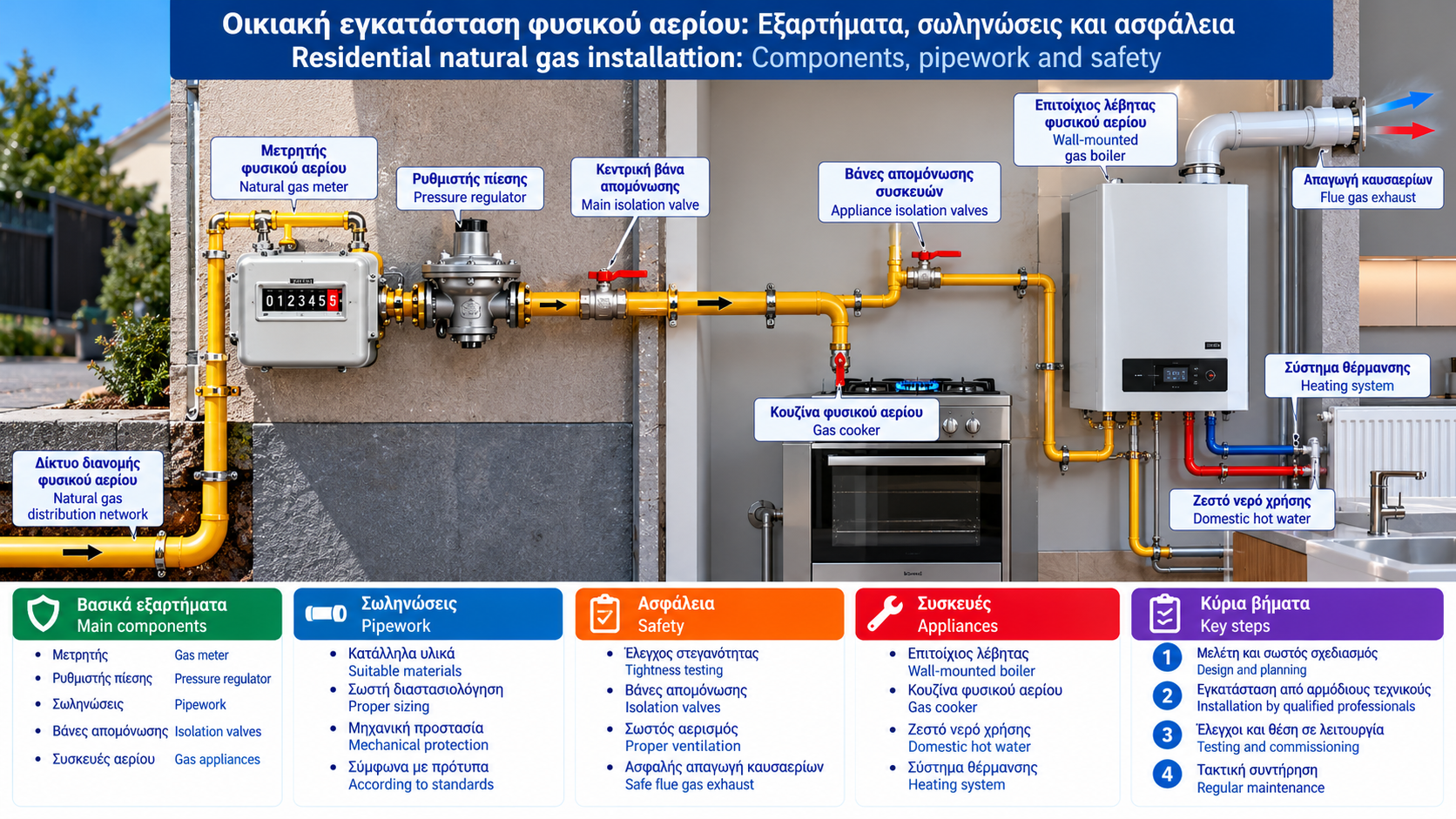
Residential Natural Gas Installation: Components, Pipework and Essential Safety Requirements
A residential natural gas installation is an integrated fuel supply system. It involves much more than connecting a boiler or cooker to a gas pipe.
A properly designed installation includes suitable piping, isolation devices, pressure regulation and metering equipment, gas-consuming appliances and the required safety inspections.
Correct design is essential for both safe operation and reliable gas supply, especially when several appliances operate simultaneously.
1. How Does a Residential Natural Gas Installation Work?
Natural gas is supplied from the distribution network and delivered to domestic appliances through an appropriately designed installation.
A typical arrangement may include:
Connection to the gas distribution network.
Main isolation device.
Pressure regulator, where required.
Gas consumption meter.
Internal gas pipework.
Appliance isolation valves.
Gas appliances, such as a boiler or cooker.
Suitable combustion air and flue gas arrangements, depending on the appliance type.
The exact order and location of these components vary between installations and are determined by the network operator, approved design and applicable technical requirements.
2. Natural Gas Meter
The gas meter measures the volume of gas consumed.
Diaphragm meters are common in domestic applications, although the final choice depends on flow requirements and network specifications.
The meter must have sufficient capacity for the expected appliance demand.
Its location must comply with applicable accessibility, protection and safety requirements.
Equipment owned or controlled by the distribution network operator must not be altered by the homeowner or unauthorized personnel.
3. Gas Pressure Regulator
A gas pressure regulator reduces or controls supply pressure to meet downstream operating requirements.
The appropriate pressure depends on the network connection and appliance specifications.
Regulator selection considers:
Inlet pressure.
Required outlet pressure.
Minimum and maximum gas flow.
Gas characteristics.
Required protective functions.
Intended application.
Changing regulator settings without authorization can create hazardous operating conditions.
4. Natural Gas Pipework
Pipework transfers gas from the designated supply point to the appliances.
Material selection, diameter and jointing methods must comply with the relevant standards, national regulations and approved engineering design.
Depending on the application and permitted technical solutions, suitable metallic piping systems may be used.
Not every pipe or fitting intended for water installations is suitable for natural gas.
Key design considerations include mechanical protection, inspection access where required, corrosion protection, penetrations through building elements, approved jointing methods and thermal or mechanical stresses.
5. How Is Gas Pipe Diameter Determined?
Pipe diameter cannot be selected solely from boiler power.
Proper sizing considers design flow, pipe lengths, branches, fittings and allowable pressure drop.
A home with both a boiler and gas cooker may have different requirements from a home with only one boiler.
Two homes with identical appliance ratings may still need different piping arrangements because of their geometry and distances.
Final pipe sizing must be based on an engineering calculation rather than a universal rule of thumb.
6. Isolation Valves
Isolation valves allow the gas supply to be shut off at designated locations.
Their positions must provide the required accessibility and comply with the approved installation arrangement.
Suitable isolation devices are typically provided at relevant supply and appliance connections where required.
Valves must be approved for the intended gas service and operating conditions.
7. Domestic Natural Gas Boiler
A gas boiler converts fuel energy into heat for space heating and, depending on its design, domestic hot water production.
Modern condensing boilers recover some of the latent heat contained in water vapour in the flue gases when operating conditions permit.
Boiler selection should consider:
Building heat losses.
Domestic hot water demand.
Burner modulation range.
Flue system requirements.
Hydraulic compatibility.
Installation location.
Manufacturer instructions.
An oversized boiler does not necessarily provide better comfort or lower energy consumption.
8. Combustion Air and Flue Gas Exhaust
Combustion requires an adequate air supply and safe removal of combustion products.
Requirements depend on the appliance category and installation arrangement.
Room-sealed appliances use designed combustion air and flue gas paths in accordance with their certification.
Flue routes, terminal positions, clearances and permitted accessories must comply with the approved design, regulations and manufacturer instructions.
Incorrect flue installation can create a serious carbon monoxide exposure hazard.
9. What Is Gas Tightness Testing?
Gas tightness testing verifies that an installation does not have unacceptable leakage under specified test conditions.
Testing is performed using approved procedures, appropriate test media and suitable instruments.
Test pressures, duration, system preparation and acceptance criteria vary according to the installation and applicable requirements.
Improvised testing with gas or unsuitable equipment must never be attempted.
10. Checks Before Initial Operation
Before an installation enters service, qualified personnel carry out the required inspections and documentation.
Depending on the installation, these may include:
Verification against the approved design.
Inspection of materials and joints.
Required strength and tightness tests.
Checks of isolation and protective devices.
Appliance installation checks.
Ventilation and flue system assessment.
Commissioning and adjustments by qualified personnel.
Delivery of the required technical documentation.
Connection and activation follow the procedures of the responsible network operator and applicable regulations.
11. What Should the Homeowner Know?
Homeowners should not modify gas installation components, but they should understand the fundamentals of safe use.
Important practices include:
Knowing the location of the designated gas isolation valve.
Keeping required ventilation openings unobstructed.
Avoiding unauthorized alterations.
Arranging maintenance in accordance with relevant requirements.
Keeping installation documentation available.
Reporting unusual smells or operating problems.
12. What Should You Do If You Smell Gas?
Natural gas is odorized to help people detect possible leaks.
If a leak is suspected:
Do not use flames, matches or lighters.
Do not operate electrical switches, sockets or appliances in the affected area.
Do not attempt to locate or repair the leak yourself.
Leave the area.
If safe, shut off the designated gas supply valve and open doors or windows.
From a safe location, contact the gas network operator’s emergency service or relevant emergency authorities.
Do not return until authorized personnel advise that it is safe.
13. Are Natural Gas Detectors Necessary?
A suitable gas detector can provide an additional layer of protection when properly selected, installed and maintained.
Suitability and positioning depend on the gas, room conditions and manufacturer instructions.
A detector does not replace correct installation, tightness testing or maintenance.
A carbon monoxide detector serves a different purpose from a natural gas leak detector.
14. Common Installation Mistakes
Problems may result from:
Unsuitable materials or fittings.
Incorrect pipe sizing.
Unauthorized modifications.
Inadequate pipe protection.
Incorrect appliance installation.
Unsuitable flue arrangements.
Omitted required tests.
Poor maintenance.
Certified equipment alone is not sufficient. The entire system must be correctly designed, installed and operated.
15. Technical Standards and Regulatory Framework
Residential installations in Greece must comply with the applicable national technical regulation, the requirements of the relevant network operator and manufacturers’ instructions.
Relevant European standards may include:
EN 1775: Gas pipework for buildings.
EN 1555: Polyethylene piping systems for gaseous fuels, where permitted.
EN 331: Manually operated gas valves.
EN 1359: Diaphragm gas meters.
EN 15502: Gas-fired central heating boilers.
In Greece, Ministerial Decision D3/A/oik.6598/2012 (Government Gazette B 976/2012) is a key technical regulatory reference for natural gas installations operating at pressures up to 500 mbar, subject to applicable amendments and specific requirements.
The applicability of each requirement must be verified for the installation concerned.
Conclusion
A safe residential natural gas installation depends on the performance of the complete system, not a single component.
It requires appropriate design, suitable materials, correct pipe sizing, safe appliance installation, mandatory testing and continued maintenance.
Design, construction, testing and commissioning must be performed by legally qualified professionals in accordance with the applicable regulatory framework.
For homeowners, the essential principle is to operate the system as instructed, recognize warning signs and avoid unauthorized interventions.