
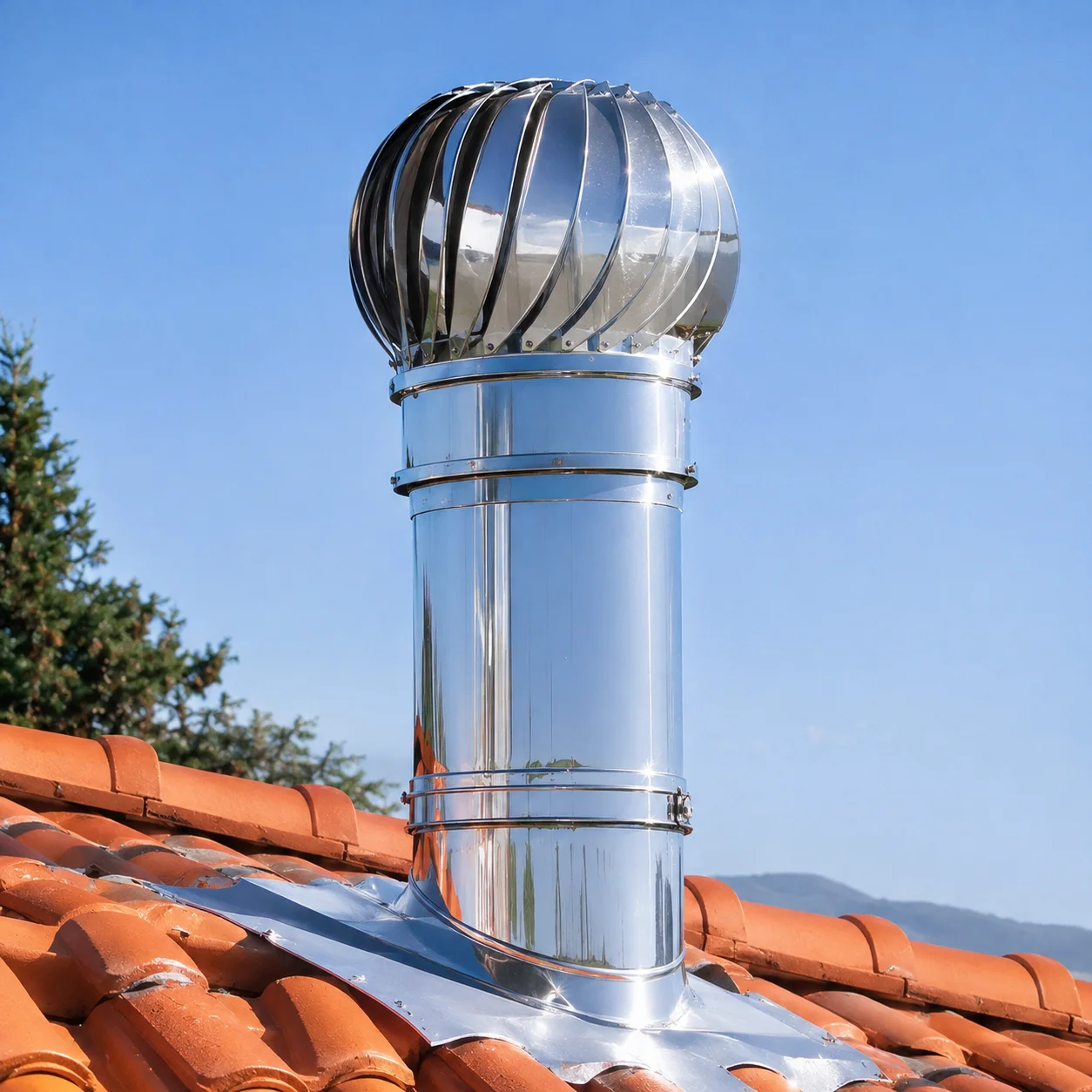
Chimney Flue Gas Leaks: Warning Signs, Carbon Monoxide Risks and Tightness Testing
Chimney flue gas leaks are among the most serious safety problems that can affect heating installations.
A chimney or flue system is designed to carry combustion products from a heating appliance to the outside atmosphere without allowing them to enter occupied spaces or other unintended areas of the building.
When the system loses its required tightness, or when the conditions governing flue gas flow are unsuitable, combustion gases may escape through joints, cracks or damaged components.
Depending on the fuel and combustion conditions, flue gases may contain carbon monoxide (CO), carbon dioxide (CO₂), nitrogen oxides, water vapour, particles and other substances.
Carbon monoxide is particularly dangerous because it is colourless and odourless and can cause severe or fatal poisoning.
A suspected flue gas leak must therefore be treated as a potential safety hazard rather than simply a smoke or odour problem.
What Is a Chimney Flue Gas Leak?
A flue gas leak occurs when combustion products escape from their intended evacuation path into an area where they should not be present.
Leakage may occur at:
The connection between the appliance and chimney.
A joint between metal flue sections.
A damaged sealing gasket.
A crack in a masonry chimney.
A corroded metal component.
An incorrectly assembled section.
A building service shaft.
A boiler room or enclosed technical space.
A leak may be continuous or appear only under certain operating conditions.
For example, a system may develop problems during appliance start-up, at high output or when mechanical ventilation equipment is operating elsewhere in the building.
What Causes Flue Gas Leakage?
Several factors can compromise the integrity of a chimney system.
1. Damaged or Incorrect Flue Connections
Joints are critical elements of the flue gas evacuation path.
Their tightness depends on:
Joint design.
Correct assembly.
Gasket condition.
Component compatibility.
Operating temperature.
Pressure conditions.
A component that is not part of the intended chimney system may not provide the required level of tightness.
2. Corrosion of Metal Chimneys
Corrosion can affect both the structural condition and tightness of metal flue components.
Contributing factors may include:
Condensate formation.
Chemical composition of the flue gases.
Unsuitable material selection.
Prolonged moisture exposure.
Inadequate maintenance.
Stainless steel is not automatically suitable for every fuel, temperature or condensation condition.
The complete chimney classification and intended application must be considered.
3. Cracks in Masonry Chimneys
Masonry chimneys may develop cracks because of:
Thermal stresses.
Ageing materials.
Structural movement.
Moisture damage.
Inadequate maintenance.
A visible crack does not necessarily prove that combustion gases are entering an occupied room.
However, it is a reason to arrange a technical inspection.
4. Incorrect Installation or Assembly
Failure to follow the manufacturer's instructions can compromise flue tightness.
Problems may arise from:
Incorrect joint orientation.
Inadequately secured components.
Improperly installed gaskets.
Incompatible connectors.
Unapproved modifications.
Even components with apparently matching dimensions may not be interchangeable.
5. Unsuitable Pressure Conditions
A chimney must be suitable for its intended operating pressure.
A flue system designed for negative-pressure operation must not be arbitrarily used under positive-pressure conditions.
Pressure influences both the likelihood of flue gas escape and the tightness performance required of the system.
6. Insufficient Draft or Smoke Backflow
Insufficient chimney draft can cause combustion products to spill into the room containing the appliance.
This is not necessarily the same failure mechanism as leakage through a crack or pipe joint.
However, both situations may expose occupants to harmful combustion gases.
What Are the Warning Signs of a Chimney Flue Gas Leak?
Some signs are visible, while others cannot be reliably identified without specialised inspection or testing.
Possible warning signs include:
Smoke or combustion odours near the appliance.
Visible smoke escaping from a flue connection.
Black soot deposits around pipe joints.
Discolouration or heat damage near the chimney.
Evidence of combustion gases entering an enclosed service area.
Corrosion or deterioration of flue components.
Activation of a carbon monoxide alarm.
Repeated appliance operating faults.
The absence of visible smoke or an unusual smell does not prove that a chimney is safe.
Carbon monoxide cannot be detected by smell.
Carbon Monoxide: Why Is It Dangerous?
Carbon monoxide is produced during incomplete combustion of carbon-containing fuels.
It may be present in combustion products from:
Oil boilers.
Gas boilers.
Fireplaces.
Wood-burning stoves.
Other fuel-burning appliances.
Exposure to CO interferes with the blood's ability to transport oxygen.
Possible symptoms of carbon monoxide poisoning include:
Headache.
Dizziness.
Nausea.
Weakness.
Confusion.
Drowsiness.
Severe exposure can lead to loss of consciousness and life-threatening complications.
These symptoms are not unique to carbon monoxide poisoning and must not be used as a substitute for medical assessment.
What Should You Do If You Suspect a Flue Gas Leak?
If a carbon monoxide alarm activates or there is serious evidence that combustion gases are entering an occupied space:
Leave the affected area immediately and move to fresh air.
Warn other occupants so they can evacuate safely.
Contact emergency services from a safe location.
Do not re-enter the affected area until the appropriate authorities have confirmed that it is safe.
Do not operate the appliance again until the fault has been professionally assessed and corrected.
In Greece and throughout the European Union, 112 is the emergency telephone number.
Anyone experiencing symptoms consistent with possible carbon monoxide exposure should receive urgent medical evaluation.
Negative-Pressure vs Positive-Pressure Chimneys
Operating pressure has an important influence on how a chimney behaves when a joint or component loses tightness.
Negative-Pressure Chimney Systems
In a natural-draft chimney, the pressure inside the flue is generally lower than the surrounding pressure during normal operation.
Under these conditions, small defects may allow surrounding air to enter the chimney rather than causing combustion gases to escape.
However, a leaking negative-pressure chimney must not be considered safe.
Pressure conditions may change because of wind, inadequate draft or negative pressure within the building.
Positive-Pressure Flue Systems
In a positive-pressure system, the pressure of the combustion gases is higher than the pressure of the surrounding environment.
If a joint or component fails, flue gases may escape through the defective area.
For this reason, the chimney must have the appropriate pressure classification and compatible, correctly assembled sealing components.
What Do Chimney Pressure Classifications Mean?
European chimney classification systems use designations describing suitability for different pressure conditions.
Common categories include:
N: Negative-pressure operating classes.
P: Positive-pressure operating classes.
H: Higher positive-pressure operating classes.
The full designation includes additional characteristics and must be interpreted according to the relevant product standard.
Recognising the pressure class alone is not sufficient.
Temperature, condensation, corrosion resistance and other operating requirements must also be considered.
How Is Chimney Tightness Tested?
Chimney tightness testing evaluates the ability of a flue system to limit unintended leakage under the conditions for which it was designed.
There is no single test procedure that applies identically to every chimney.
The appropriate method depends on:
Appliance type.
Chimney classification.
Operating pressure.
Construction material.
Installation configuration.
Manufacturer instructions.
Applicable technical requirements.
Testing should be carried out by a suitably qualified professional.
1. Visual Inspection
Accessible parts of the system are examined for:
Physical damage.
Cracks.
Corrosion.
Incorrect connections.
Missing components.
Signs of leakage.
Unapproved modifications.
Visual inspection is an important first step, but it does not always establish whether a flue is sufficiently gas-tight.
2. Inspection of Joints and Gaskets
The condition of connections and compatibility of components are assessed.
Where the system uses dedicated sealing gaskets, the inspection should establish whether they are suitable for the expected operating conditions and correctly installed.
3. Internal Chimney Inspection
Where technically feasible, suitable equipment may be used to inspect the internal flue passage.
This can help identify:
Cracks.
Corrosion.
Displaced components.
Deposits.
Other visible defects.
4. Tightness Testing Using an Appropriate Procedure
Some systems can be tested under defined pressure conditions, with leakage evaluated according to the applicable procedure.
The test pressure, method and acceptance criteria depend on the system classification and relevant requirements.
Pressure must never be applied arbitrarily to an existing chimney.
An unsuitable test can damage components or create additional hazards.
5. Appliance Operating Checks
The inspection may also require an assessment of appliance operation and flue gas evacuation conditions.
Depending on the installation, a professional may examine:
Burner operation.
Draft conditions.
Operating pressures.
Start-up behaviour.
Effects of mechanical ventilation.
Performance under different appliance loads.
A chimney tightness test and a combustion performance assessment are different procedures.
Both may be necessary for a complete evaluation.
Can a Chimney Camera Detect Flue Gas Leaks?
Internal camera inspection can be useful where direct access to the flue is difficult.
It may reveal visible defects that cannot be identified from the chimney openings.
However, a camera inspection alone cannot prove that the chimney is gas-tight.
Small leaks, or faults that occur only under particular pressure conditions, may require another appropriate testing method.
Flue Gas Leakage from a Fireplace Chimney
Smoke entering a room from a fireplace can result from several different problems.
Possible causes include:
Insufficient chimney draft.
Inadequate combustion air supply.
Unsuitable chimney geometry.
Deposits restricting the flue passage.
Cracks or other chimney defects.
Negative pressure inside the building.
Smoke spilling from the fireplace opening is technically different from smoke escaping through a crack in the chimney.
Both situations require investigation when they affect indoor air quality or occupant safety.
Flue Gas Leakage from a Wood Stove
In wood-burning stove installations, the connection between the appliance and chimney must be suitable for the expected operating temperatures.
Possible warning signs include:
Smoke escaping near the connector.
Soot deposits around joints.
Damaged components.
Corrosion.
Displaced flue sections.
The installation must be inspected and maintained according to the relevant manufacturer instructions.
Flue Gas Leakage from a Gas Boiler
In gas boiler installations, particularly those using positive-pressure flue systems, joint tightness is critical.
Leakage may be associated with:
Unsuitable components.
Damaged gaskets.
Incorrect assembly.
Corrosion.
Failure of an approved flue assembly.
Approved boiler flue systems must not be modified arbitrarily.
Diagnosis and repair should be performed by an appropriately qualified or licensed technician, in accordance with applicable requirements.
Chimney Flue Gas Leaks in Apartment Buildings
In apartment buildings, a leak may affect spaces other than the room containing the heating appliance.
Particular attention is needed where the chimney passes through:
Shared service shafts.
Enclosed technical spaces.
Suspended ceilings.
Vertical building penetrations.
Areas adjoining other apartments.
In collective flue systems, the possibility of unwanted flow towards connections serving other appliances must also be considered.
An investigation should assess the relevant system as a whole, rather than only the location where a leak is first observed.
Can Water Leakage Indicate a Flue Gas Tightness Problem?
Yes, in some circumstances.
If water or condensate escapes from a metal chimney joint, the connection may be defective.
This does not automatically prove that combustion gases are also leaking.
However, the same joint may contribute to the gas-tightness performance of the system.
Water leakage at a flue connection should therefore be investigated rather than dismissed as a minor moisture problem.
Common Mistakes to Avoid
Sealing Joints with Ordinary Silicone
Not every sealant is suitable for flue gas temperatures, operating pressures or chemical exposure.
Using an arbitrary sealant may conceal the underlying problem without restoring the required system performance.
Ignoring a Small Leak
A small visible leak does not necessarily indicate a small risk.
The potential consequences depend on the composition of the gases, exposure conditions and appliance operation.
Using Incompatible Components
Replacing a component with another that merely has similar dimensions may compromise the integrity of the flue system.
Continuing to Operate a Suspect Appliance
An appliance should not continue operating when there is serious evidence that combustion gases may be entering an occupied space.
Treating a CO Alarm as a Substitute for Inspection
A carbon monoxide alarm is an important additional protective measure.
However, it does not replace correct installation, maintenance or professional flue tightness testing.
How Can Chimney Flue Gas Leaks Be Prevented?
Prevention depends on correct design, suitable materials and regular maintenance.
Important measures include:
Selecting a chimney suitable for the appliance.
Correct flue sizing.
Using compatible system components.
Following the manufacturer's installation instructions.
Maintaining required safety clearances.
Regularly inspecting accessible connections.
Checking for corrosion and deterioration.
Cleaning the chimney when required.
Providing suitable condensate management.
Installing and maintaining CO alarms in accordance with their instructions and applicable requirements.
Which European Standards Relate to Chimney Tightness?
Depending on the chimney construction and application, relevant European standards may include:
EN 1443: General chimney requirements and classification.
EN 1856-1: Requirements for metal chimney system products.
EN 1856-2: Requirements for metal flue liners and connecting flue pipes.
EN 13384-1: Thermal and fluid dynamic calculation methods for chimneys serving one combustion appliance.
EN 13384-2: Calculation methods for chimneys serving more than one combustion appliance.
EN 15287-1: Design, installation and commissioning requirements for chimneys within its scope.
The specific testing procedures and acceptance criteria must be established from the applicable requirements for the particular flue system.
The relevant editions of the standards, national regulations and manufacturer documentation should always be verified.
Frequently Asked Questions
How Can I Tell If My Chimney Is Leaking Flue Gases?
Possible signs include visible smoke, soot around joints, combustion odours or activation of a carbon monoxide alarm.
However, the absence of these signs does not rule out leakage.
Can a Chimney Leak Without Any Smell?
Yes. Carbon monoxide is odourless, and some flue gas leaks may not produce a noticeable smell.
Is a Small Flue Gas Leak Dangerous?
It can be. The risk depends on the combustion gas composition, exposure conditions and operating characteristics of the installation.
Can I Test Chimney Tightness Myself?
Reliable tightness testing requires appropriate procedures, equipment and technical knowledge.
Improvised pressure or smoke tests should not be used as a substitute for professional assessment.
Does a CO Detector Identify Every Flue Gas Leak?
No. A CO alarm detects carbon monoxide according to its specifications.
It is not a general-purpose instrument for assessing chimney gas tightness.
When Should Chimney Tightness Be Tested?
The need for testing depends on the system and applicable requirements.
Testing may be required during installation or commissioning, after modifications or repairs, and whenever there is evidence of a possible defect.
Can a Chimney Leak Affect a Neighbouring Apartment?
Yes. In buildings with shared service shafts or collective flue systems, escaped combustion gases may affect multiple spaces.
Conclusion
Chimney flue gas leaks are a serious technical and safety concern that can affect both heating system operation and the health of building occupants.
Common causes include damaged joints, corrosion, cracks, unsuitable components and incorrect pressure conditions.
The absence of visible smoke or unusual odours does not guarantee safety.
Appropriate chimney tightness testing, compatible components and professional repair are essential for the safe evacuation of combustion gases.
Where there is serious evidence of flue gas leakage into an occupied area, protecting people must take priority over continued appliance operation.
Technical References
EN 1443 — Chimneys: General requirements.
EN 1856-1 — Chimneys: Requirements for metal chimneys — Part 1: System chimney products.
EN 1856-2 — Chimneys: Requirements for metal chimneys — Part 2: Metal flue liners and connecting flue pipes.
EN 13384-1 — Chimneys: Thermal and fluid dynamic calculation methods — Part 1.
EN 13384-2 — Chimneys: Thermal and fluid dynamic calculation methods — Part 2.
EN 15287-1 — Chimneys: Design, installation and commissioning — Part 1.
The applicable editions, manufacturer requirements and national regulations must be confirmed for each installation.