Introduction: The Reliability of Heat Pumps in Practice
The heat pump is currently the most efficient solution for residential heating and cooling in Greece. As a technology, it is based on the principles of a refrigeration cycle, similar to an air conditioner, but with much more complex hydraulic and electronic components. Despite their high reliability, heat pumps are not indestructible. Their exposure to weather conditions and constant operation during the winter can lead to malfunctions.
Before panicking at the sight of a red light on the controller, it is important to know that many "faults" are due to simple oversights or external factors that can be resolved without the cost of a technician's visit. In this guide, we will analyze what you should check first and what are the actual technical faults that require a professional.
The 5 Most Common Heat Pump Faults
1. Low Pressure in the Hydraulic Circuit
This is the number one reason a heat pump stops working. If the water pressure drops below the safety threshold (usually 0.6 - 0.8 bar), the unit "locks" to protect the circulation pump from running without water (dry run).
2. Debris Accumulation in the Filter (Y-Strainer)
The filter installed on the return line to the pump collects sludge, metal shavings, and scale. When it clogs, the water flow decreases, the pump cannot dissipate heat, and a Flow Error appears.
3. Evaporator Freezing (Outdoor Unit)
In conditions of high humidity and low temperature, the outdoor unit develops ice. Normally, the pump performs a defrost cycle. However, if the unit is installed in a spot without good ventilation or if the temperature sensor is faulty, ice accumulates, obstructing operation.
4. Circulator or Three-Way Valve Fault
In monoblock units or the internal units of split systems, the circulator pump can "stick" after a long period of inactivity (e.g., during summer). Additionally, the three-way valve that switches operation between heating and domestic hot water often experiences mechanical jamming.
5. Electrical Problems and Circuit Boards
Voltage fluctuations in the grid are a common phenomenon in Greece. These can burn fuses or, in the worst case, the pump's main inverter board.
What to Check Yourself Before Calling a Technician
Before making the call, follow the steps below. You might save time and money:
- Pressure Check: Look at the pressure gauge. The ideal pressure when the system is cold should be between 1.2 and 1.5 bar. If it is lower, carefully open the filling valve.
- Power Supply: Check your electrical panel. Did the heat pump's fuse or the residual current device trip?
- Thermostat Settings: Ensure the indoor thermostat is set to the correct mode (Sun icon for heating) and that the desired temperature is higher than the room temperature.
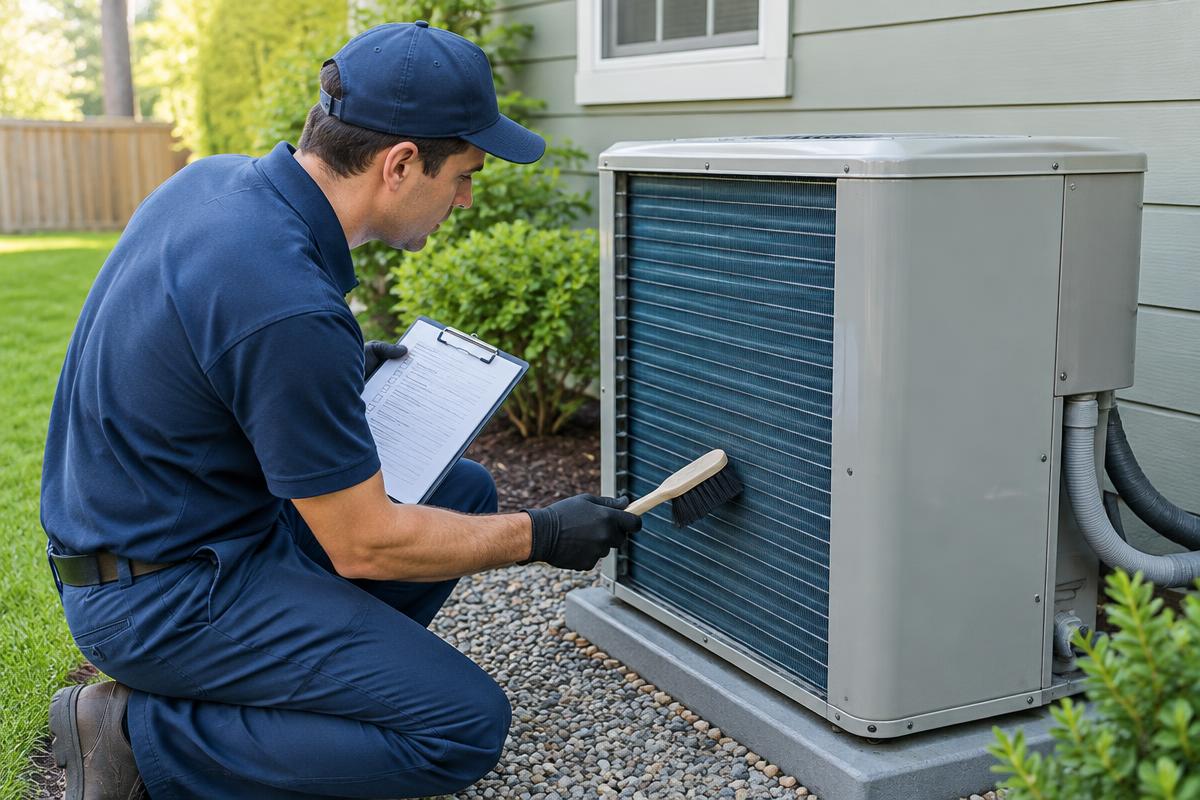
- Outdoor Unit: Ensure there are no leaves, debris, or snow blocking the air intake to the fan.
- Error Code: Note the code displayed on the screen (e.g., E1, A7, H9). Refer to the user manual to see what it means.
When a Technician's Intervention is Mandatory
There are cases where intervention by an unskilled person can cause further damage or compromise safety. Call a technician when:
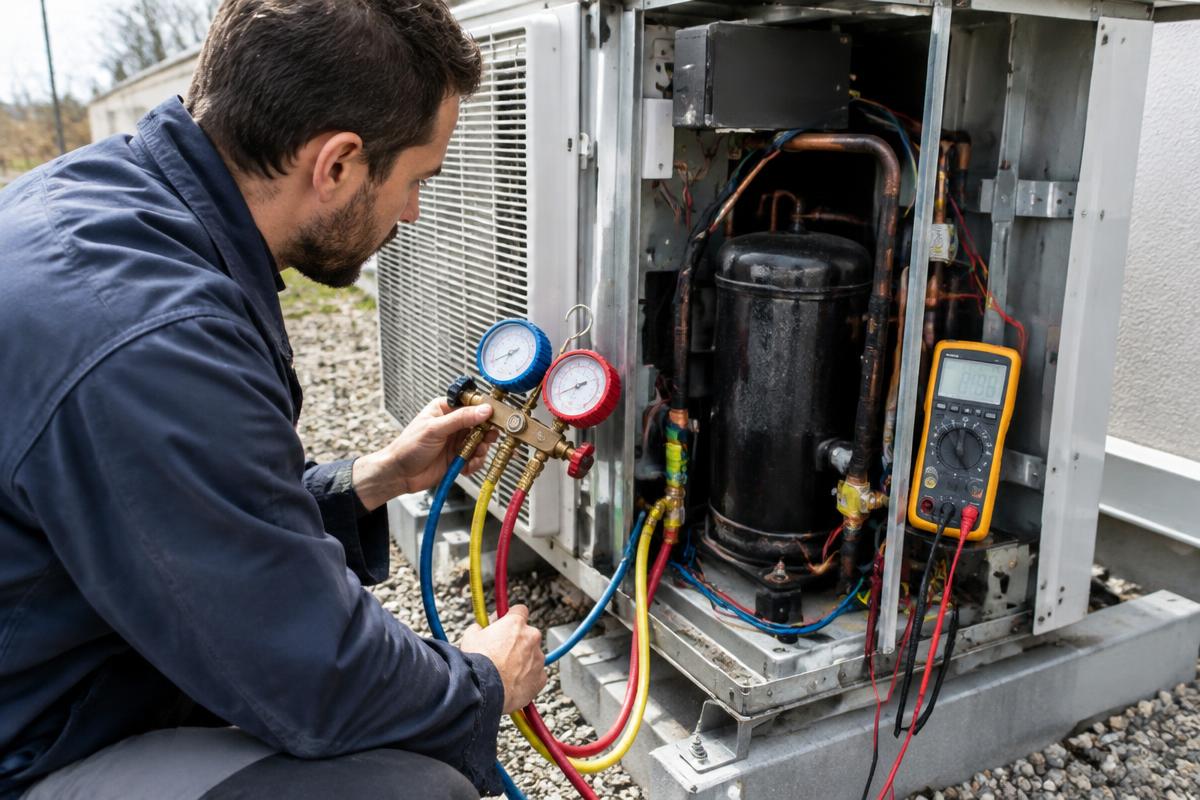
- There is a refrigerant leak (you will see oil around the connections).
- Unusual metallic noises are heard from the compressor.
- The pump constantly trips the circuit breaker on the panel.
- The system is running but the water is not heating up (potential four-way valve fault).
- Cleaning the Y-strainer is needed if this requires isolating the main valves and venting the system.
Preventive Maintenance Tips
Prevention is always cheaper than repair. A heat pump requires an annual check, ideally in the autumn before the severe frosts. The technician will check the nitrogen pressure in the expansion vessel, the cleanliness of the heat exchanger, and the proper functioning of the sensors.
Also, the installation of a magnetic sludge filter is essential, especially in renovations of old houses with panel radiators, as it protects the pump's sensitive heat exchanger from iron oxides.
Frequently Asked Questions (FAQ)
Why does my pump emit steam from the outdoor unit in winter?
It is not a fault! This is the defrost process. The pump melts the ice that has accumulated on the fins, and the steam you see is a normal phenomenon.
How often should I refill water in the circuit?
In a sealed circuit, the pressure should not drop. If you need to refill water more than once a year, there is a minor leak somewhere that needs to be located.
The heat pump is suddenly consuming a lot of electricity, what is wrong?
The auxiliary electric heaters have likely activated because the pump cannot cover the load (due to a fault or very low external temperature) or the water filter is clogged and performance has dropped.
Conclusion
Understanding how your heat pump works allows you to distinguish a simple malfunction from a serious fault. By keeping the hydraulic network at the correct pressure and ensuring the cleanliness of the filters, you ensure the longevity of your system. For any error related to the refrigeration circuit or electronic components, the involvement of a certified technician is the only safe path.