
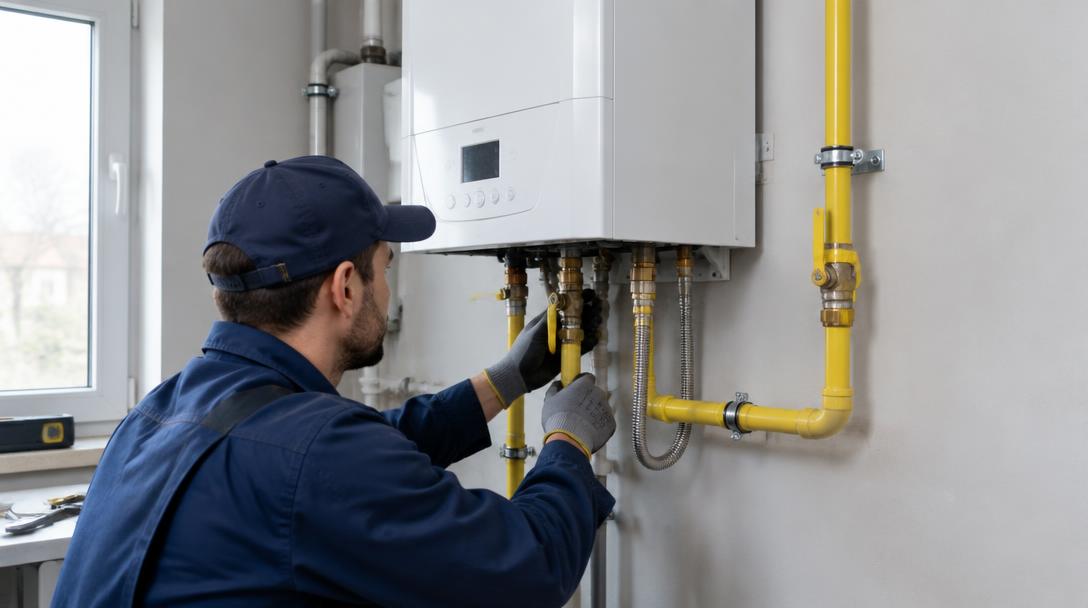
Flue gas temperature: Common faults and diagnostics
Diagnosis or adjustment on this matter is based on alarm or lockout diagnosis according to the correct startup sequence. Special attention is required for the points of temperature, flue gas, and common [issues].
In this technical subject, the "temperature" directly affects the "flue gas", while the term "common" is used as an additional confirmation point before a decision to intervene is made.
Technical check
- flame signal.
- alarm code.
- stage at which it stops.
- pressures.
Isolation of the cause is done by comparing what the automation requests, what is actually happening in the circuit, and which protection device interrupts operation.
Possible causes
- pre-purge failure.
- lack of gas.
- ignition failure.
- protection activation.
Valuable measurements
For this specific topic, the error code, sequence timing, gas pressure, and flame signal are primarily examined. Interpretation is based on the operating stage rather than in isolation.
Practical conclusion
Do not perform continuous resets without identifying the cause of the lockout.
By combining the points of temperature, flue gas, and common [issues], unnecessary component changes are avoided and the actual root cause is identified more quickly.
Safety
In natural gas installations, do not perform makeshift tests or bypass pressure switches, valves, or safety automations. Leak testing, gas train adjustment, and combustion analysis must be performed by a suitably licensed technician with the correct instruments.